


The use of postoperative topical corticosteroids in chronic rhinosinusitis with nasal polyps: a systematic review and meta-analysis
- PMID: 24119596
- PMCID: PMC3899544
- DOI: 10.2500/ajra.2013.27.3950
The use of postoperative topical corticosteroids in chronic rhinosinusitis with nasal polyps: a systematic review and meta-analysis
Abstract
Background: Topical intranasal corticosteroids (INCSs) are used to control disease symptoms in patients with chronic rhinosinusitis with nasal polyposis (CRSwNP). The evidence to recommend INCSs as part of the postoperative care is limited. This study was designed to assess the efficacy of INCSs in the postoperative care of patients undergoing functional endoscopic sinus surgery (FESS) during the 1st year postoperatively.
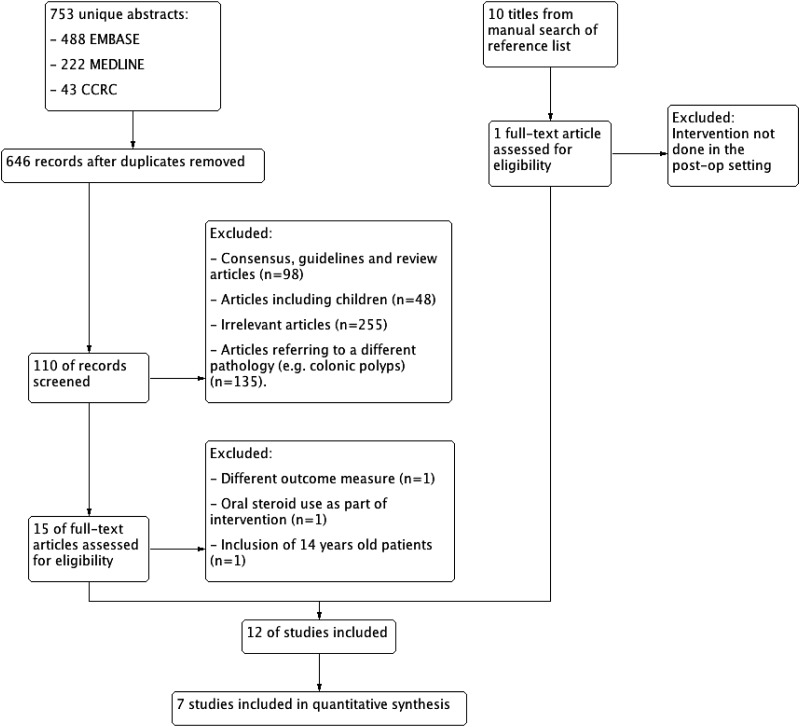
Methods: We searched the Cochrane Central Register of Controlled Trials (1995 to May 2012), MEDLINE (January 1948 to May 2012), EMBASE (January 1980 to May 2012), and the reference lists of articles. The Preferred Reporting Items for Systematic Reviews and Meta-Analyses (PRISMA) guidelines were followed. Randomized controlled trials (RCT) and cohort studies comparing INCSs with placebo or comparing different types of INCSs were included.
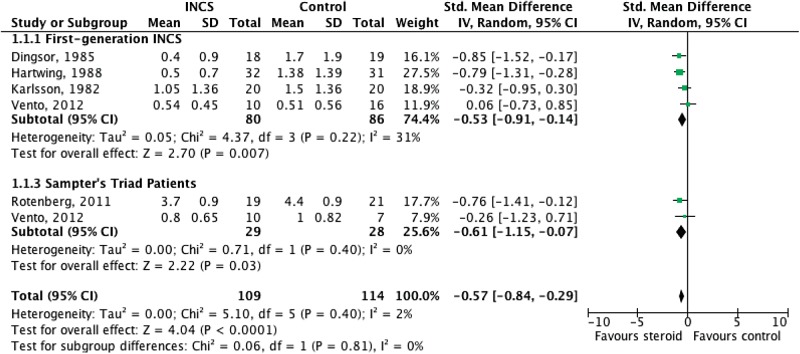
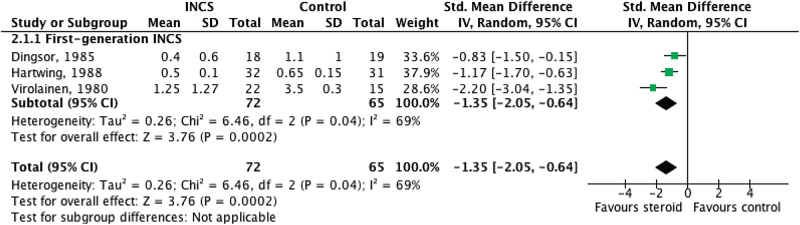
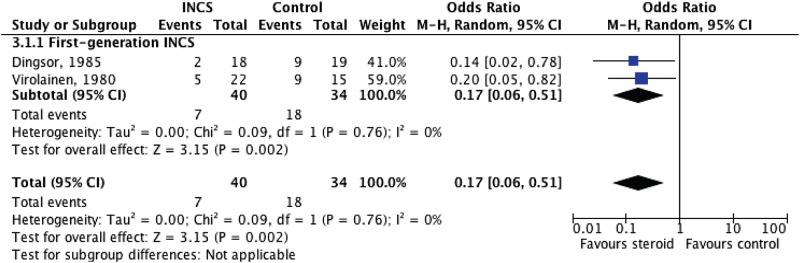
Results: Eleven studies (n = 945 patients) were RCTs and one prospective cohort study (n = 32 patients). As measured by the standardized mean difference (SMD) INCSs had a beneficial effect on symptom scores (SMD, -1.35; 95% CI, -2.05 to -0.64; p = 0.0002; 3 trials; 137 patients) and polyp score (SMD, 0.53; 95% CI, -0.91 to -0.14; p = 0.007; 5 trials; 223 patients). Compared with placebo, the use of INCSs decreased the odds of polyp recurrence (odds ratio, 0.17; 95% CI, 0.06-0.51; p = 0.002; 2 trials; 74 patients). Two RCTs (n = 105) and one cohort study (n = 32) reported normal adrenocorticotropic hormone levels postintervention.
Conclusion: INCS use is a safe therapy in postoperative management of CRSwNP patients. INCS showed significant improvement in polyp score, patients' symptoms and significant decrease in polyp recurrence in the first year postoperatively.
Figures
References
-
- Rudmik L, Schlosser RJ, Smith TL, Soler ZM. Impact of topical nasal steroid therapy on symptoms of nasal polyposis: A meta-analysis. Laryngoscope 122:1431–1437, 2012. - PubMed
-
- Derendorf H, Meltzer EO. Molecular and clinical pharmacology of intranasal corticosteroids: Clinical and therapeutic implications. Allergy 63:1292–1300, 2008. - PubMed
-
- Rowe-Jones JM, Medcalf M, Durham SR, et al. Functional endoscopic sinus surgery: 5 Year follow up and results of a prospective, randomised, stratified, double-blind, placebo controlled study of postoperative fluticasone propionate aqueous nasal spray. Rhinology 43:2–10, 2005. - PubMed
Publication types
MeSH terms
Substances
LinkOut - more resources
Full Text Sources
Other Literature Sources
Medical
Research Materials
