


PKM2 isoform-specific deletion reveals a differential requirement for pyruvate kinase in tumor cells
- PMID: 24120138
- PMCID: PMC3850755
- DOI: 10.1016/j.cell.2013.09.025
PKM2 isoform-specific deletion reveals a differential requirement for pyruvate kinase in tumor cells
Abstract
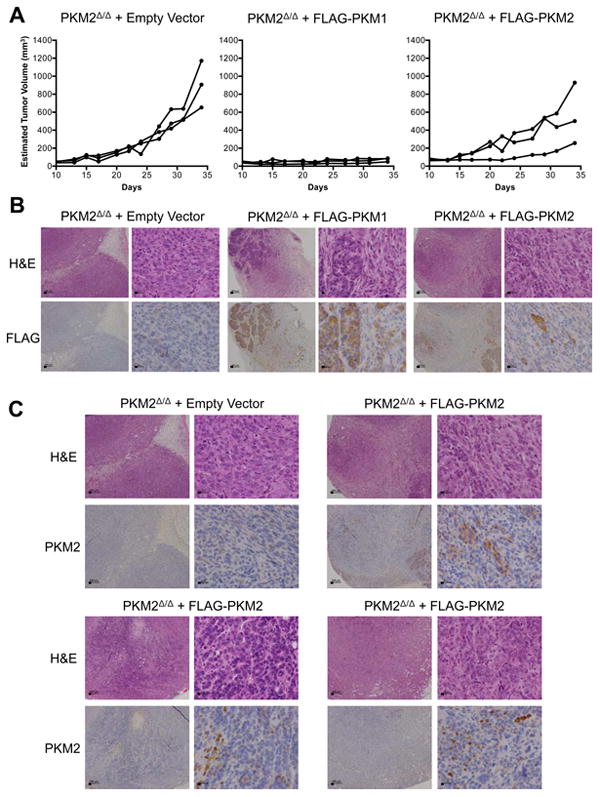
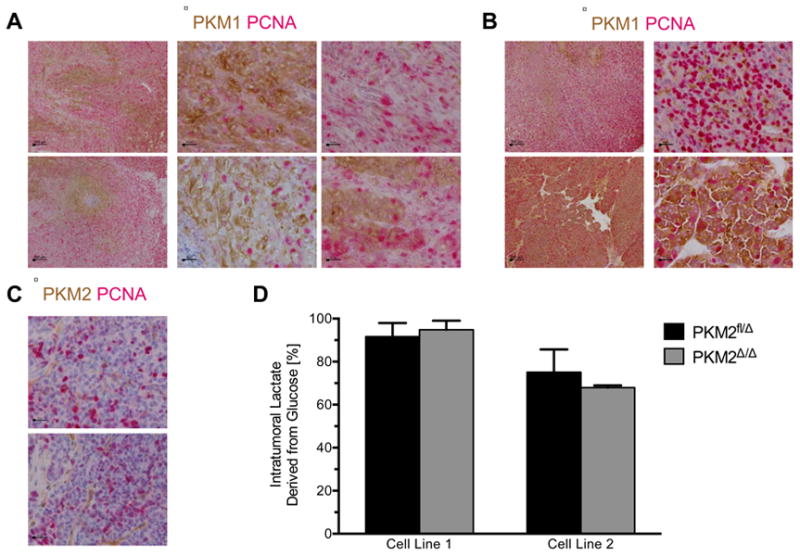
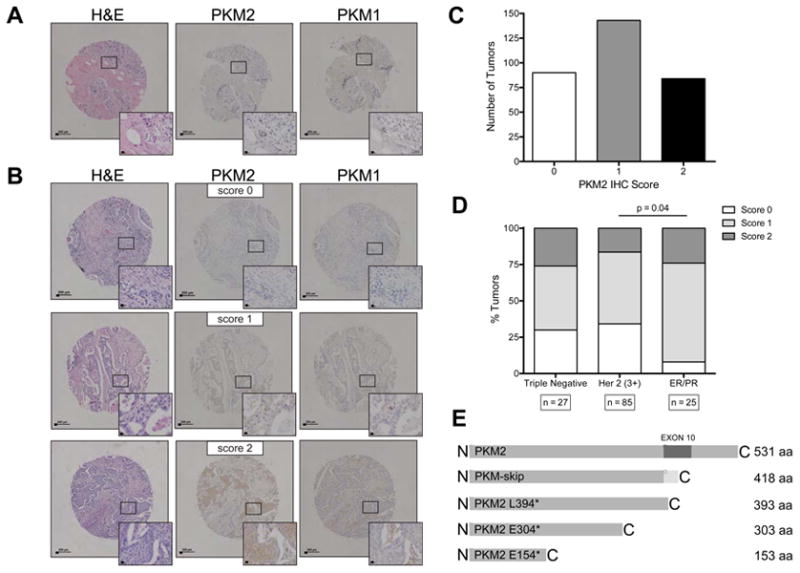
The pyruvate kinase M2 isoform (PKM2) is expressed in cancer and plays a role in regulating anabolic metabolism. To determine whether PKM2 is required for tumor formation or growth, we generated mice with a conditional allele that abolishes PKM2 expression without disrupting PKM1 expression. PKM2 deletion accelerated mammary tumor formation in a Brca1-loss-driven model of breast cancer. PKM2 null tumors displayed heterogeneous PKM1 expression, with PKM1 found in nonproliferating tumor cells and no detectable pyruvate kinase expression in proliferating cells. This suggests that PKM2 is not necessary for tumor cell proliferation and implies that the inactive state of PKM2 is associated with the proliferating cell population within tumors, whereas nonproliferating tumor cells require active pyruvate kinase. Consistent with these findings, variable PKM2 expression and heterozygous PKM2 mutations are found in human tumors. These data suggest that regulation of PKM2 activity supports the different metabolic requirements of proliferating and nonproliferating tumor cells.
Copyright © 2013 Elsevier Inc. All rights reserved.
Figures
References
-
- Allali-Hassani A, Wasney GA, Chau I, Hong BS, Senisterra G, Loppnau P, Shi Z, Moult J, Edwards AM, Arrowsmith CH, et al. A survey of proteins encoded by non-synonymous single nucleotide polymorphisms reveals a significant fraction with altered stability and activity. The Biochemical journal. 2009;424:15–26. - PubMed
-
- Baumhoer D, Tornillo L, Stadlmann S, Roncalli M, Diamantis EK, Terracciano LM. Glypican 3 expression in human nonneoplastic, preneoplastic, and neoplastic tissues: a tissue microarray analysis of 4,387 tissue samples. American journal of clinical pathology. 2008;129:899–906. - PubMed
Publication types
MeSH terms
Substances
Grants and funding
- 5K08CA136983/CA/NCI NIH HHS/United States
- R00 CA131472/CA/NCI NIH HHS/United States
- R01 CA168653/CA/NCI NIH HHS/United States
- 5P01CA117969/CA/NCI NIH HHS/United States
- P01 CA117969/CA/NCI NIH HHS/United States
- P30 CA014051/CA/NCI NIH HHS/United States
- R01GM056203/GM/NIGMS NIH HHS/United States
- R01CA168653/CA/NCI NIH HHS/United States
- 5P30CA14051/CA/NCI NIH HHS/United States
- R01DK092606/DK/NIDDK NIH HHS/United States
- P30CA147882/CA/NCI NIH HHS/United States
- DK059635/DK/NIDDK NIH HHS/United States
- R00CA131472/CA/NCI NIH HHS/United States
- P30 CA147882/CA/NCI NIH HHS/United States
- R01 GM056203/GM/NIGMS NIH HHS/United States
- P50 CA098258/CA/NCI NIH HHS/United States
- U24 DK059635/DK/NIDDK NIH HHS/United States
- K08 CA136983/CA/NCI NIH HHS/United States
- R01 DK092606/DK/NIDDK NIH HHS/United States
LinkOut - more resources
Full Text Sources
Other Literature Sources
Medical
Molecular Biology Databases
Research Materials
Miscellaneous
