


Psychological treatment of hypnotic-dependent insomnia in a primarily older adult sample
- PMID: 24121096
- PMCID: PMC3838504
- DOI: 10.1016/j.brat.2013.09.006
Psychological treatment of hypnotic-dependent insomnia in a primarily older adult sample
Abstract
Objective: This study tested cognitive behavior therapy (CBT) in hypnotic-dependent, late middle-age and older adults with insomnia.
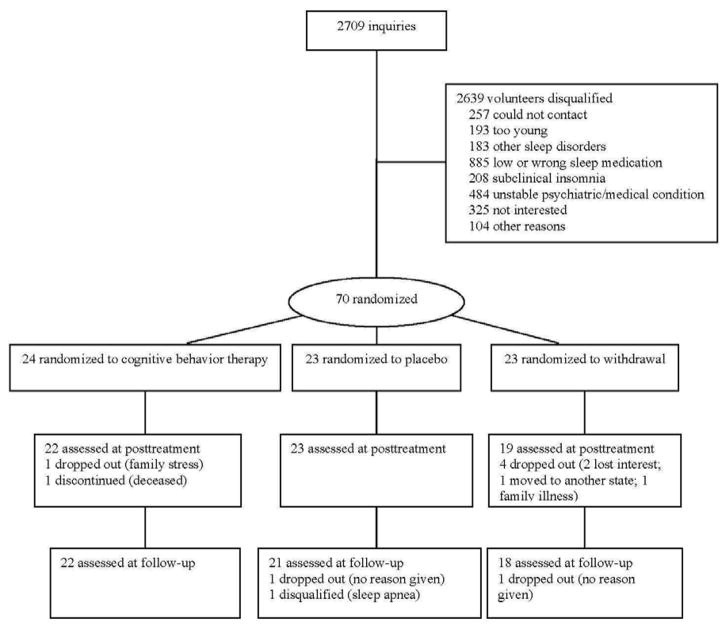
Method: Seventy volunteers age 50 and older were randomized to CBT plus drug withdrawal, placebo biofeedback (PL) plus drug withdrawal, or drug withdrawal (MED) only. The CBT and PL groups received eight, 45 min weekly treatment sessions. The drug withdrawal protocol comprised slow tapering monitored with about six biweekly, 30 min sessions. Assessment including polysomnography (PSG), sleep diaries, hypnotic consumption, daytime functioning questionnaires, and drug screens collected at baseline, posttreatment, and 1-year follow-up.
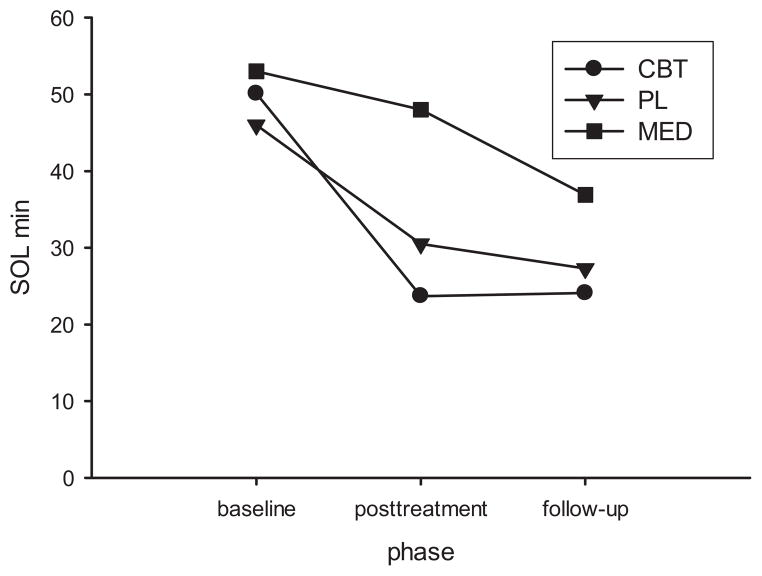
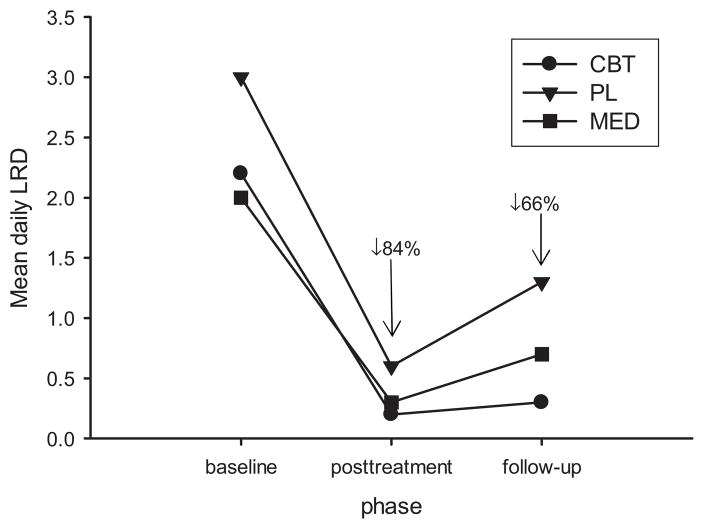
Results: Only the CBT group showed significant sleep diary improvement, sleep onset latency significantly decreased at posttreatment. For all sleep diary measures for all groups, including MED, sleep trended to improvement from baseline to follow-up. Most PSG sleep variables did not significantly change. There were no significant between group differences in medication reduction. Compared to baseline, the three groups decreased hypnotic use at posttreatment, down 84%, and follow-up, down 66%. There was no evidence of withdrawal side-effects. Daytime functioning, including anxiety and depression, improved by posttreatment. Rigorous methodological features, including documentation of strong treatment implementation and the presence of a credible placebo, elevated the confidence due these findings.
Conclusions: Gradual drug withdrawal was associated with substantial hypnotic reduction at posttreatment and follow-up, and withdrawal side-effects were absent. When supplemented with CBT, participants accrued incremental self-reported, but not PSG, sleep benefits.
Keywords: Cognitive behavior therapy; Drug withdrawal; Hypnotic dependence; Insomnia.
Copyright © 2013 Elsevier Ltd. All rights reserved.
Figures
References
-
- Agnew HW, Jr, Webb WB, Williams RL. The first night effect: An EEG study of sleep. Psychophysiology. 1966;2:263–266. - PubMed
-
- American Psychiatric Association. Diagnostic and statistical manual of mental disorders. 4. Washington, DC: Author; 1994.
-
- American Sleep Disorders Association. International classification of sleep disorders: Diagnostic and coding manual, revised. Rochester, MN: Author; 1997.
-
- Ashton H. Guidelines for the rational use of benzodiazepines: When and what to use. Drugs. 1994;48:25–40. - PubMed
-
- Baillargeon L, Landreville P, Verreault R, Beauchemin JP, Grégoire JP, Morin CM. Discontinuation of benzodiazepines among older insomniac adults treated with cognitive-behavioural therapy combined with gradual tapering: a randomized trial. Canadian Medical Association Journal. 2003;169:1015–1020. - PMC - PubMed
Publication types
MeSH terms
Substances
Grants and funding
LinkOut - more resources
Full Text Sources
Other Literature Sources
Medical
