


Whole-genome and whole-exome sequencing of bladder cancer identifies frequent alterations in genes involved in sister chromatid cohesion and segregation
- PMID: 24121792
- PMCID: PMC7512009
- DOI: 10.1038/ng.2798
Whole-genome and whole-exome sequencing of bladder cancer identifies frequent alterations in genes involved in sister chromatid cohesion and segregation
Abstract
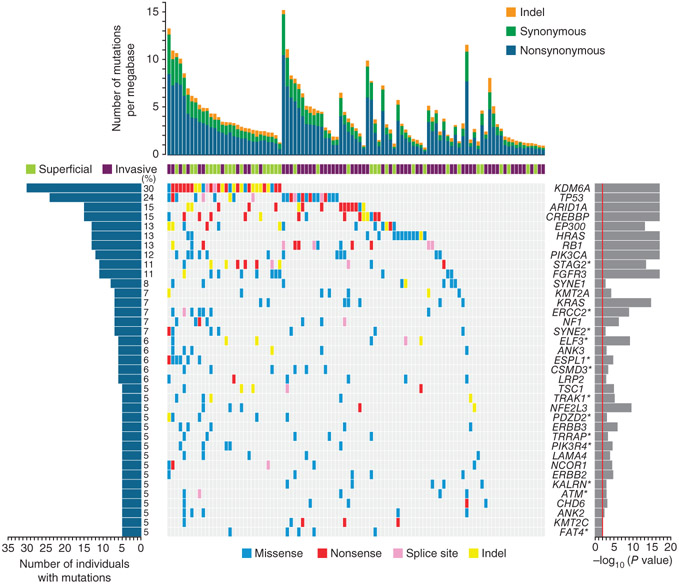
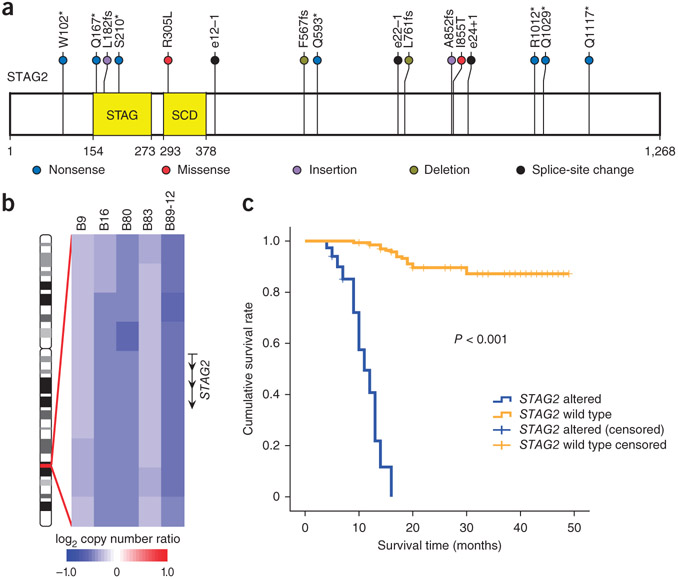
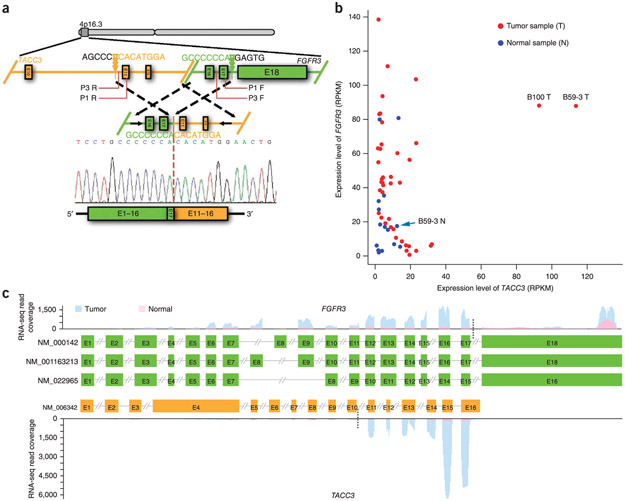
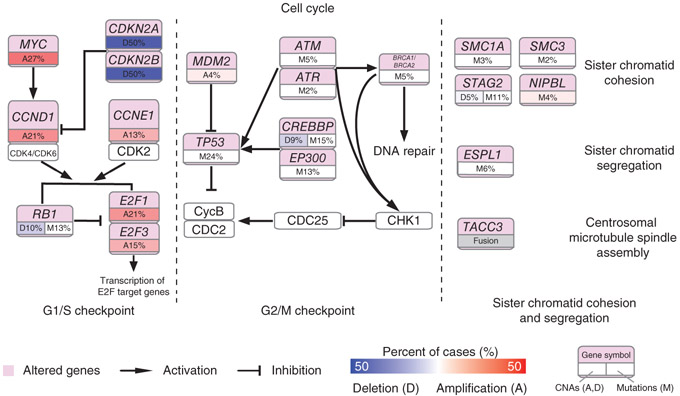
Bladder cancer is one of the most common cancers worldwide, with transitional cell carcinoma (TCC) being the predominant form. Here we report a genomic analysis of TCC by both whole-genome and whole-exome sequencing of 99 individuals with TCC. Beyond confirming recurrent mutations in genes previously identified as being mutated in TCC, we identified additional altered genes and pathways that were implicated in TCC. Notably, we discovered frequent alterations in STAG2 and ESPL1, two genes involved in the sister chromatid cohesion and segregation (SCCS) process. Furthermore, we also detected a recurrent fusion involving FGFR3 and TACC3, another component of SCCS, by transcriptome sequencing of 42 DNA-sequenced tumors. Overall, 32 of the 99 tumors (32%) harbored genetic alterations in the SCCS process. Our analysis provides evidence that genetic alterations affecting the SCCS process may be involved in bladder tumorigenesis and identifies a new therapeutic possibility for bladder cancer.
Figures
Comment in
-
Bladder cancer: STAG2 in the spotlight--have genomic studies identified a plausible biomarker?Nat Rev Urol. 2013 Dec;10(12):675. doi: 10.1038/nrurol.2013.253. Epub 2013 Nov 5. Nat Rev Urol. 2013. PMID: 24189933 No abstract available.
-
Frequent truncating mutations of STAG2 in bladder cancer.Urology. 2014 Apr;83(4):691-2. doi: 10.1016/j.urology.2013.11.027. Epub 2014 Jan 31. Urology. 2014. PMID: 24486001 No abstract available.
-
Re: whole-genome and whole-exome sequencing of bladder cancer identifies frequent alterations in genes involved in sister chromatid cohesion and segregation.Eur Urol. 2015 Feb;67(2):350-1. doi: 10.1016/j.eururo.2014.11.021. Eur Urol. 2015. PMID: 25760253 No abstract available.
References
-
- Jemal A et al. Global cancer statistics. CA Cancer J. Clin. 61, 69–90 (2011). - PubMed
-
- Wu XR Urothelial tumorigenesis: a tale of divergent pathways. Nat. Rev. Cancer 5, 713–725 (2005). - PubMed
-
- Cordon-Cardo C et al. p53 mutations in human bladder cancer: genotypic versus phenotypic patterns. Int. J. Cancer 56, 347–353 (1994). - PubMed
-
- Jebar AH et al. FGFR3 and Ras gene mutations are mutually exclusive genetic events in urothelial cell carcinoma. Oncogene 24, 5218–5225 (2005). - PubMed
Publication types
MeSH terms
Associated data
Grants and funding
LinkOut - more resources
Full Text Sources
Other Literature Sources
Medical
