doi: 10.1158/2159-8290.CD-13-0506.
Are short telomeres predictive of advanced cancer?
Affiliations
- PMID: 24124228
- PMCID: PMC4163052
- DOI: 10.1158/2159-8290.CD-13-0506
Item in Clipboard
Are short telomeres predictive of advanced cancer?
Cancer Discov.
2013 Oct.
Abstract
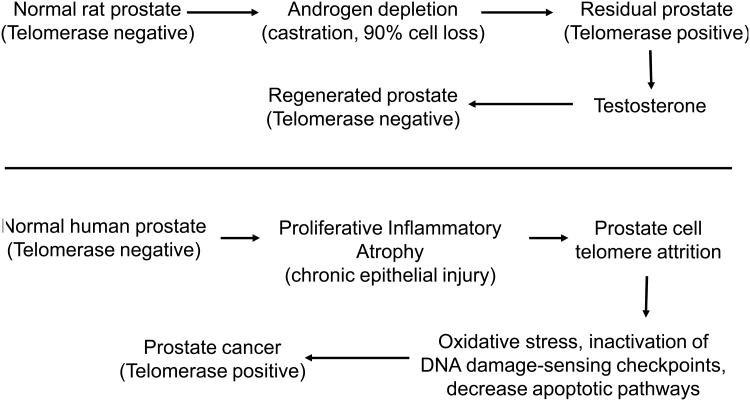
The combination of variable telomere length in cancer cells and shorter telomere length in cancer-associated stromal cells strongly correlates with progression to prostate cancer metastasis and cancer death. The implication is that telomere length measurements have potential not only as prognostic indicators of prostate cancer outcomes but also as risk stratification enrichment biomarkers for individualized therapeutic interventions.
©2013 AACR.
Figures
References
-
- Kim NW, Harley CB, Prowse KR, Weinrich SL, Piatyszek MA, et al. Telomeres, telomerase and cancer. Science. 1995;268:1115–17.
-
- Willeit P, Willeit J, Mayr A, Weger S, Oberhollenzer F, Brandstätter A, et al. Telomere length and risk of incident cancer and cancer mortality. JAMA. 2010;304(1):69–75. - PubMed
Publication types
MeSH terms
Substances
Grants and funding
LinkOut - more resources
Full Text Sources
Other Literature Sources
Medical