


ASPP2 suppresses squamous cell carcinoma via RelA/p65-mediated repression of p63
- PMID: 24127607
- PMCID: PMC3816480
- DOI: 10.1073/pnas.1309362110
ASPP2 suppresses squamous cell carcinoma via RelA/p65-mediated repression of p63
Abstract
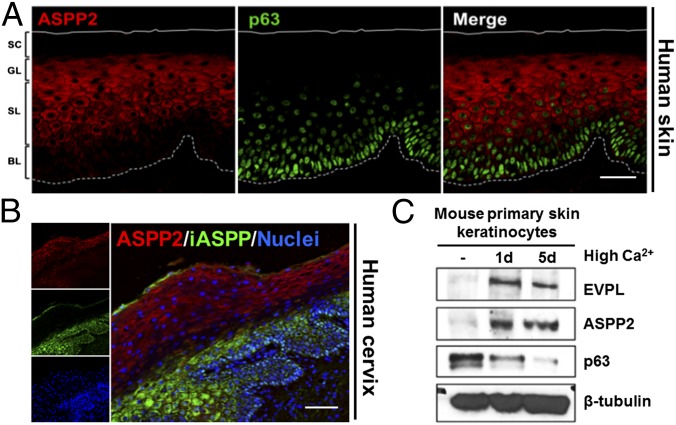
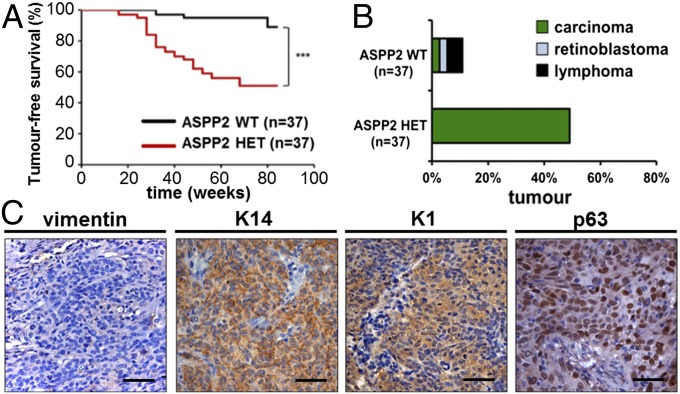
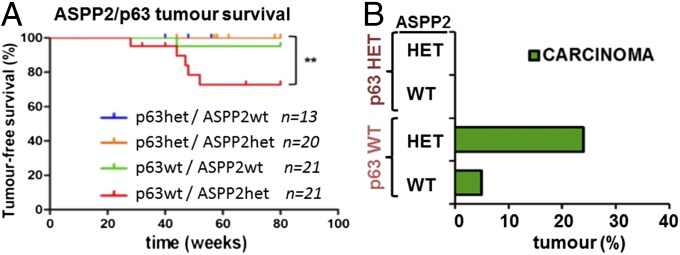
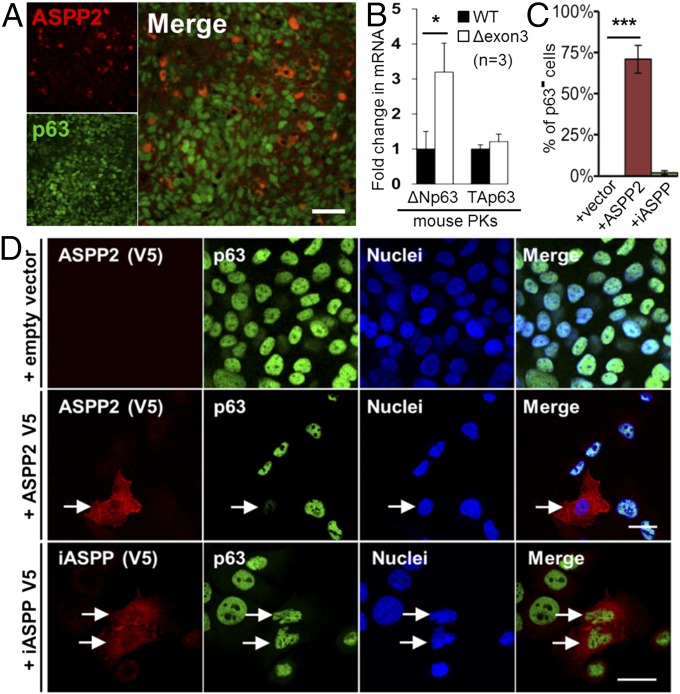
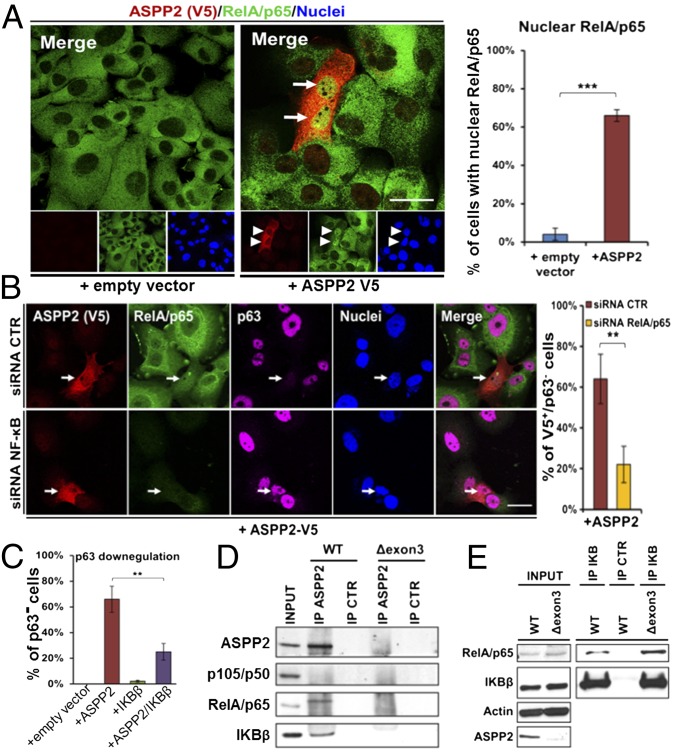
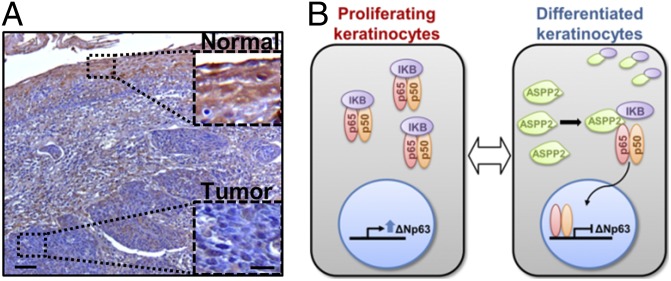
Squamous cell carcinoma (SCC) is highly malignant and refractory to therapy. The majority of existing mouse SCC models involve multiple gene mutations. Very few mouse models of spontaneous SCC have been generated by a single gene deletion. Here we report a haploinsufficient SCC mouse model in which exon 3 of the Tp53BP2 gene (a p53 binding protein) was deleted in one allele in a BALB/c genetic background. Tp53BP2 encodes ASPP2 (ankyrin repeats, SH3 domain and protein rich region containing protein 2). Keratinocyte differentiation induces ASPP2 and its expression is inversely correlated with p63 protein in vitro and in vivo. Up-regulation of p63 expression is required for ASPP2(Δexon3/+) BALB/c mice to develop SCC, as heterozygosity of p63 but not p53 prevents them from developing it. Mechanistically, ASPP2 inhibits ΔNp63 expression through its ability to bind IκB and enhance nuclear Rel/A p65, a component of the NF-κB transcription complex, which mediates the repression of p63. Reduced ASPP2 expression associates with tumor metastasis and increased p63 expression in human head and neck SCCs. This study identifies ASPP2 as a tumor suppressor that suppresses SCC via inflammatory signaling through NF-κB-mediated repression of p63.
Keywords: T53BP2; inflammation; stratified epithelial cell tumor.
Conflict of interest statement
The authors declare no conflict of interest.
Figures
References
-
- Quintanilla M, Brown K, Ramsden M, Balmain A. Carcinogen-specific mutation and amplification of Ha-ras during mouse skin carcinogenesis. Nature. 1986;322(6074):78–80. - PubMed
-
- Vitale-Cross L, Amornphimoltham P, Fisher G, Molinolo AA, Gutkind JS. Conditional expression of K-ras in an epithelial compartment that includes the stem cells is sufficient to promote squamous cell carcinogenesis. Cancer Res. 2004;64(24):8804–8807. - PubMed
-
- Kemp CJ, Donehower LA, Bradley A, Balmain A. Reduction of p53 gene dosage does not increase initiation or promotion but enhances malignant progression of chemically induced skin tumors. Cell. 1993;74(5):813–822. - PubMed
-
- Martínez-Cruz AB, et al. Spontaneous squamous cell carcinoma induced by the somatic inactivation of retinoblastoma and Trp53 tumor suppressors. Cancer Res. 2008;68(3):683–692. - PubMed
-
- Qiao W, et al. Hair follicle defects and squamous cell carcinoma formation in Smad4 conditional knockout mouse skin. Oncogene. 2006;25(2):207–217. - PubMed
Publication types
MeSH terms
Substances
Grants and funding
LinkOut - more resources
Full Text Sources
Other Literature Sources
Molecular Biology Databases
Research Materials
Miscellaneous
