


Molecular epidemiology of Staphylococcus aureus in households of children with community-associated S aureus skin and soft tissue infections
- PMID: 24128648
- PMCID: PMC3921902
- DOI: 10.1016/j.jpeds.2013.08.072
Molecular epidemiology of Staphylococcus aureus in households of children with community-associated S aureus skin and soft tissue infections
Abstract
Objectives: Although colonization traditionally is considered a risk factor for Staphylococcus aureus infection, the relationship between contemporary S aureus colonization and infection is not well characterized. We aimed to relate the presence of colonizing and disease-causing strains of S aureus within individuals and households.
Study design: In a prospective study of 163 pediatric outpatients (cases) with community-associated S aureus skin and soft tissue infections in St Louis, infection isolates were obtained from cases and colonization cultures were obtained from cases and their household contacts (n = 562). Molecular typing by repetitive sequence-based polymerase chain reaction was used to compare infecting and colonizing isolates within each case. The infecting strain from each case was compared with S aureus strains colonizing household contacts. The colonization status of cases was followed for 12 months.
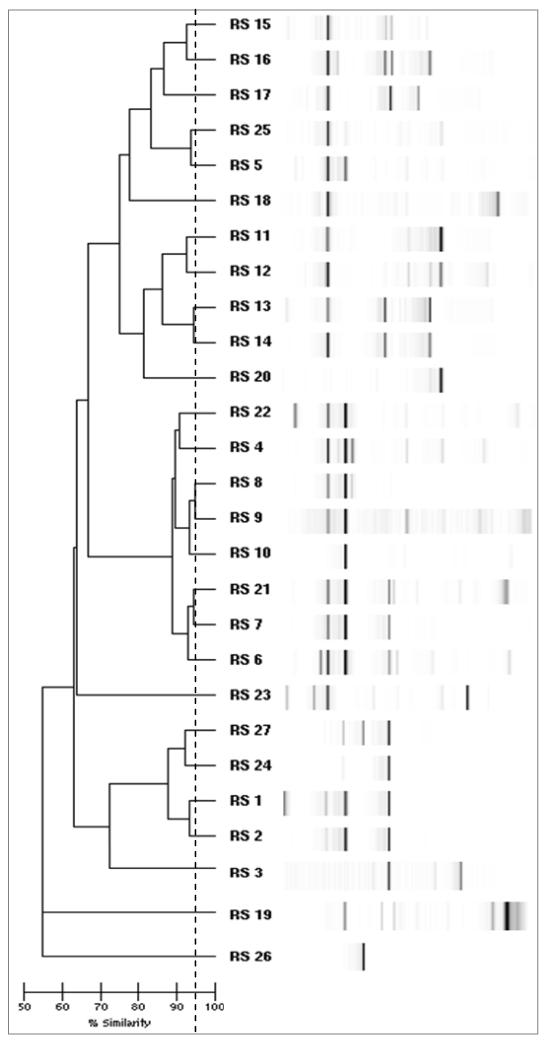
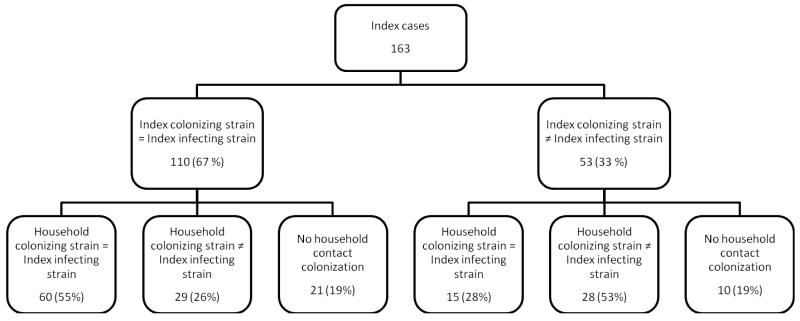
Results: A total of 27 distinct strain types were identified among the 1299 S aureus isolates evaluated. Between 1 and 6 distinct strain types were detected per household. A total of 110 cases (67%) were colonized at 1 or more body sites with the infecting strain. Of the 53 cases with an infecting strain that did not match a colonizing strain, 15 (28%) had 1 or more household contacts with a colonizing strain that matched the infecting strain. Intrafamilial strain-relatedness was observed in 105 families (64%).
Conclusion: One-third of cases were colonized with a different strain type than the strain causing the skin and soft tissue infection. Fewer than one-third of cases with discordant infecting and colonizing isolates could be linked to the strain from another household contact, suggesting acquisition from sources outside the household.
Keywords: CA; Community-associated; MRSA; MSSA; Methicillin-resistant Staphylococcus aureus; Methicillin-susceptible Staphylococcus aureus; PFGE; Pulsed-field gel electrophoresis; Repetitive sequence-based polymerase chain reaction; SSTI; Skin and soft tissue infection; repPCR.
Published by Mosby, Inc.
Figures
References
-
- Daum RS. Clinical practice. Skin and soft-tissue infections caused by methicillin-resistant Staphylococcus aureus. N Engl J Med. 2007;357:380–90. - PubMed
-
- Liu C, Bayer A, Cosgrove SE, Daum RS, Fridkin SK, Gorwitz RJ, et al. Clinical practice guidelines by the infectious diseases society of america for the treatment of methicillin-resistant Staphylococcus aureus infections in adults and children: executive summary. Clin Infect Dis. 2011;52:285–92. - PubMed
-
- Kaplan SL, Hulten KG, Gonzalez BE, Hammerman WA, Lamberth L, Versalovic J, et al. Three-year surveillance of community-acquired Staphylococcus aureus infections in children. Clin Infect Dis. 2005;40:1785–91. - PubMed
-
- Lina G, Piemont Y, Godail-Gamot F, Bes M, Peter MO, Gauduchon V, et al. Involvement of Panton-Valentine leukocidin-producing Staphylococcus aureus in primary skin infections and pneumonia. Clin Infect Dis. 1999;29:1128–32. - PubMed
Publication types
MeSH terms
Substances
Grants and funding
LinkOut - more resources
Full Text Sources
Other Literature Sources
Medical
