


Neural processing of intentional biological motion in unaffected siblings of children with autism spectrum disorder: an fMRI study
- PMID: 24128657
- PMCID: PMC3869032
- DOI: 10.1016/j.bandc.2013.09.007
Neural processing of intentional biological motion in unaffected siblings of children with autism spectrum disorder: an fMRI study
Abstract
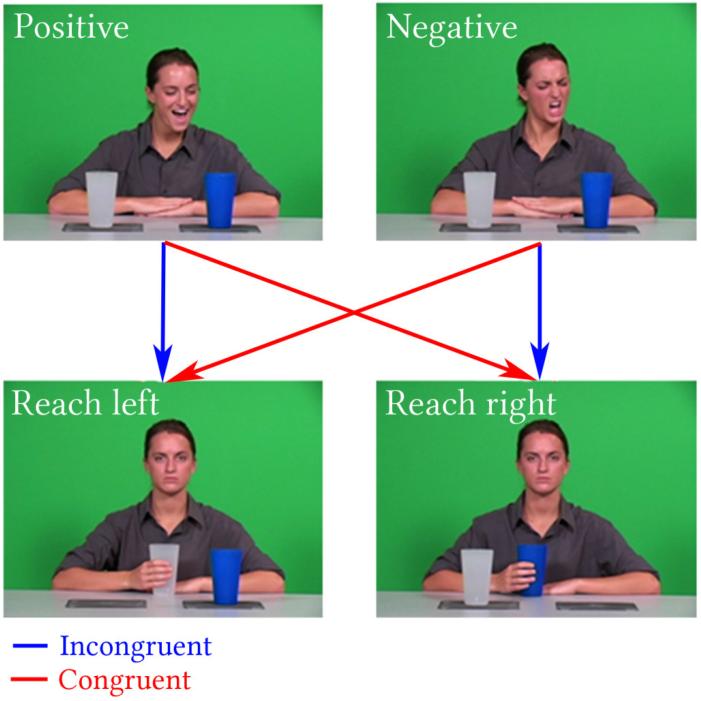
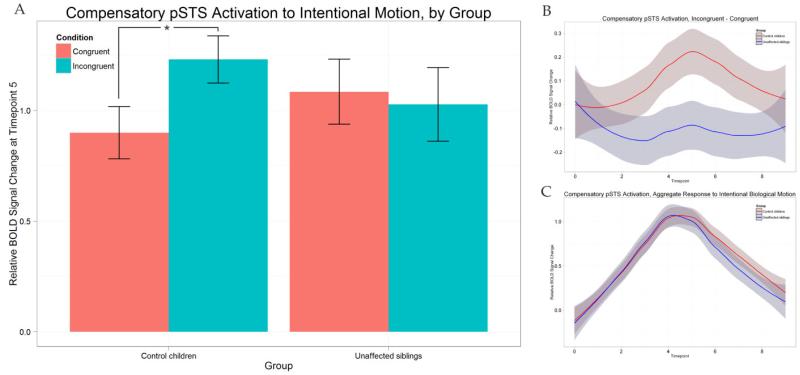
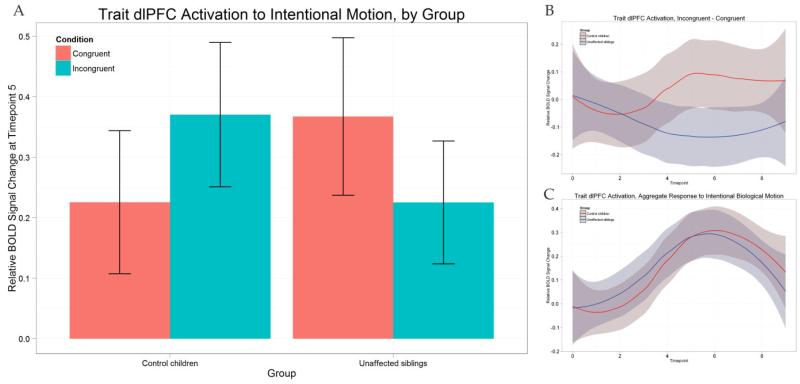
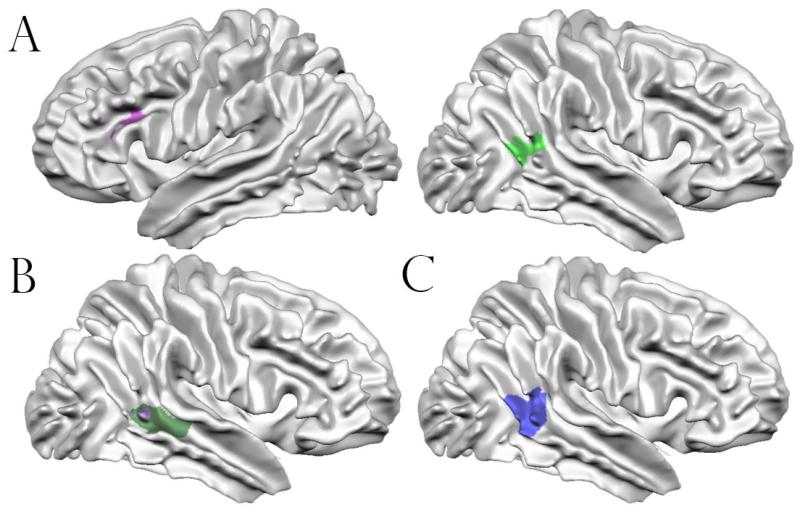
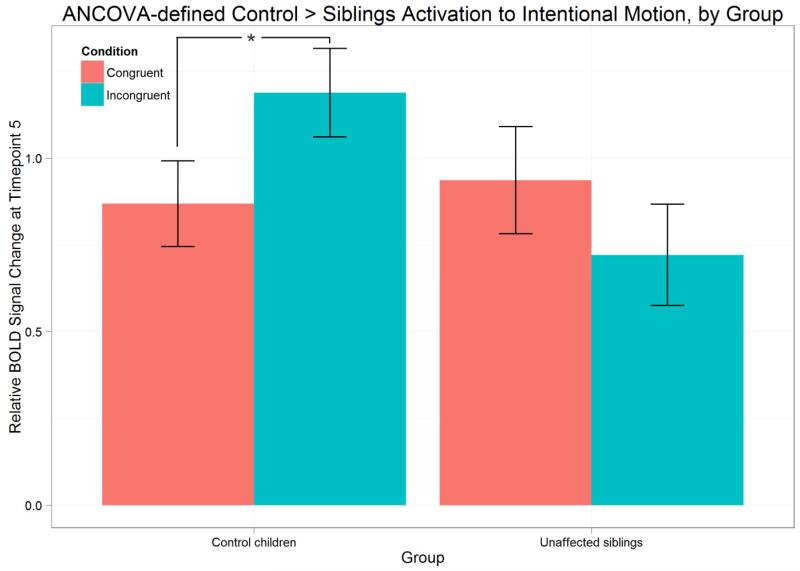
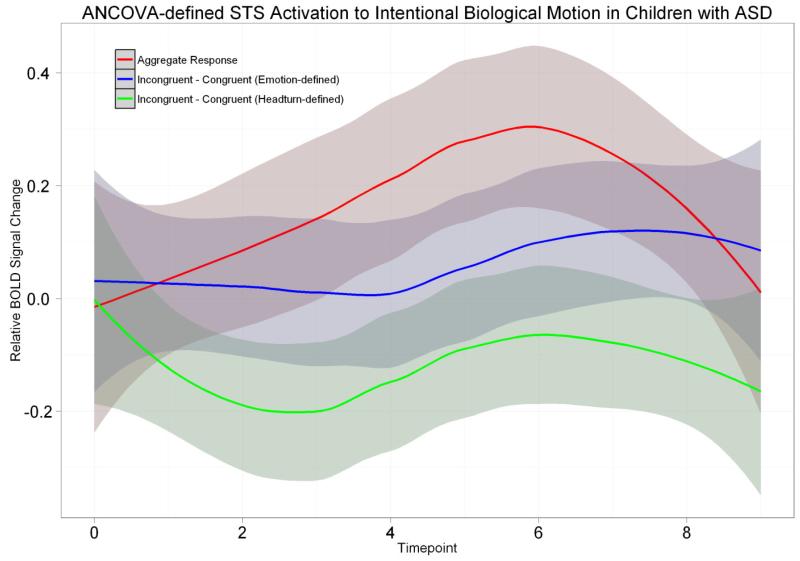
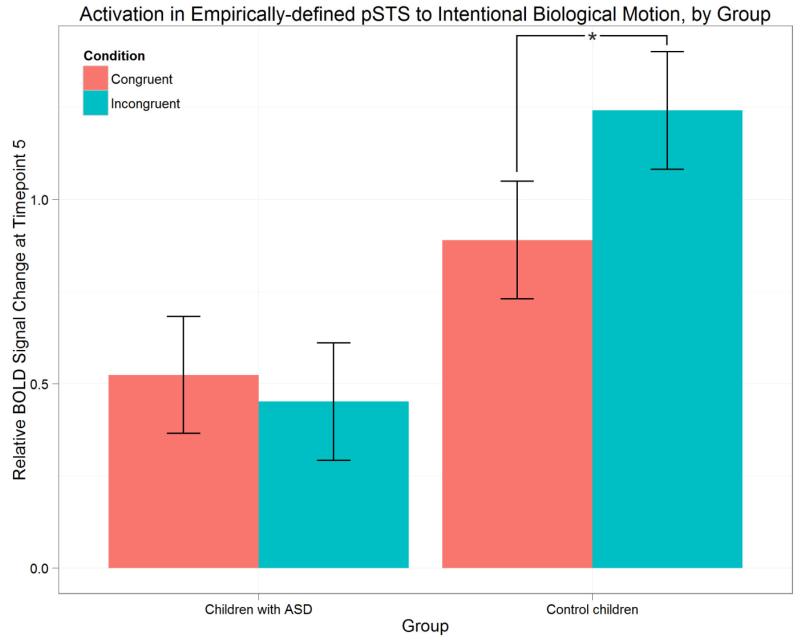
Despite often showing behaviorally typical levels of social cognitive ability, unaffected siblings of children with autism spectrum disorder have been found to show similar functional and morphological deficits within brain regions associated with social processing. They have also been reported to show increased activation to biological motion in these same regions, such as the posterior superior temporal sulcus (pSTS), relative to both children with autism and control children. It has been suggested that this increased activation may represent a compensatory reorganization of these regions as a result of the highly heritable genetic influence of autism. However, the response patterns of unaffected siblings in the domain of action perception are unstudied, and the phenomenon of compensatory activation has not yet been replicated. The present study used functional magnetic resonance imaging to determine the neural responses to intentional biological actions in 22 siblings of children with autism and 22 matched controls. The presented actions were either congruent or incongruent with the actor's emotional cue. Prior studies reported that typically developing children and adults, but not children with autism, show increased activation to incongruent actions (relative to congruent), within the pSTS and dorsolateral prefrontal cortex. We report that unaffected siblings did not show a compensatory response, or a preference for incongruent over congruent trials, in any brain region. Moreover, interaction analyses revealed a sub-region of the pSTS in which control children showed an incongruency preference to a significantly greater degree than siblings, which suggests a localized deficit in siblings. A sample of children with autism also did not show differential activation in the pSTS, providing further evidence that it is an area of selective disruption in children with autism and siblings. While reduced activation to both conditions was unique to the autism sample, lack of differentiation to incongruent and congruent intentional actions was common to both children with ASD and unaffected siblings.
Keywords: ASD; Action perception; Autism; BOLD; CC; Endophenotype; ROI; Superior temporal sulcus; US; autism spectrum disorder; blood oxygen level-dependent; control children; dlPFC; dorsolateral prefrontal cortex; fMRI; pSTS; posterior superior temporal sulcus; region-of-interest; unaffected siblings.
Copyright © 2013 Elsevier Inc. All rights reserved.
Figures
References
-
- Barnea-Goraly N, Lotspeich LJ, Reiss AL. Similar White Matter Aberrations in Children With Autism and Their Unaffected Siblings. Archives of General Psychiatry. 2010;67(10):1052–1060. doi:10.1001/archgenpsychiatry.2010.123. - PubMed
-
- Belmonte MK, Gomot M, Baron-Cohen S. Visual attention in autism families: “unaffected” sibs share atypical frontal activation. Journal of Child Psychology and Psychiatry, and Allied Disciplines. 2010;51(3):259–76. doi:10.1111/j.1469-7610.2009.02153.x. - PubMed
-
- Constantino JN, Todd RD. Autistic traits in the general population: a twin study. Archives of General Psychiatry. 2003;60(5):524–30. - PubMed
Publication types
MeSH terms
Grants and funding
LinkOut - more resources
Full Text Sources
Other Literature Sources
