Gentamicin in bone cement: A potentially more effective prophylactic measure of infectionin joint arthroplasty
- PMID: 24128666
- PMCID: PMC3809714
- DOI: 10.1302/2046-3758.210.2000188
Gentamicin in bone cement: A potentially more effective prophylactic measure of infectionin joint arthroplasty
Abstract
Objectives: The objective of this study is to determine an optimal antibiotic-loaded bone cement (ALBC) for infection prophylaxis in total joint arthroplasty (TJA).
Methods: We evaluated the antibacterial effects of polymethylmethacrylate (PMMA) bone cements loaded with vancomycin, teicoplanin, ceftazidime, imipenem, piperacillin, gentamicin, and tobramycin against methicillin-sensitive Staphylococcus aureus (MSSA), methicillin-resistant Staph. aureus (MRSA), coagulase-negative staphylococci (CoNS), Escherichia coli, Pseudomonas aeruginosa, and Klebsiella pneumoniae. Standardised cement specimens made from 40 g PMMA loaded with 1 g antibiotics were tested for elution characteristics, antibacterial activities, and compressive strength in vitro.
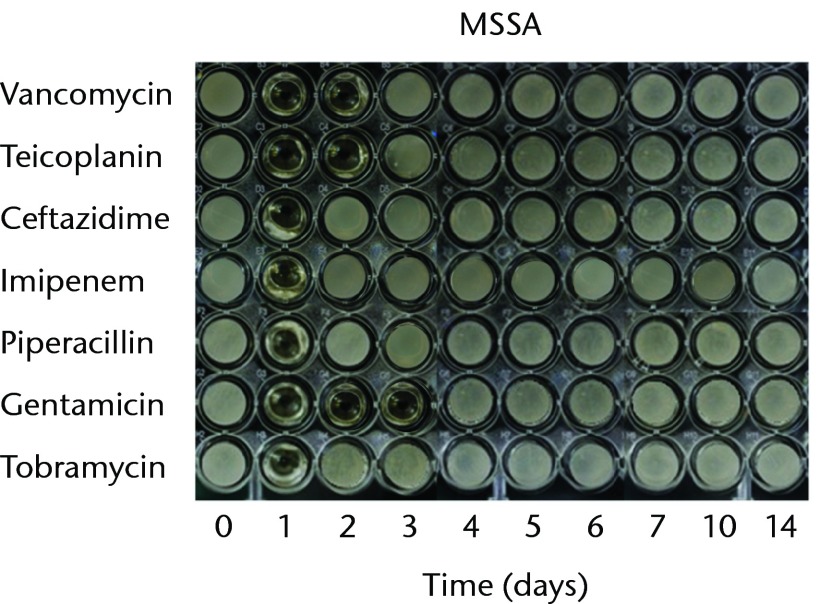
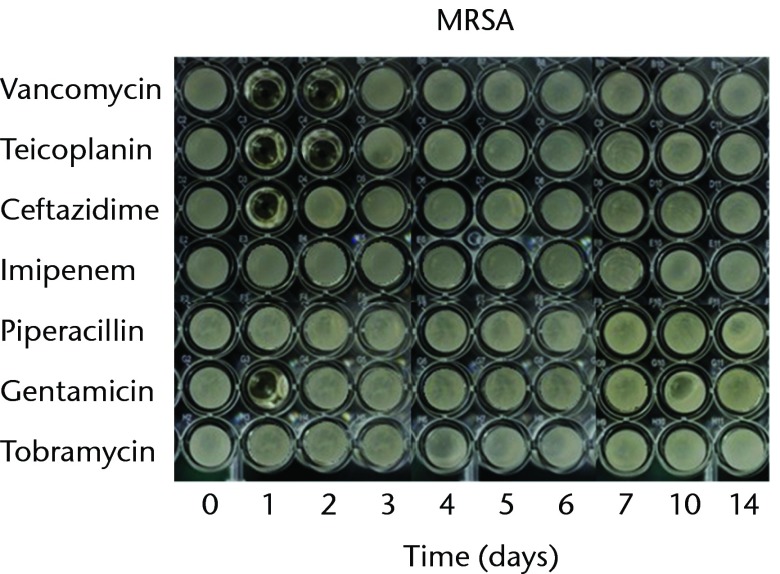
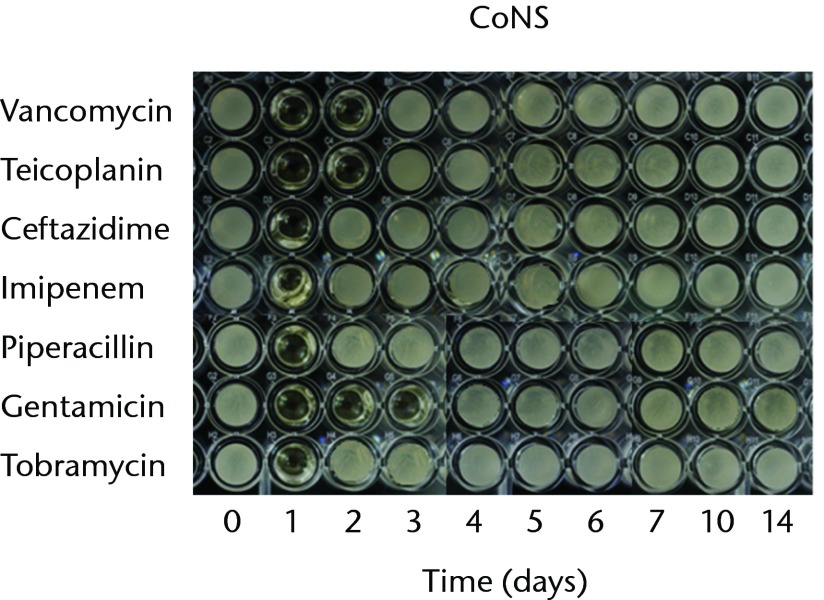
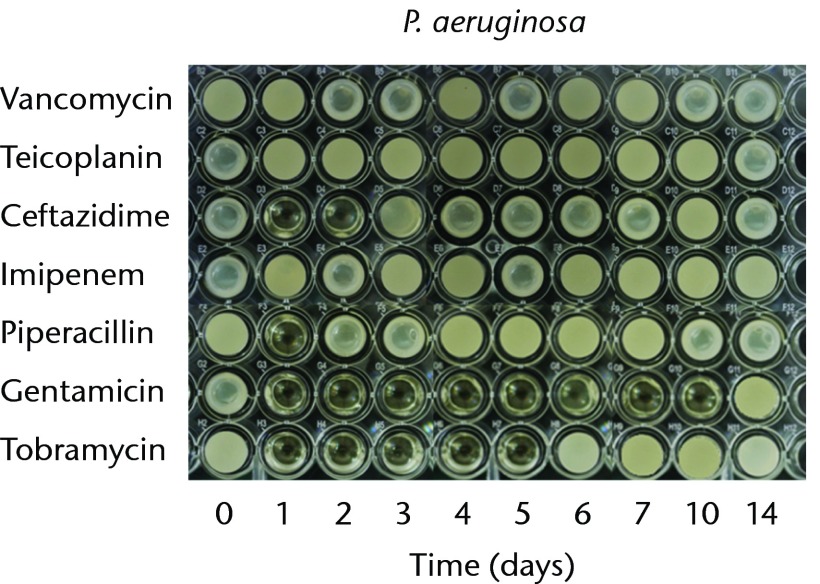
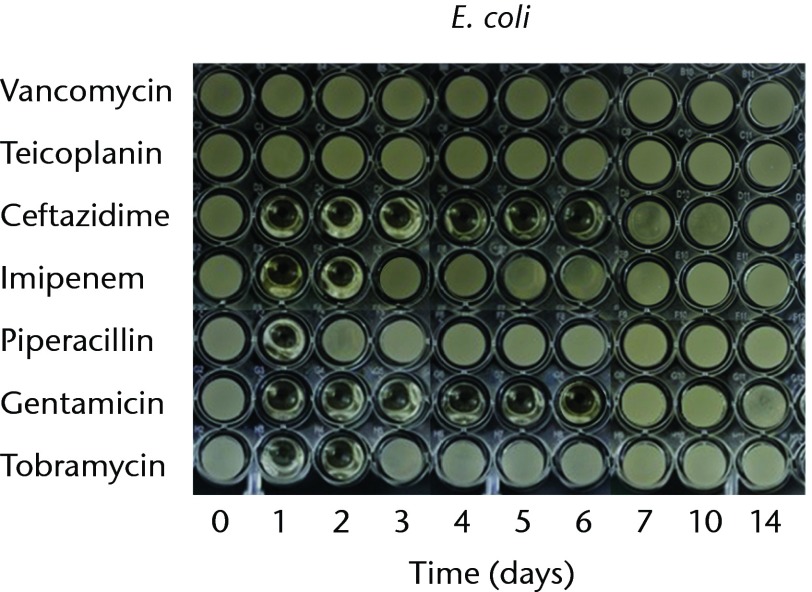
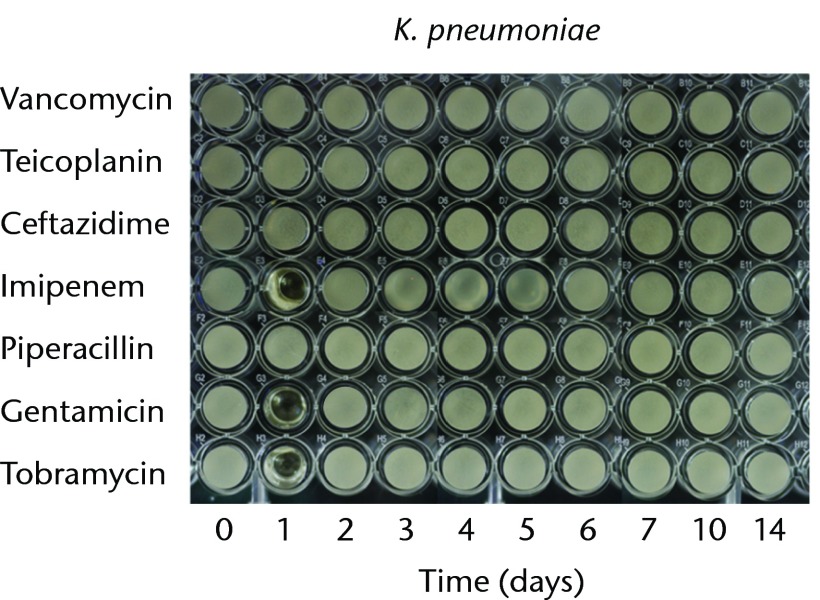
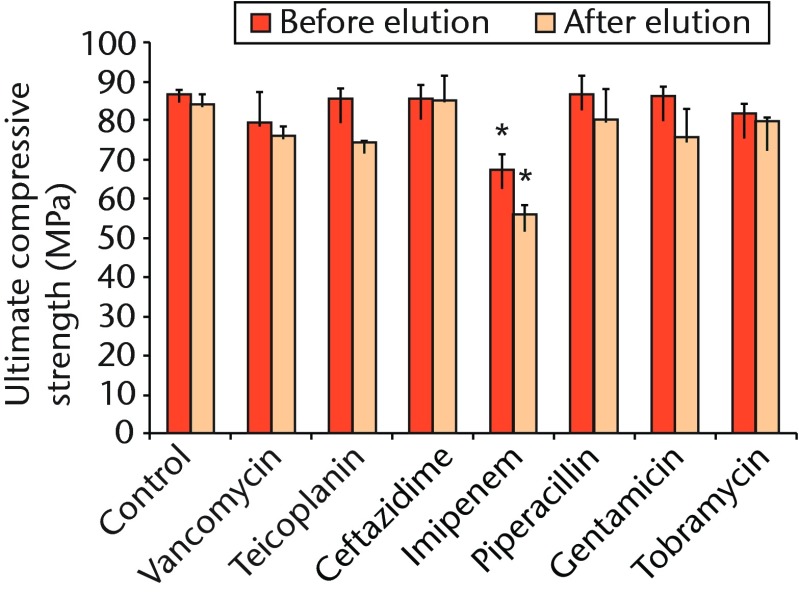
Results: The ALBC containing gentamicin provided a much longer duration of antibiotic release than those containing other antibiotic. Imipenem-loading on the cement had a significant adverse effect on the compressive strength of the ALBC, which made it insufficient for use in prosthesis fixation. All of the tested antibiotics maintained their antibacterial properties after being mixed with PMMA. The gentamicin-loaded ALBC provided a broad antibacterial spectrum against all the test organisms and had the greatest duration of antibacterial activity against MSSA, CoNS, P. aeruginosa and E. coli.
Conclusion: When considering the use of ALBC as infection prophylaxis in TJA, gentamicin-loaded ALBC may be a very effective choice. Cite this article: Bone Joint Res 2013;2:220-6.
Keywords: Arthroplasty; Bone cement; Gentamicin; Infection; Peri-prosthetic joint infection.
Conflict of interest statement
Figures
References
-
- Norden CW. Prevention of bone and joint infections. Am J Med 1985;78:229–232 - PubMed
-
- Hill C, Flamant R, Mazas F, Evrard J. Prophylactic cefazolin versus placebo in total hip replacement: report of a multicentre double-blind randomised trial. Lancet 1981;1:795–796 - PubMed
-
- Josefsson G, Gudmundsson G, Kolmert L, Wijkström S. Prophylaxis with systemic antibiotics versus gentamicin bone cement in total hip arthroplasty: a five-year survey of 1688 hips. Clin Orthop Relat Res 1990;253:173–178 - PubMed
-
- Chiu FY, Chen CM, Lin CF, Lo WH. Cefuroxime-impregnated cement in primary total knee arthroplasty: a prospective, randomized study of three hundred and forty knees. J Bone Joint Surg [Am] 2002;84-A:759–762 - PubMed
-
- Chiu FY, Lin CF, Chen CM, Lo WH, Chaung TY. Cefuroxime-impregnated cement at primary total knee arthroplasty in diabetes mellitus: a prospective, randomised study. J Bone Joint Surg [Br] 2001;83-A:691–695 - PubMed
LinkOut - more resources
Full Text Sources
Other Literature Sources