


Inhibition of melanogenesis by gallic acid: possible involvement of the PI3K/Akt, MEK/ERK and Wnt/β-catenin signaling pathways in B16F10 cells
- PMID: 24129178
- PMCID: PMC3821624
- DOI: 10.3390/ijms141020443
Inhibition of melanogenesis by gallic acid: possible involvement of the PI3K/Akt, MEK/ERK and Wnt/β-catenin signaling pathways in B16F10 cells
Abstract
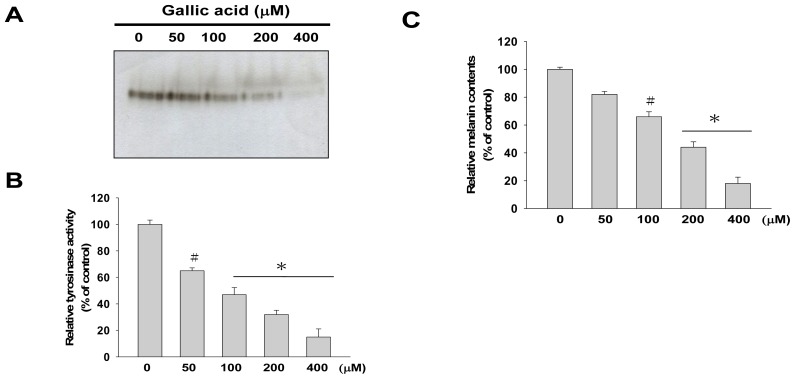
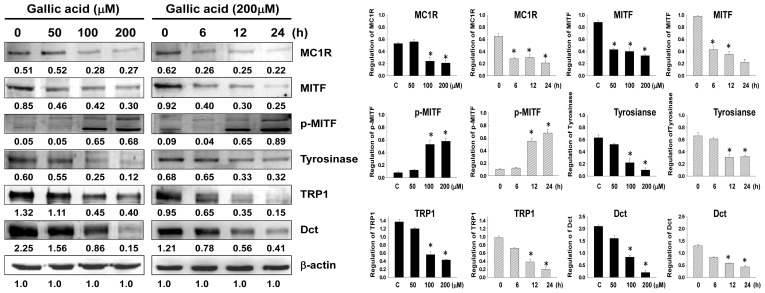
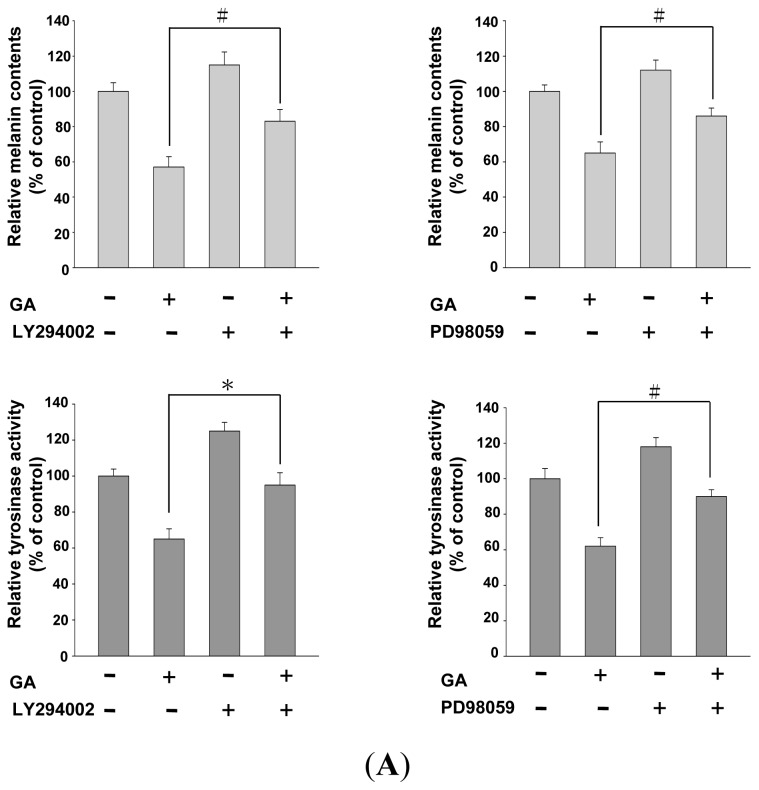
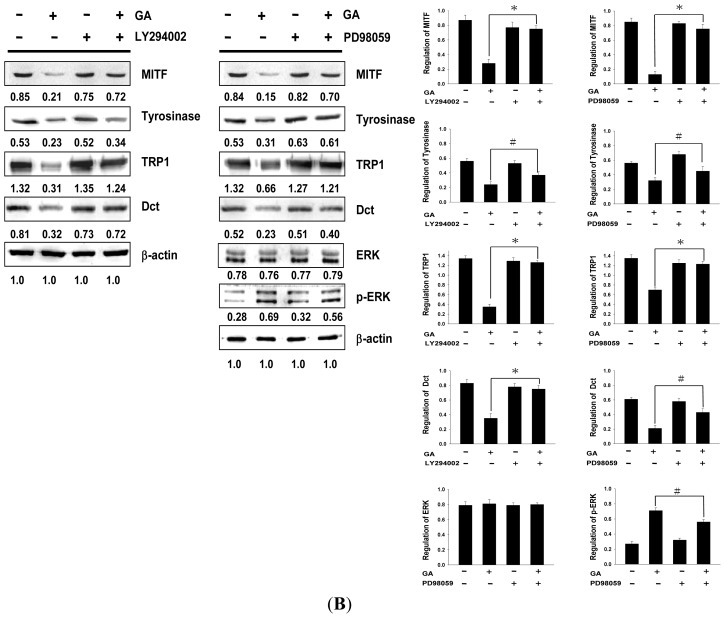
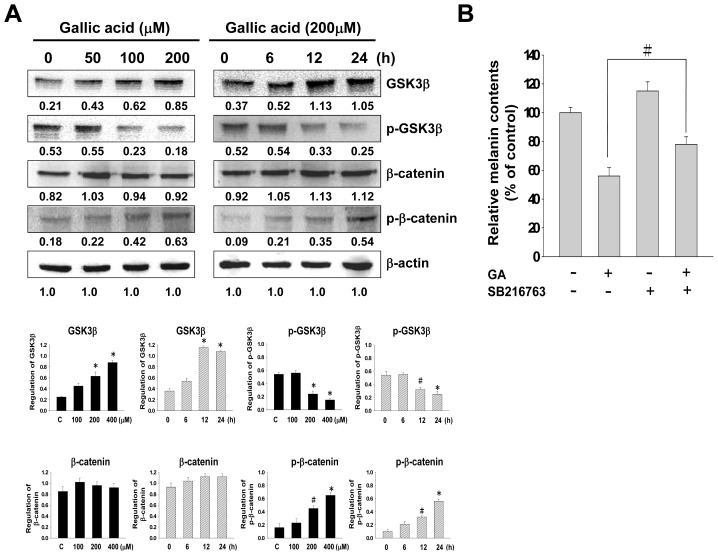
Gallic acid is one of the major flavonoids found in plants. It acts as an antioxidant, and seems to have anti-inflammatory, anti-viral, and anti-cancer properties. In this study, we investigated the effects of gallic acid on melanogenesis, including the activation of melanogenesis signaling pathways. Gallic acid significantly inhibited both melanin synthesis and tyrosinase activity in a dose- and time-dependent manner, and decreased the expression of melanogenesis-related proteins, such as microphthalmia-associated transcription factor (MITF), tyrosinase, tyrosinase-related protein-1 (TRP1), and dopachrome tautomerase (Dct). In addition, gallic acid also acts by phosphorylating and activating melanogenesis inhibitory proteins such as Akt and mitogen-activated protein kinase (MEK)/extracellular signal-regulated kinase (ERK). Using inhibitors against PI3K/Akt (LY294002) or MEK/ERK-specific (PD98059), the hypopigmentation effect was suppressed, and the gallic acid-initiated activation of MEK/ERK and PI3K/Akt was also revoked. Gallic acid also increased GSK3β and p-β-catenin expression but down-regulated p-GSK3β. Moreover, GSK3β-specific inhibitor (SB216763) restored gallic acid-induced melanin reduction. These results suggest that activation of the MEK/ERK, PI3K/Akt, and inhibition of Wnt/β-catenin signaling pathways is involved in the melanogenesis signaling cascade, and that activation by gallic acid reduces melanin synthesis via down-regulation of MITF and its downstream signaling pathway. In conclusion, gallic acid may be a potentially agent for the treatment of certain skin conditions.
Figures

References
-
- Tsatmali M., Ancans J., Thody A.J. Melanocyte function and its control by melanocortin peptides. J. Histochem. Cytochem. 2002;50:125–133. - PubMed
-
- Briganti S., Camera E., Picardo M. Chemical and instrumental approaches to treat hyperpigmentation. Pigment Cell Melanoma Res. 2003;16:101–110. - PubMed
-
- Busca R., Ballotti R. Cyclic AMP a key messenger in the regulation of skin pigmentation. Pigment Cell Res. 2000;13:60–69. - PubMed
Publication types
MeSH terms
Substances
LinkOut - more resources
Full Text Sources
Other Literature Sources
Research Materials
Miscellaneous
