


Two immune faces of pancreatic adenocarcinoma: possible implication for immunotherapy
- PMID: 24129765
- PMCID: PMC11028995
- DOI: 10.1007/s00262-013-1485-8
Two immune faces of pancreatic adenocarcinoma: possible implication for immunotherapy
Abstract
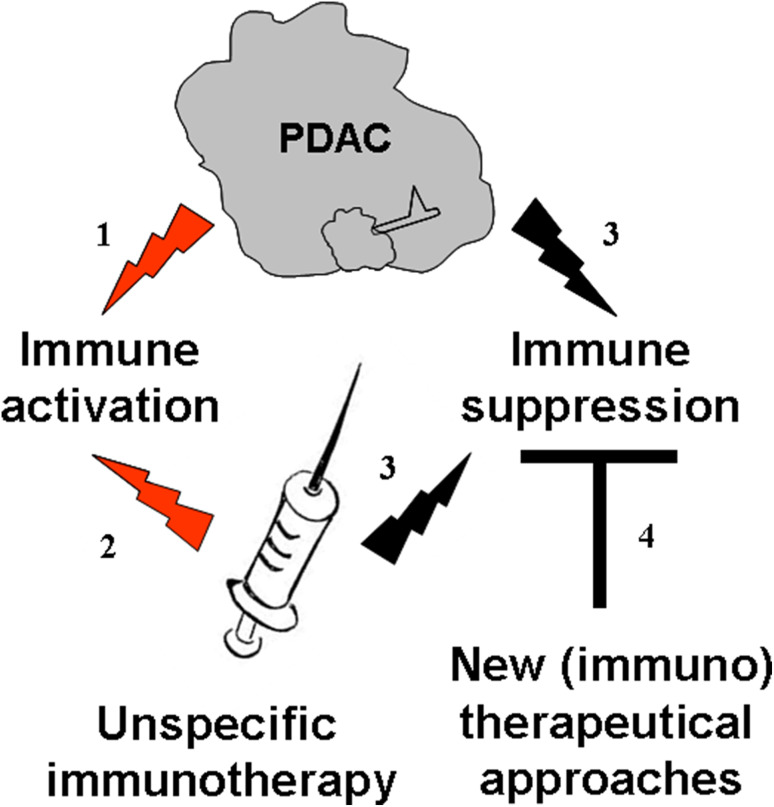
Pancreatic ductal adenocarcinoma (PDAC) is one of the most aggressive human neoplasms, having extremely poor prognosis with a 5-year survival rate of <1 % and a median survival of 6 months. In contrast to other malignancies, pancreatic cancer is highly resistant to chemotherapy and targeted therapy. Therefore, new treatment options are urgently needed to improve the survival of patients with PDAC. Based on our data showing that patients with higher CD8+ T cell tumour infiltration exhibited prolonged overall and disease-free survival compared to patients with lower or without CD8+ T cell tumour infiltration, we suggested that immunotherapy could be a promising treatment option for PDAC. However, clinical data from the chemoradioimmunotherapy with interferon-α (IFN) trial did not point to an improved efficiency of chemoradiation combined with IFN as compared to chemoradiotherapy alone, suggesting an important role of the immune suppression induced by PDAC and/or unspecific immune stimulation. In support of this hypothesis, we found that the PDAC patients and experimental mice had an increased number of regulatory T cells and myeloid-derived suppressor cells. These results allowed us to conclude that PDAC provokes not only an anti-tumour immune response, but also strong immune suppression. Thus, we supposed that new immunotherapeutical strategies should involve not only stimulation of the immune system of PDAC patients, but also exert control over the tumour immune suppressive milieu.
Conflict of interest statement
All authors do not have any conflict of interest.
Figures
References
Publication types
MeSH terms
Substances
LinkOut - more resources
Full Text Sources
Other Literature Sources
Medical
Research Materials
