Correlation between biomechanical responses of posterior sclera and IOP elevations during micro intraocular volume change
- PMID: 24130185
- PMCID: PMC3816617
- DOI: 10.1167/iovs.13-12441
Correlation between biomechanical responses of posterior sclera and IOP elevations during micro intraocular volume change
Abstract
Purpose: This study tested the hypothesis that intraocular pressure (IOP) elevations, induced by controlled increase of intraocular volume, are correlated with the biomechanical responses of the posterior sclera.
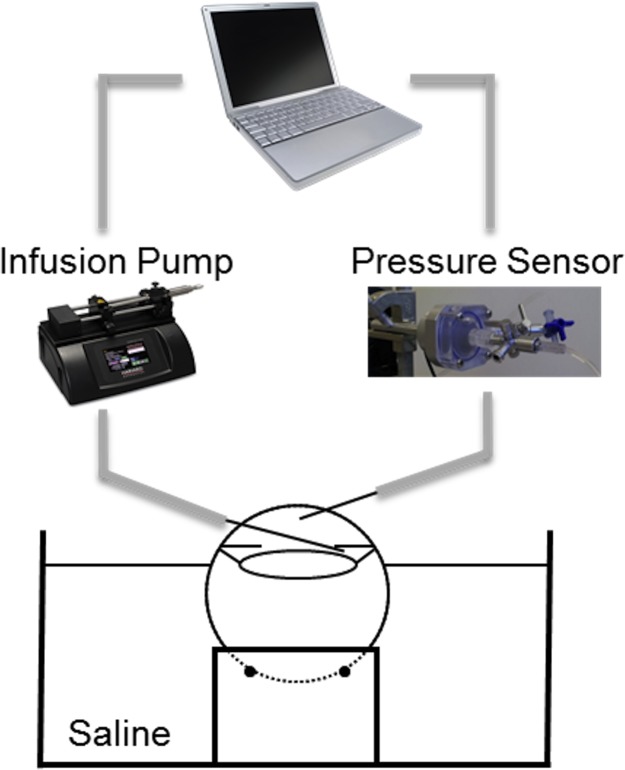
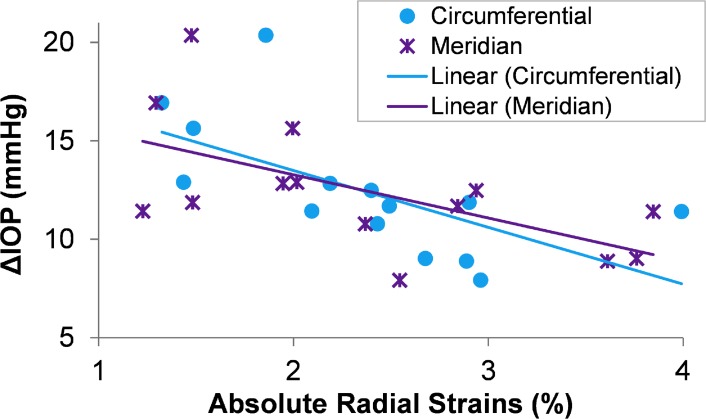
Methods: Porcine globes were tested within 48 hours postmortem. The first group of globes (n = 11) was infused with 15 μL of phosphate-buffered saline at three different rates to investigate rate-dependent IOP elevations. The second group (n = 16) was first infused at the fast rate and then underwent inflation tests to investigate the relationship between IOP elevations (ΔIOP) and scleral strains. The strains in the superotemporal region of the posterior sclera were measured by ultrasound speckle tracking. Linear regression was used to examine the association between ΔIOP due to micro-volumetric infusion and the scleral strains at a specific inflation pressure.
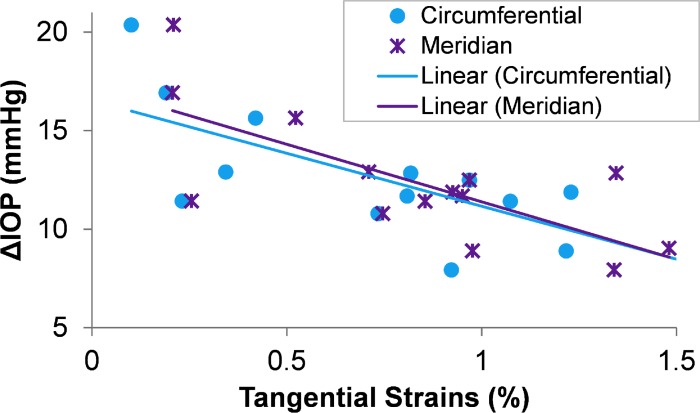
Results: The average ΔIOP was 14.9 ± 4.3 mm Hg for the infusion of 15 μL in 1 second. The ΔIOP was greater for the faster infusion rates but highly correlated across different rates (P < 0.001). A significant negative association was found between the ΔIOP and the tangential strains in both the circumferential (R(2) = 0.54, P = 0.003) and meridian (R(2) = 0.53, P = 0.002) directions in the posterior sclera.
Conclusions: This study showed a substantial increase in IOP, with a large intersubject variance during micro-volumetric change. A stiffer response of the sclera was associated with larger IOP spikes, providing experimental evidence linking corneoscleral biomechanics to IOP fluctuation. In vivo measurement of corneoscleral biomechanics may help better predict the dynamic profile of IOP.
Keywords: IOP fluctuation; glaucoma posterior segment; scleral biomechanics.
Figures


References
-
- Anderson DR, Grant WM. The influence of position on intraocular pressure. Invest Ophthalmol. 1973; 12: 204–212 - PubMed
-
- Coleman DJ, Trokel S. Direct-recorded intraocular pressure variations in a human subject. Arch Ophthalmol. 1969; 82: 637 - PubMed
-
- Weinreb RN, Cook J, Friberg TR. Effect of inverted body position on intraocular pressure. Am J Ophthalmol. 1984; 98: 784–787 - PubMed
Publication types
MeSH terms
Grants and funding
LinkOut - more resources
Full Text Sources
Other Literature Sources