


Comprehensive clinic-pathological characteristics of cervical cancer in southwestern China and the clinical significance of histological type and lymph node metastases in young patients
- PMID: 24130747
- PMCID: PMC3794011
- DOI: 10.1371/journal.pone.0075849
Comprehensive clinic-pathological characteristics of cervical cancer in southwestern China and the clinical significance of histological type and lymph node metastases in young patients
Abstract
Objective: To analyze the clinic-pathological characteristics of women with cervical cancers in southwestern China and discuss the features and prognosis of young patients.
Methods: A retrospective study was performed, which consisted of 1,543 patients diagnosed with cervical cancer and underwent treatment at West China Second University Hospital between November 2005 and December 2010. Among them, 154 young patients with surgical procedures between November 2005 and December 2008 were selected for a 5-year follow-up and prognostic analysis.
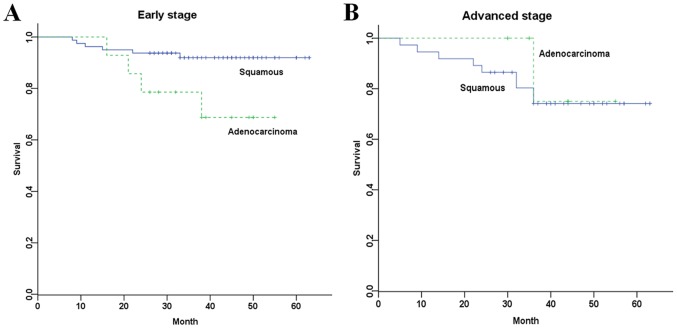
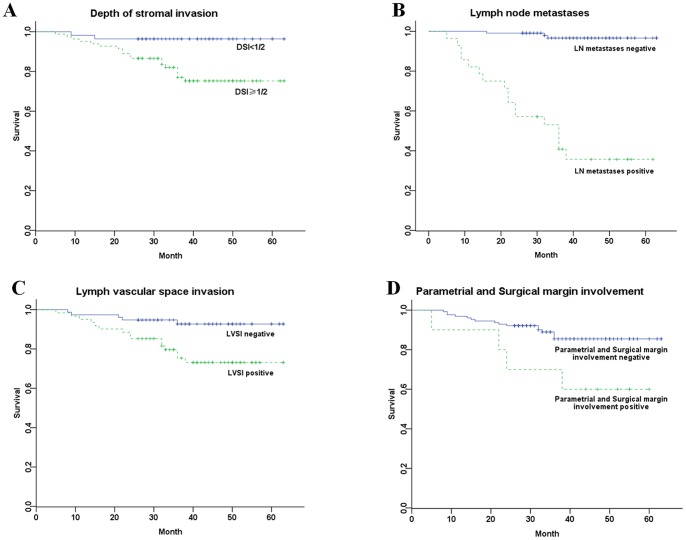
Results: The proportion of advanced FIGO stage in patients aged over 35 years was higher than in patients aged 35 years or younger (55.1% vs 38.8%, P<0.001), and strong correlation was found between FIGO stages and the postoperative pathological risk factors (P<0.05). 312 patients (20.2%) were under 35 years old in the last 5 years. The proportion of cervical adenocarcinoma remained high in young patients (13.6%), and young women with adenocarcinoma had a higher rate of LN metastases, comparing with those with squamous cell carcinoma (42.9% vs 15.8%, P = 0.004). Young patients with adenocarcinoma had shorter progression-free survival than those who had squamous cell carcinoma (P = 0.024). Patients aged 35 years or younger with positive postoperative pathological risk factors had shorter progression-free survival, comparing with those with negative factors (P<0.01).
Conclusion: Patients over 35 years were preliminarily diagnosed as advanced FIGO stage and they were more likely to have deep stromal invasion, LVSI, LN metastases, parametrial and surgical margin involvement. Regarding to young patients, cervical adenocarcinoma increased the risk of LN metastases and positive postoperative pathological risk factors could apparently worsen the prognosis. Histological type and LN metastases were independent prognostic factors for young patients in southwestern China. We re-emphasize the importance of health education and regular smear screening for elder women, and more attention should be paid to young patients with adenocarcinoma or LN metastases.
Conflict of interest statement
Figures
References
-
- Jemal A, Siegel R, Xu J, Ward E (2010) Cancer statistics, 2010. CA Cancer J Clin 60: 277–300. - PubMed
-
- Cao ZY (2010) China Obstetrics and Gynecology 2nd Edition. Beijing: People's Health Press. 2012 p.
-
- Marchiolé P, Buénerd A, Benchaib M, Nezhat K, Dargent D, et al. (2005) Clinical significance of lympho vascular space involvement and lymph node micrometastases in early-stage cervical cancer: a retrospective case-control surgico-pathological study. Gynecol Oncol 97: 725–726. - PubMed
MeSH terms
LinkOut - more resources
Full Text Sources
Other Literature Sources
Medical
