


Prospective study evaluating the radiosensitizing effect of reduced doses of temozolomide in the treatment of Egyptian patients with glioblastoma multiforme
- PMID: 24133376
- PMCID: PMC3797241
- DOI: 10.2147/CMAR.S52147
Prospective study evaluating the radiosensitizing effect of reduced doses of temozolomide in the treatment of Egyptian patients with glioblastoma multiforme
Abstract
Purpose: In view of the documented toxicity of continuous daily radiosensitizer doses of temozolomide concomitant with radiation in the treatment of glioblastoma multiforme, we aimed to compare it with a different schedule of abbreviated radiosensitizer dosing.
Patients and methods: This was a randomized prospective study comparing toxicity and survival in 60 Egyptian patients with glioblastoma multiforme. Patients in arm I received temozolomide at a dose of 75 mg/m(2) daily with radiotherapy for 42 days, starting 4 weeks after surgery and reaching to a total radiation dose of 60 Gy/30 Fractions/6 weeks, while patients in arm II received temozolomide at a dose of 75 mg/m(2) concomitantly with the same radiotherapy schedule daily in the first and last weeks of the same radiotherapy program.
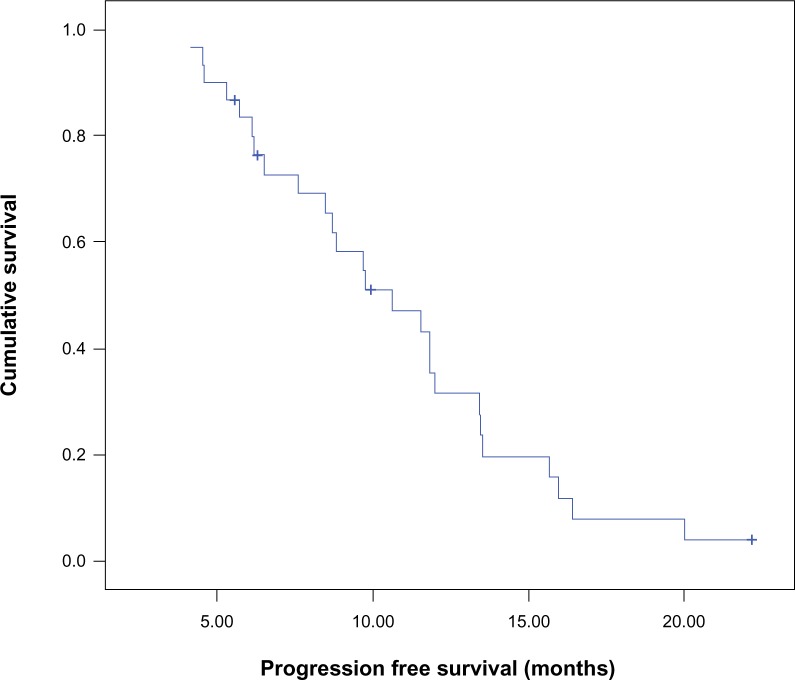
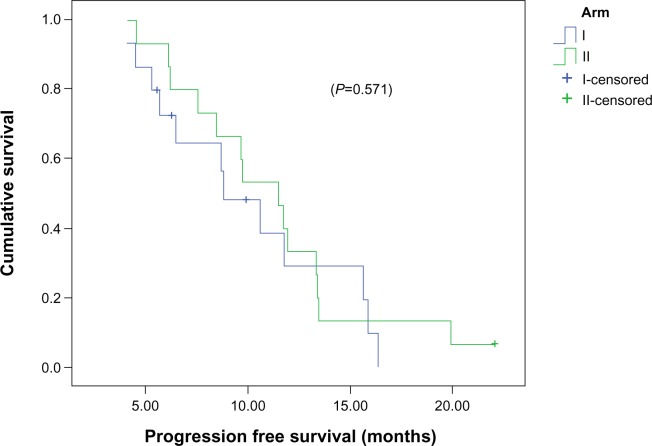
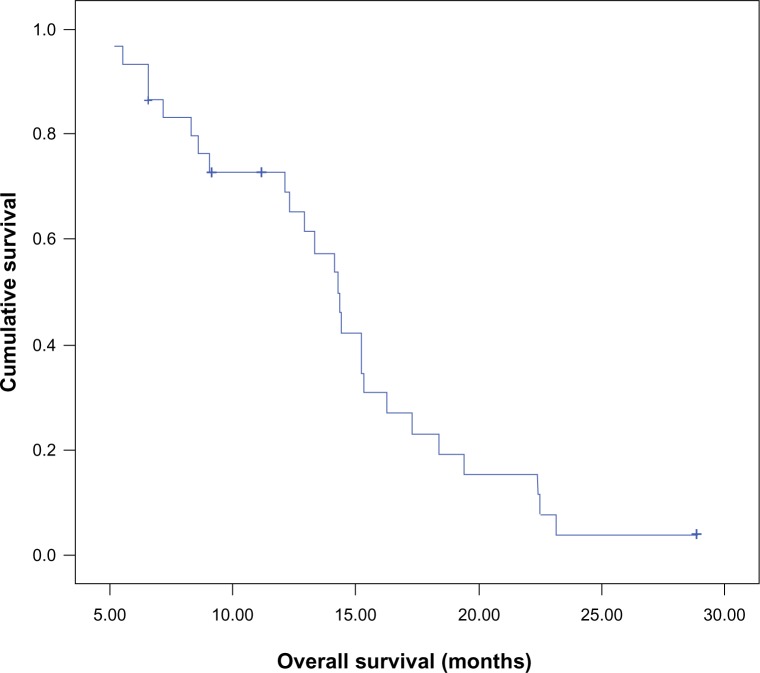
Results: Common grade 1-2 adverse events were malaise in 28 patients (46.7%), followed by alopecia (40%) and nausea (26.7%). Grade 3-4 convulsion and decreased level of consciousness was seen in only four patients who were all from arm I. The median progression-free survival (PFS) for the entire study population was 10.6 months (95% confidence interval [CI] 7.3-14), and PFS at 12 months was 32%. The median PFS in arm I was 8.8 months (95% CI 5.9-11.7) and in arm II 11.5 months (95% CI 8.9-14.2), and PFS at 12 months for both arms was 32% and 30% respectively (P=0.571). The median overall survival (OS) of the whole group of patients was 14.2 months (95% CI 13-15.5), and OS was 70% at 12 months and 25% at 18 months. The median OS for patients in arm I was 12.3 months (95% CI 7.7-16.9), whereas in arm II it was 14.3 months (95% CI 14-14.7) (P=0.83).
Conclusion: Reduced radiosensitizer dosing of temozolomide concomitant with radiotherapy in glioblastoma multiforme exhibited comparable efficacy with a classic continuous daily schedule, though with better tolerability.
Keywords: glioblastoma multiforme; high-grade glioma; radiosensitizer; temozolomide.
Figures
References
-
- Wen PY, Kesari S. Malignant gliomas in adults. N Engl J Med. 2008;359:492–507. - PubMed
-
- Stummer W, Pichlmeier U, Meinel T, Wiestler OD, Zanella F, Reulen HJ. Fluorescence-guided surgery with 5-aminolevulinic acid for resection of malignant glioma: a randomised controlled multicentre phase III trial. Lancet Oncol. 2006;7:392–401. - PubMed
-
- Laperriere N, Zuraw L, Cairncross G. Radiotherapy for newly diagnosed malignant glioma in adults: a systematic review. Radiother Oncol. 2002;64:259–273. - PubMed
-
- Walker MD, Green SB, Byar DP, et al. Randomized comparisons of radiotherapy and nitrosoureas for the treatment of malignant glioma after surgery. N Engl J Med. 1980;303:1323–1329. - PubMed
-
- Trivedi RN, Almeida KH, Fornsaglio JL, Schamus S, Sobol RW. The role of base excision repair in the sensitivity and resistance to temozolomide-mediated cell death. Cancer Res. 2005;65:6394–6400. - PubMed
LinkOut - more resources
Full Text Sources
Other Literature Sources
