


Usability application of multiplex polymerase chain reaction in the diagnosis of microorganisms isolated from urine of patients treated in cancer hospital
- PMID: 24133395
- PMCID: PMC3794886
- DOI: 10.2478/raon-2013-0044
Usability application of multiplex polymerase chain reaction in the diagnosis of microorganisms isolated from urine of patients treated in cancer hospital
Abstract
Background: THE OBJECTIVE OF THIS STUDY WAS: i) to compare the results of urine culture with polymerase chain reaction (PCR) -based detection of microorganisms using two commercially available kits, ii) to assess antimicrobial susceptibility of urine isolates from cancer patients to chosen antimicrobial drugs and, if necessary, to update the recommendation of empirical therapy.
Materials and methods: A one-year hospital-based prospective study has been conducted in Greater Poland Cancer Centre and Genetic Medicine Laboratory CBDNA Research Centre in 2011. Urine cultures and urine PCR assay from 72 patients were examined.
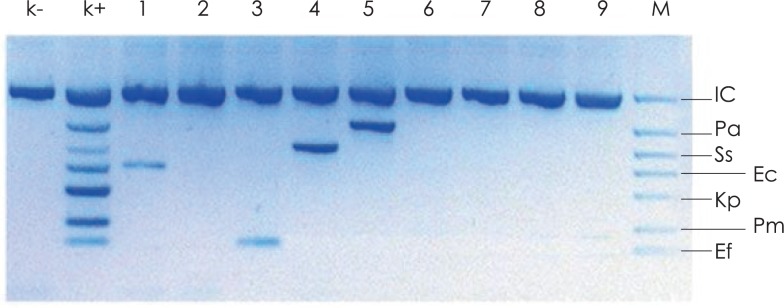
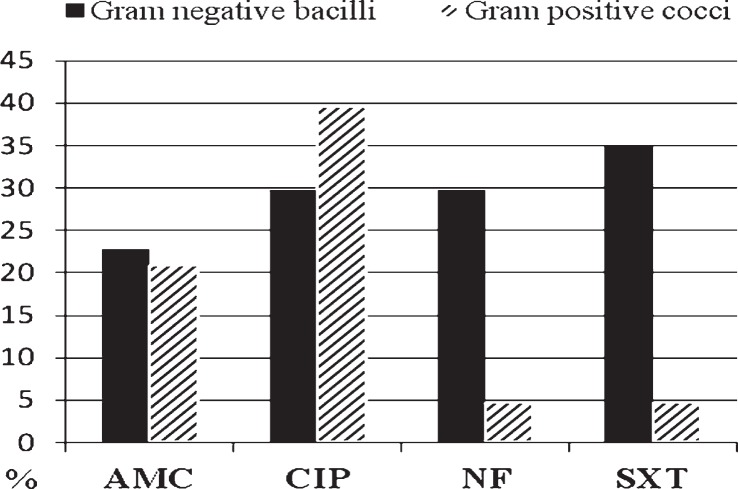
Results: Urine cultures and urine PCR assay from 72 patients were examined. Urine samples were positive for 128 strains from which 95 (74%) were identical in both tests. The most frequently isolated bacteria in both culture and PCR assay were coliform organisms and Enterococcus spp. The Gram negative bacilli were most resistant to cotrimoxazol. 77.2% of these bacilli and 100% of E. faecalis and S. agalactiae were sensitive to amoxicillin-clavulanic acid. 4.7% of Gram positive cocci were resistant to nitrofurantoin.
Conclusions: The PCR method quickly finds the causative agent of urinary tract infection (UTI) and, therefore, it can help with making the choice of the proper antimicrobial therapy at an early stage. It appears to be a viable alternative to the recommendations made in general treatment guidelines, in cases where diversified sensitivity patterns of microorganisms have been found.
Keywords: PCR; microbiological culture; significant bacteriuria; susceptibility tests.
Figures
References
-
- Cybulski Z, Kjaeldgaard P. Resistance to oral antibiotics in urinary coliform strains isolated between 2000 and 2008 in Sønderborg area, Denmark. Int J Antimicrob Agents. 2010;35:516–7. - PubMed
-
- Bouza E, San Juan R, Muñoz P, Voss A, Kluytmans J. Co-operative Group of the European Study Group on Nosocomial Infections: A European perspective on nosocomial urinary tract infections I. Report on the microbiology workload, etiology and antimicrobial susceptibility (ESGNI-003 study). European Study Group on Nosocomial Infections. Clin Microbiol Infect. 2001;7:523–31. - PubMed
-
- Laupland KB, Zygun DA, Davies HD, Church DL, Louie TJ, Doig CJ. Incidence and risk factors for acquiring nosocomial urinary tract infection in the critically ill. J Crit Care. 2002;17:50–7. - PubMed
-
- Warren JW. Catheter-associated urinary tract infections. Int J Antimicrob. 2001;17:299–303. - PubMed
LinkOut - more resources
Full Text Sources
Other Literature Sources
Research Materials
Miscellaneous
