


Low-cost tele-assessment system for home-based evaluation of reaching ability following stroke
- PMID: 24138613
- PMCID: PMC3850429
- DOI: 10.1089/tmj.2012.0300
Low-cost tele-assessment system for home-based evaluation of reaching ability following stroke
Abstract
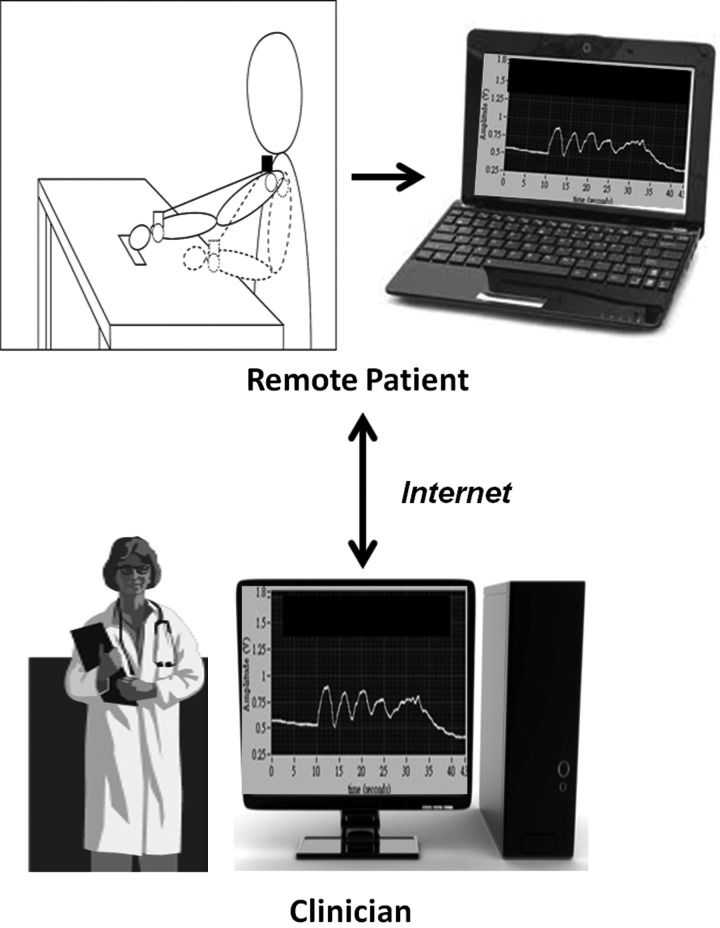
Objective: Tele-assessment techniques can provide healthcare professionals with easily accessible information regarding patients' clinical progress. Recently, kinematic analysis systems have been used to assess rehabilitative outcomes in stroke patients. Kinematic systems, however, are not compatible with tele-assessment. The objective of our study was to develop a tele-assessment system for acquiring kinematic data of forward reaching movements in stroke patients, with an emphasis on cost-effectiveness, portability, and ease of use.
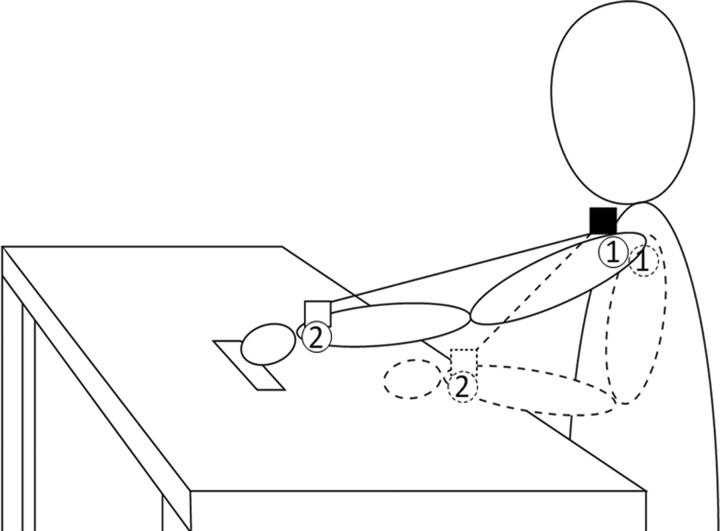
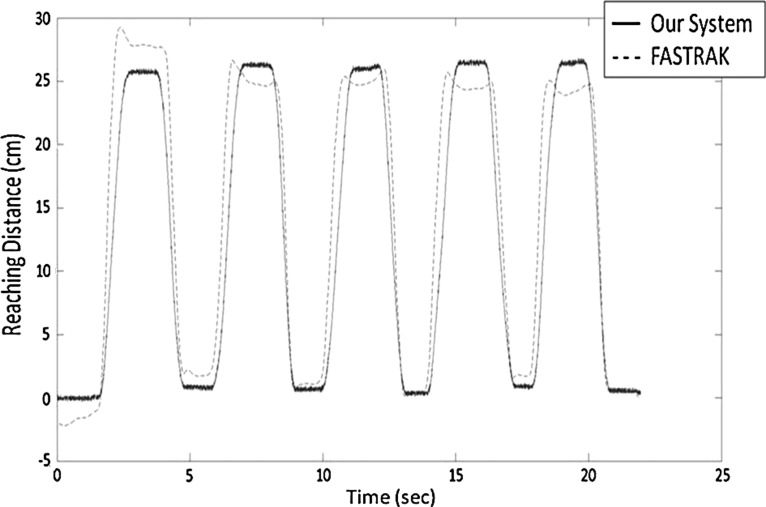
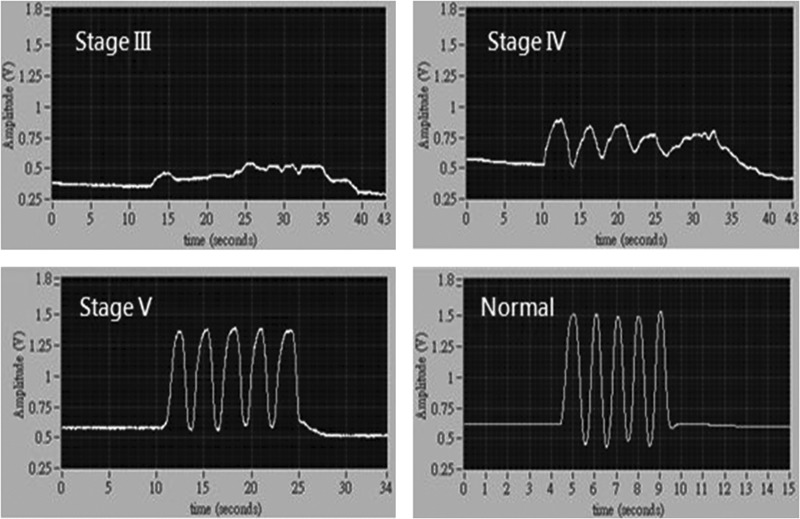
Materials and methods: We selected four healthy control participants and eight hemiplegic stroke patients for our study. The stroke patients were classified as Brunnstrom stage III, stage IV, or stage V. Our tele-assessment system used two three-axes accelerometers, a potentiometer, a multifunctional data acquisition card, and two computers. A standardized kinematic system was applied simultaneously to validate the measurements recorded by our tele-assessment system during five repetitions of forward reaching movements.
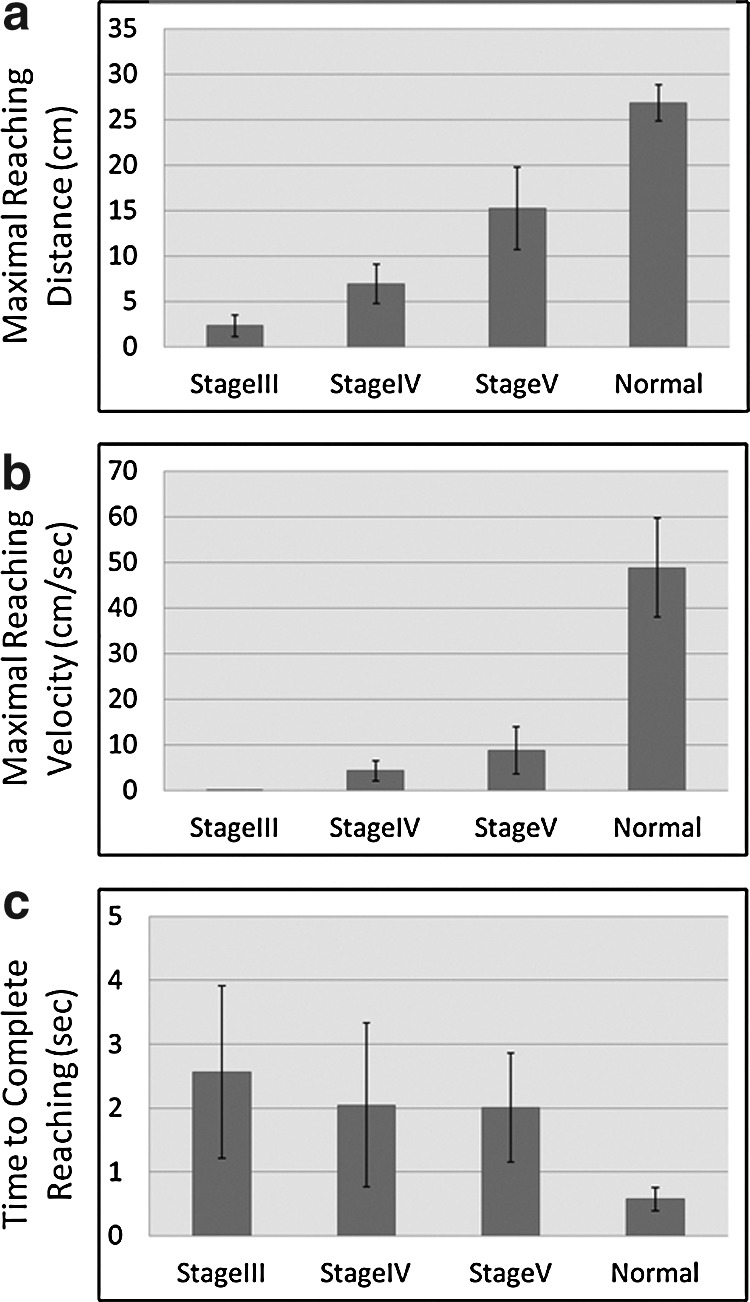
Results: The correlation coefficients of the reaching displacement, velocity, and acceleration measurements obtained using our tele-assessment system and the standardized kinematic system were 0.956, 0.896, and 0.727, respectively. Differences in the maximum reaching distance and the maximum reaching velocity of forward reaching movements were observed among the study groups. There were no significant differences in the time required to complete the testing session among the study groups.
Conclusions: Our tele-assessment system is valid for the evaluation of upper-extremity reaching ability in stroke patients. Further research is needed to investigate the feasibility of the use of the tele-assessment system in patients' homes.
Figures
References
-
- Ytterberg C. Thorsén A-M. Liljedahl M, et al. Changes in perceived health between one and five years after stroke: A randomized controlled trial of early supported discharge with continued rehabilitation at home versus conventional rehabilitation. J Neurol Sci. 2010;294:86–88. - PubMed
-
- Johansson T. Wild C. Telerehabilitation in stroke care—A systematic review. J Telemed Telecare. 2011;17:1–6. - PubMed
-
- Piron L. Turolla A. Agostini M, et al. Exercises for paretic upper limb after stroke: A combined virtual-reality and telemedicine approach. J Rehabil Med. 2009;41:1016–1102. - PubMed
-
- Piron L. Tonin P. Trivello E, et al. Motor tele-rehabilitation in post-stroke patients. Med Inform Internet Med. 2004;29:119–125. - PubMed
-
- Holden MK. Dyar TA. Dayan-Cimadoro L. Telerehabilitation using a virtual environment improves upper extremity function in patients with stroke. IEEE Trans Neural Syst Rehabil Eng. 2007;15:36–42. - PubMed
Publication types
MeSH terms
LinkOut - more resources
Full Text Sources
Other Literature Sources
Medical
