


Evaluation of factors associated with noncompliance in users of combined hormonal contraceptive methods: a cross-sectional study: results from the MIA study
- PMID: 24138751
- PMCID: PMC4015733
- DOI: 10.1186/1472-6874-13-38
Evaluation of factors associated with noncompliance in users of combined hormonal contraceptive methods: a cross-sectional study: results from the MIA study
Abstract
Background: Understanding contraception from the perspective of the user may help to improve compliance. The aim of this project was to determine the factors that influence the noncompliance in young women that use combined hormonal contraceptives (pill, patch or vaginal ring).
Methods: A nationwide cross-sectional multicenter epidemiology study. Physicians [obstetricians/gynecologists]) recorded socio-demographic, clinical and current contraception data of 8,762 women. Women completed a self-administered questionnaire on compliance. After the assessment of self-administrated questionnaire, the physicians reported on their recommendations on the possibility of changing the contraceptive.
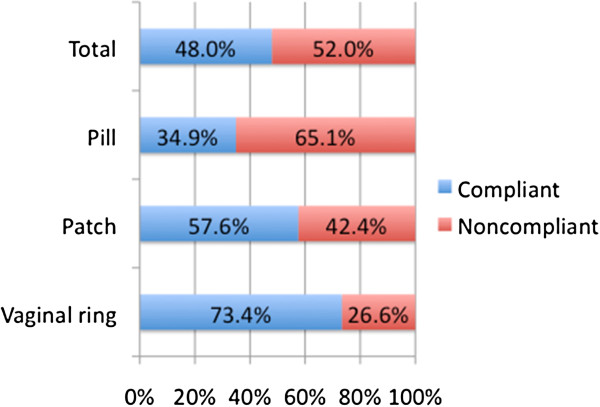
Results: Fifty-two percent of women were noncompliant, mainly because of simple forgetfulness (pill, 74.9%; patch, 47.8%; vaginal ring, 69.1%). The percentage of noncompliant women was lower in vaginal ring users (26.6%) than in patch users (42.4%) or pill users (65.1%) (p < 0.0001). The most common course of action after noncompliance was to take/use the contraceptive as soon as possible. In the multiple logistic regression analysis, the use of the pill increased the probability of noncompliance compared with the patch and the vaginal ring (odds ratio [IC95%]: 2.53 (2.13-3.02) and 4.17 (3.68-4.73, respectively), and using the patch compared with the vaginal ring (1.65 (1.36-1.99)). Others factors associated with noncompliance were: high treatment duration, low degree of information on the contraceptive method, understanding of instructions on the contraceptive method, indifference to becoming pregnant, lack of partner support, not participation in selecting the method, not having a routine for taking treatment and difficulties remembering use the contraceptive method. Switching contraceptive method was proposed by the physicians to 43.2% of women (51.8% of pill users, 58.2% of patch users and 19.4% of vaginal ring users).
Conclusions: More than 50% of combined hormonal contraceptive users did not comply with the treatment regimen. The percentage of noncompliant women was lower between vaginal ring users. Understanding user's reasons for noncompliance by the clinician and encouraging a collaborative approach can go a long way to improving compliance.
Figures
References
-
- Lete I, Bermejo R, Coll C, Dueñas JL, Doval JL, Martinez-Salmeán J, Parrilla JJ, Serrano I. Spanish population at risk of unwanted pregnancy: results of a national survey. Eur J Contracept Reprod Health Care. 2003;13:75–79. - PubMed
-
- Darney PD. A hormonal contraception update 2010: a decade of innovation & transformation. Am J Obstet Gynecol. 2011;13:S1–S24.
-
- Rosenberg MJ, Waugh MS, Long S. Unintended pregnancies and use, misuse and discontinuation of oral contraceptives. J Reprod Med. 1995;13:355–360. - PubMed
Publication types
MeSH terms
Substances
LinkOut - more resources
Full Text Sources
Other Literature Sources
