


Highlights of the DNA cutters: a short history of the restriction enzymes
- PMID: 24141096
- PMCID: PMC3874209
- DOI: 10.1093/nar/gkt990
Highlights of the DNA cutters: a short history of the restriction enzymes
Abstract
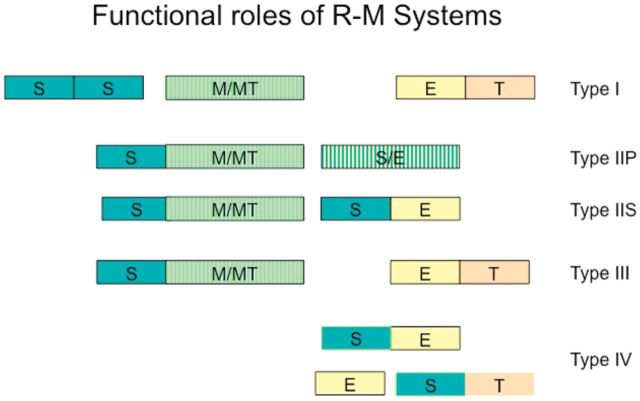
In the early 1950's, 'host-controlled variation in bacterial viruses' was reported as a non-hereditary phenomenon: one cycle of viral growth on certain bacterial hosts affected the ability of progeny virus to grow on other hosts by either restricting or enlarging their host range. Unlike mutation, this change was reversible, and one cycle of growth in the previous host returned the virus to its original form. These simple observations heralded the discovery of the endonuclease and methyltransferase activities of what are now termed Type I, II, III and IV DNA restriction-modification systems. The Type II restriction enzymes (e.g. EcoRI) gave rise to recombinant DNA technology that has transformed molecular biology and medicine. This review traces the discovery of restriction enzymes and their continuing impact on molecular biology and medicine.
Figures
References
-
- Roberts RJ, Cheng X. Base flipping. Annu. Rev. Biochem. 1998;67:181–198. - PubMed
Publication types
MeSH terms
Substances
LinkOut - more resources
Full Text Sources
Other Literature Sources
Molecular Biology Databases
