


Multicomponent intervention to reduce daily sedentary time: a randomised controlled trial
- PMID: 24141969
- PMCID: PMC3808782
- DOI: 10.1136/bmjopen-2013-003261
Multicomponent intervention to reduce daily sedentary time: a randomised controlled trial
Abstract
Objectives: To test the efficacy of a multicomponent technology intervention for reducing daily sedentary time and improving cardiometabolic disease risk among sedentary, overweight university employees.
Design: Blinded, randomised controlled trial.
Setting: A large south-eastern university in the USA.
Participants: 49 middle-aged, primarily female, sedentary and overweight adults working in sedentary jobs enrolled in the study. A total of 40 participants completed the study.
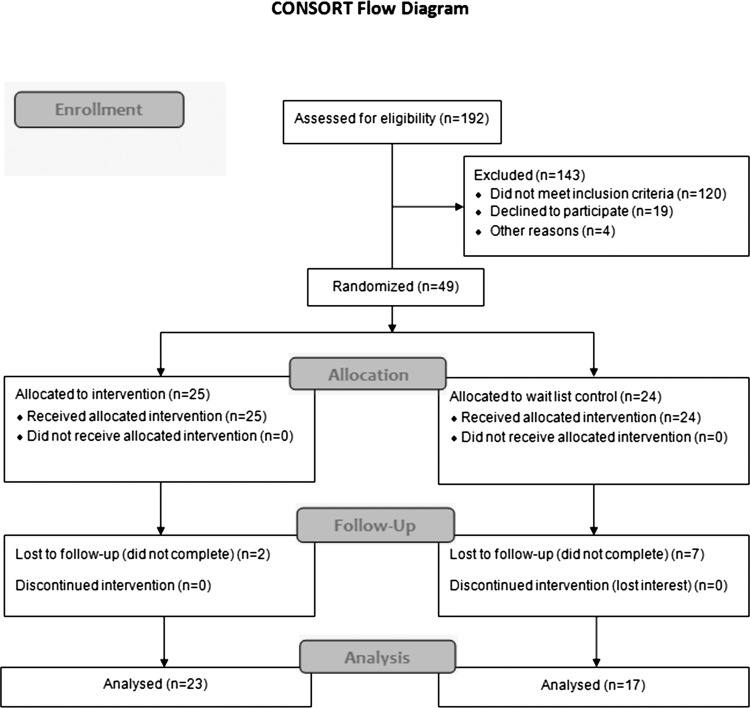
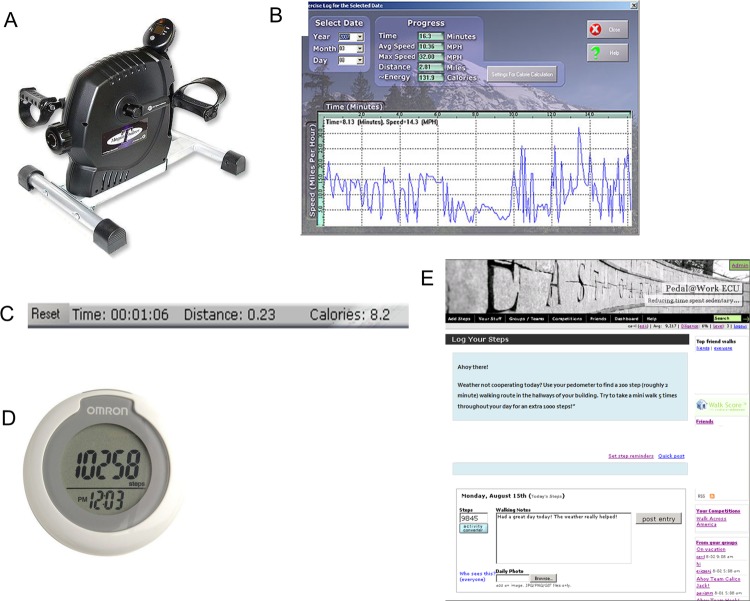
Interventions: Participants were randomised to either: (1) an intervention group (N=23; 47.6+9.9 years; 94.1% female; 33.2+4.5 kg/m(2)); (2) or wait-list control group (N=17; 42.6+8.9 years; 86.9% female; 31.7+4.9 kg/m(2)). The intervention group received a theory-based, internet-delivered programme, a portable pedal machine at work and a pedometer for 12 weeks. The wait-list control group maintained their behaviours for 12 weeks.
Outcome measures: Primary (sedentary and physical activity behaviour measured objectively through StepWatch) and secondary (heart rate, blood pressure, height, weight, waist circumference, per cent body fat, cardiorespiratory fitness, fasting lipids) outcomes were measured at baseline and postintervention (12 weeks). Exploratory outcomes including intervention compliance and process evaluation measures were also assessed postintervention.
Results: Compared to controls, the intervention group reduced daily sedentary time (mean change (95%CI): -58.7 min/day (-118.4 to 0.99; p<0.01)) after adjusting for baseline values and monitor wear time. Intervention participants logged on to the website 71.3% of all intervention days, used the pedal machine 37.7% of all working intervention days and pedalled an average of 31.1 min/day.
Conclusions: These findings suggest that the intervention was engaging and resulted in reductions in daily sedentary time among full-time sedentary employees. These findings hold public health significance due to the growing number of sedentary jobs and the potential of these technologies in large-scale worksite programmes.
Trial registration: ClinicalTrials.gov #NCT01371084.
Keywords: sedentary; technology; worksite.
Figures
References
-
- Roberts CK, Vaziri ND, Sindhu RK, et al. A high-fat, refined-carbohydrate diet affects renal NO synthase protein expression and salt sensitivity. J Appl Physiol 2003;94:941–6 - PubMed
-
- Beunza JJ, Martinez-Gonzalez MA, Ebrahim S, et al. Sedentary behaviors and the risk of incident hypertension: the SUN Cohort. Am J Hypertens 2007;20:1156–62 - PubMed
-
- Ford ES, Kohl HW, III, Mokdad AH, et al. Sedentary behavior, physical activity, and the metabolic syndrome among U.S. adults. Obesity Res 2005;13:608–14 - PubMed
Associated data
LinkOut - more resources
Full Text Sources
Other Literature Sources
Medical
