


Beneficial effects of bumetanide in a CaV1.1-R528H mouse model of hypokalaemic periodic paralysis
- PMID: 24142145
- PMCID: PMC3859222
- DOI: 10.1093/brain/awt280
Beneficial effects of bumetanide in a CaV1.1-R528H mouse model of hypokalaemic periodic paralysis
Abstract
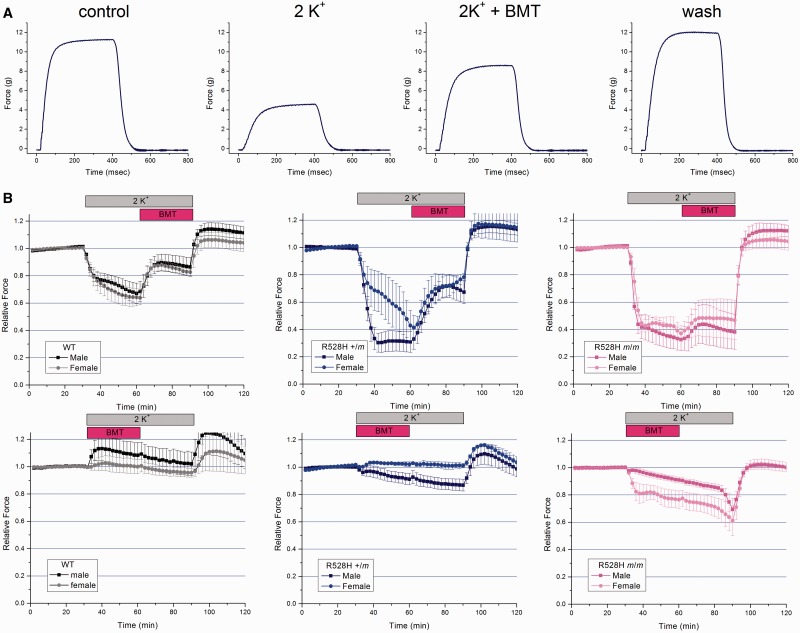
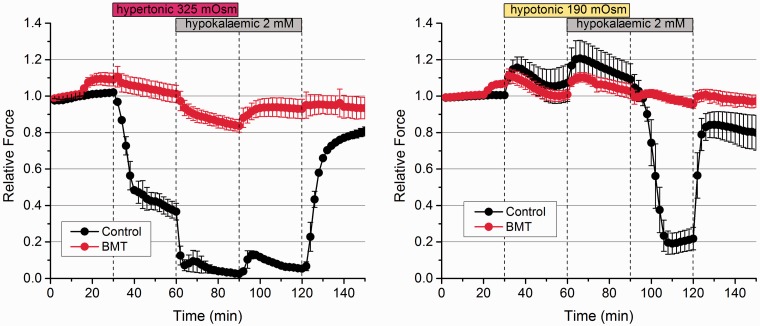
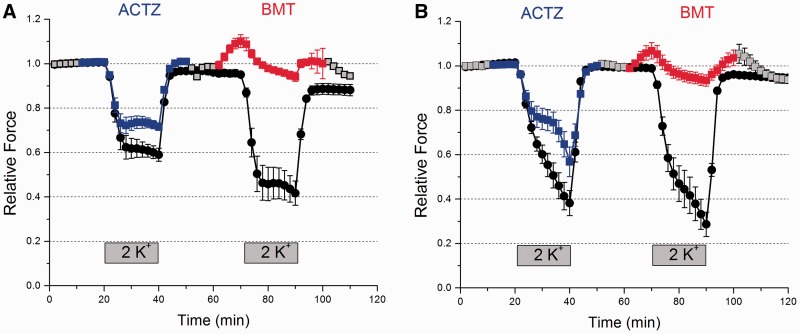
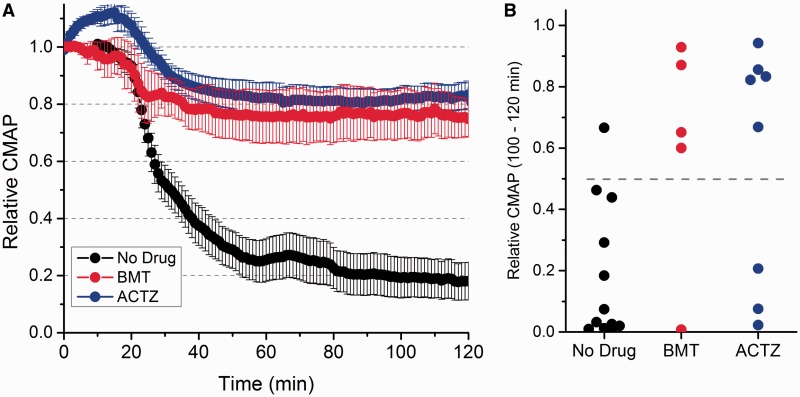
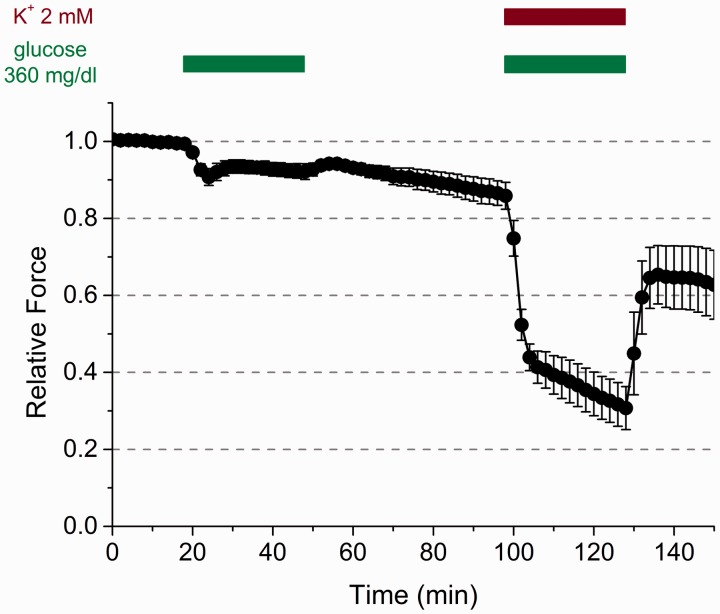
Transient attacks of weakness in hypokalaemic periodic paralysis are caused by reduced fibre excitability from paradoxical depolarization of the resting potential in low potassium. Mutations of calcium channel and sodium channel genes have been identified as the underlying molecular defects that cause instability of the resting potential. Despite these scientific advances, therapeutic options remain limited. In a mouse model of hypokalaemic periodic paralysis from a sodium channel mutation (NaV1.4-R669H), we recently showed that inhibition of chloride influx with bumetanide reduced the susceptibility to attacks of weakness, in vitro. The R528H mutation in the calcium channel gene (CACNA1S encoding CaV1.1) is the most common cause of hypokalaemic periodic paralysis. We developed a CaV1.1-R528H knock-in mouse model of hypokalaemic periodic paralysis and show herein that bumetanide protects against both muscle weakness from low K+ challenge in vitro and loss of muscle excitability in vivo from a glucose plus insulin infusion. This work demonstrates the critical role of the chloride gradient in modulating the susceptibility to ictal weakness and establishes bumetanide as a potential therapy for hypokalaemic periodic paralysis arising from either NaV1.4 or CaV1.1 mutations.
Keywords: NKCC transporter; acetazolamide; calcium channel; skeletal muscle.
Figures
References
-
- Bulman DE, Scoggan KA, van Oene MD, Nicolle MW, Hahn AF, Tollar LL, et al. A novel sodium channel mutation in a family with hypokalemic periodic paralysis. Neurology. 1999;53:1932–6. - PubMed
-
- Cannon SC, Strittmatter SM. Functional expression of sodium channel mutations identified in families with periodic paralysis. Neuron. 1993;10:317–26. - PubMed
-
- Elbaz A, Vale-Santos J, Jurkat-Rott K, Lapie P, Ophoff RA, Bady B, et al. Hypokalemic periodic paralysis and the dihydropyridine receptor (CACNL1A3): genotype/phenotype correlations for two predominant mutations and evidence for the absence of a founder effect in 16 caucasian families. Am J Hum Genet. 1995;56:374–80. - PMC - PubMed
-
- Geukes Foppen RJ, van Mil HG, Siegenbeek van Heukelom J. Osmolality influences bistability of membrane potential under hypokalemic conditions in mouse skeletal muscle: an experimental and theoretical study. Comp Biochem Physiol A Mol Integr Physiol. 2001;130:533–8. - PubMed
Publication types
MeSH terms
Substances
Grants and funding
LinkOut - more resources
Full Text Sources
Other Literature Sources
Medical
