


The developmental stages of synaptic plasticity
- PMID: 24144877
- PMCID: PMC3903349
- DOI: 10.1113/jphysiol.2012.235119
The developmental stages of synaptic plasticity
Abstract
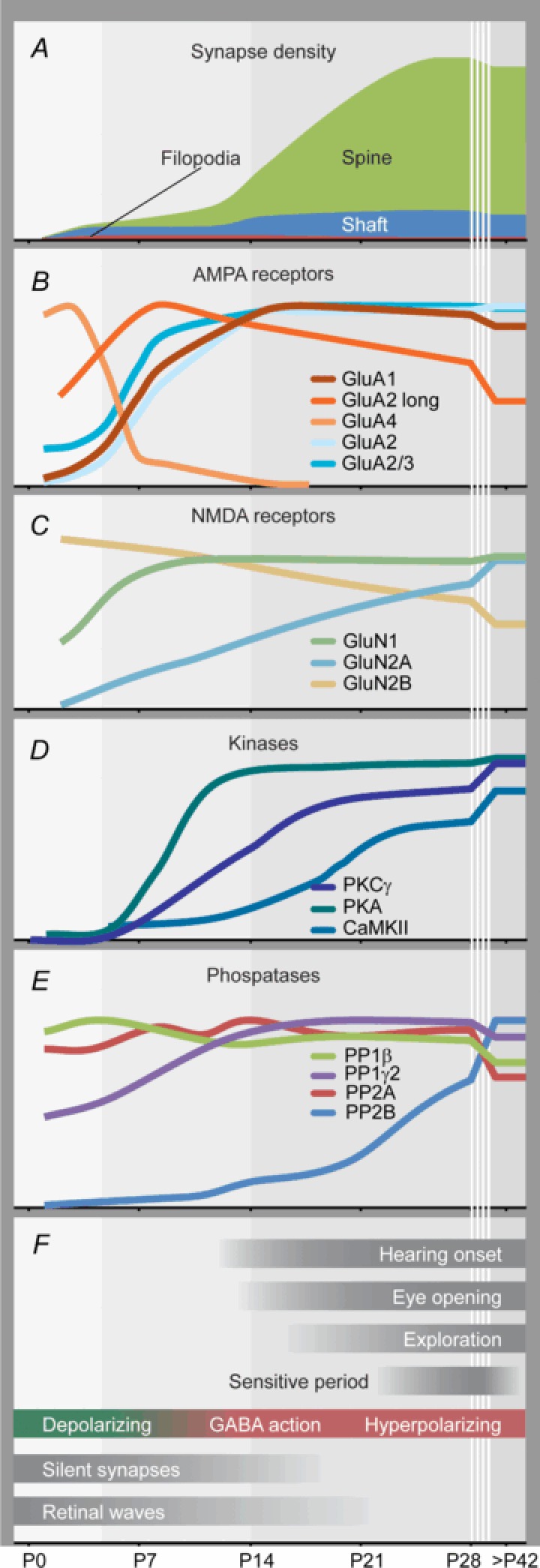
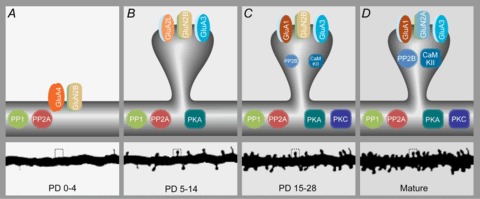
The brain is programmed to drive behaviour by precisely wiring the appropriate neuronal circuits. Wiring and rewiring of neuronal circuits largely depends on the orchestrated changes in the strengths of synaptic contacts. Here, we review how the rules of synaptic plasticity change during development of the brain, from birth to independence. We focus on the changes that occur at the postsynaptic side of excitatory glutamatergic synapses in the rodent hippocampus and neocortex. First we summarize the current data on the structure of synapses and the developmental expression patterns of the key molecular players of synaptic plasticity, N-methyl-d-aspartate (NMDA) and α-amino-3-hydroxy-5-methyl-4-isoxazolepropionic acid (AMPA) receptors, as well as pivotal kinases (Ca(2+)/calmodulin-dependent protein kinase II, protein kinase A, protein kinase C) and phosphatases (PP1, PP2A, PP2B). In the second part we relate these findings to important characteristics of the emerging network. We argue that the concerted and gradual shifts in the usage of plasticity molecules comply with the changing need for (re)wiring neuronal circuits.
Figures
References
-
- Akaneya Y( Activity regulates the expression of AMPA receptor subunit GluR4 in developing visual cortex. Eur J Neurosci. 2007;25:1641–1646. - PubMed
Publication types
MeSH terms
Substances
LinkOut - more resources
Full Text Sources
Other Literature Sources
Miscellaneous
