


Hyperpolarization without persistent radicals for in vivo real-time metabolic imaging
- PMID: 24145405
- PMCID: PMC3831441
- DOI: 10.1073/pnas.1314928110
Hyperpolarization without persistent radicals for in vivo real-time metabolic imaging
Abstract
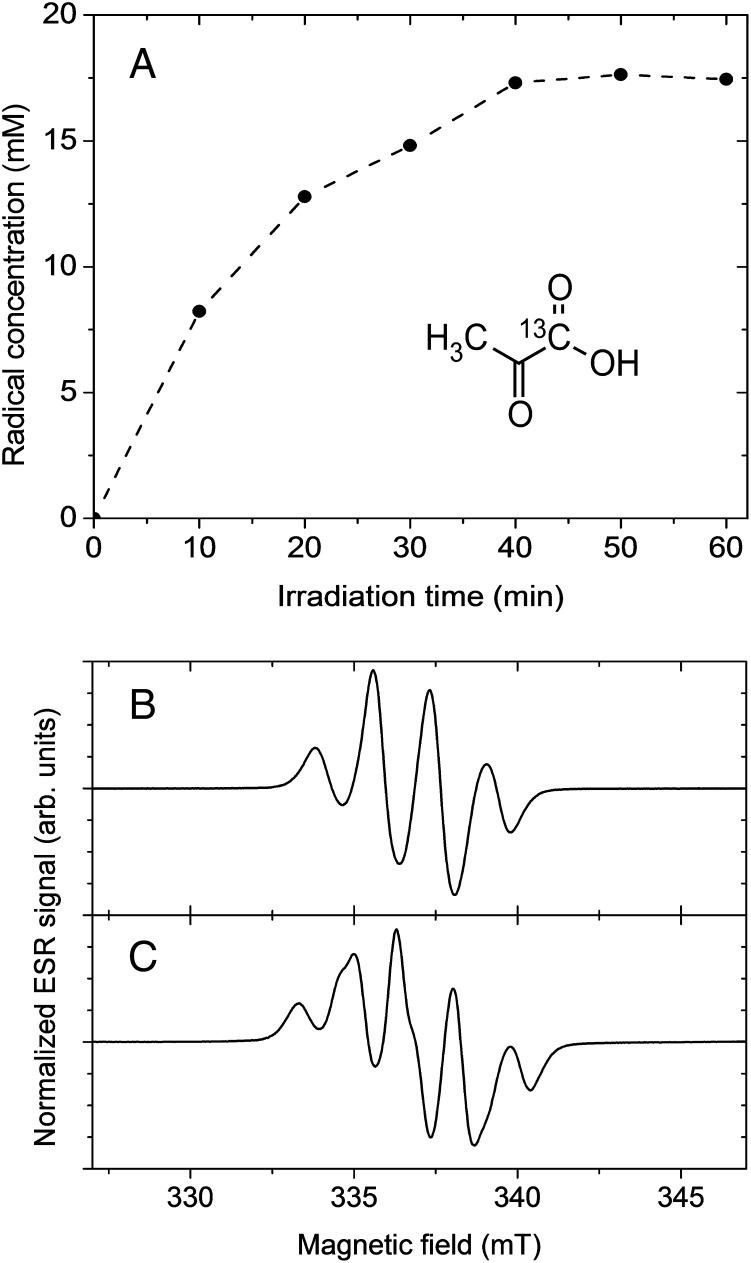
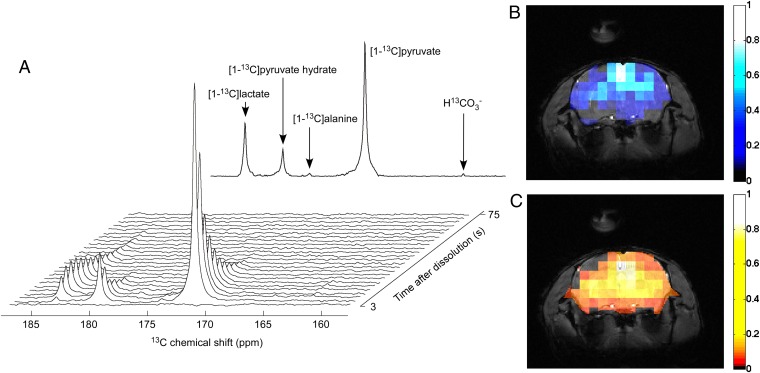
Hyperpolarized substrates prepared via dissolution dynamic nuclear polarization have been proposed as magnetic resonance imaging (MRI) agents for cancer or cardiac failure diagnosis and therapy monitoring through the detection of metabolic impairments in vivo. The use of potentially toxic persistent radicals to hyperpolarize substrates was hitherto required. We demonstrate that by shining UV light for an hour on a frozen pure endogenous substance, namely the glucose metabolic product pyruvic acid, it is possible to generate a concentration of photo-induced radicals that is large enough to highly enhance the (13)C polarization of the substance via dynamic nuclear polarization. These radicals recombine upon dissolution and a solution composed of purely endogenous products is obtained for performing in vivo metabolic hyperpolarized (13)C MRI with high spatial resolution. Our method opens the way to safe and straightforward preclinical and clinical applications of hyperpolarized MRI because the filtering procedure mandatory for clinical applications and the associated pharmacological tests necessary to prevent contamination are eliminated, concurrently allowing a decrease in the delay between preparation and injection of the imaging agents for improved in vivo sensitivity.
Keywords: acetate; lactate; metabolism; nuclear magnetic resonance; pyruvate.
Conflict of interest statement
The authors declare no conflict of interest.
Figures
References
-
- Shulman RG, Rothman DL. 13C NMR of intermediary metabolism: Implications for systemic physiology. Annu Rev Physiol. 2001;63:15–48. - PubMed
-
- Abragam A, Goldman M. Principles of dynamic nuclear-polarization. Rep Prog Phys. 1978;41(3):395–467.
-
- Gallagher FA, Kettunen MI, Brindle KM. Biomedical applications of hyperpolarized C-13 magnetic resonance imaging. Prog Nucl Magn Reson Spectrosc. 2009;55(4):285–295.
Publication types
MeSH terms
Substances
LinkOut - more resources
Full Text Sources
Other Literature Sources
Medical
