


Impaired glutathione synthesis in neurodegeneration
- PMID: 24145751
- PMCID: PMC3821656
- DOI: 10.3390/ijms141021021
Impaired glutathione synthesis in neurodegeneration
Abstract
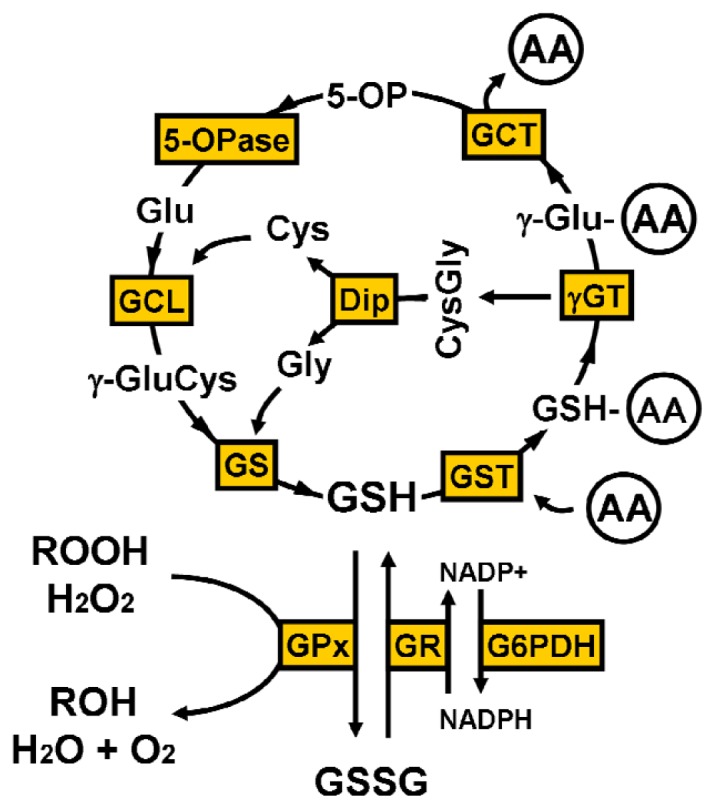
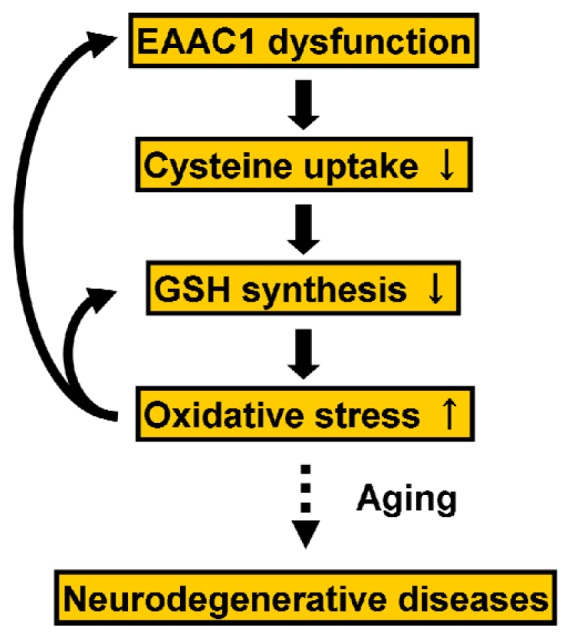
Glutathione (GSH) was discovered in yeast cells in 1888. Studies of GSH in mammalian cells before the 1980s focused exclusively on its function for the detoxication of xenobiotics or for drug metabolism in the liver, in which GSH is present at its highest concentration in the body. Increasing evidence has demonstrated other important roles of GSH in the brain, not only for the detoxication of xenobiotics but also for antioxidant defense and the regulation of intracellular redox homeostasis. GSH also regulates cell signaling, protein function, gene expression, and cell differentiation/proliferation in the brain. Clinically, inborn errors in GSH-related enzymes are very rare, but disorders of GSH metabolism are common in major neurodegenerative diseases showing GSH depletion and increased levels of oxidative stress in the brain. GSH depletion would precipitate oxidative damage in the brain, leading to neurodegenerative diseases. This review focuses on the significance of GSH function, the synthesis of GSH and its metabolism, and clinical disorders of GSH metabolism. A potential approach to increase brain GSH levels against neurodegeneration is also discussed.
Figures
References
-
- De Rey-Pailhade M.J. Sur un corps d’origine organique hydrogénant le soufre á froid. C. R. Acad. Sci. 1888;106:1683–1684.
-
- Meister A. On the discovery of glutathione. Trends Biochem. Sci. 1988;13:185–188. - PubMed
-
- Hopkins F.G. On glutathione: A reinvestigation. J. Biol. Chem. 1929;84:269–320.
-
- Kendall E.C., Mason H.L., McKenzie B.F. A study of glutathione. J. Biol. Chem. 1930;88:409–423.
Publication types
MeSH terms
Substances
LinkOut - more resources
Full Text Sources
Other Literature Sources
Medical
