


Reduction of unwanted submental fat with ATX-101 (deoxycholic acid), an adipocytolytic injectable treatment: results from a phase III, randomized, placebo-controlled study
- PMID: 24147933
- PMCID: PMC4232897
- DOI: 10.1111/bjd.12695
Reduction of unwanted submental fat with ATX-101 (deoxycholic acid), an adipocytolytic injectable treatment: results from a phase III, randomized, placebo-controlled study
Abstract
Background: Unwanted submental fat (SMF) is aesthetically unappealing, but methods of reduction are either invasive or lack evidence for their use. An injectable approach with ATX-101 (deoxycholic acid) is under investigation.
Objectives: To evaluate the efficacy and safety of ATX-101 for the reduction of unwanted SMF.
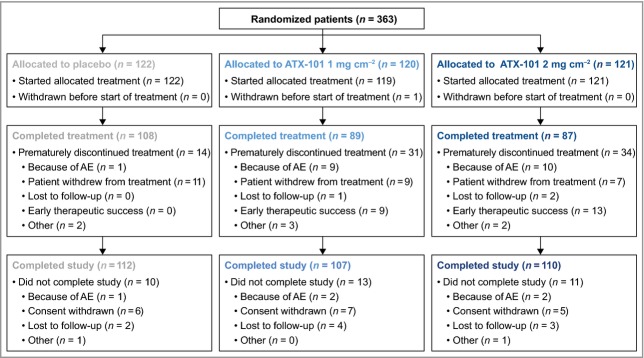
Methods: In this double-blind, placebo-controlled, phase III study, 363 patients with moderate/severe SMF were randomized to receive ATX-101 (1 or 2 mg cm(-2) ) or placebo injections into their SMF at up to four treatment sessions ~28 days apart, with a 12-week follow-up. The co-primary efficacy endpoints were the proportions of treatment responders [patients with ≥ 1-point improvement in SMF on the 5-point Clinician-Reported Submental Fat Rating Scale (CR-SMFRS)] and patients satisfied with their face and chin appearance on the Subject Self-Rating Scale (SSRS). Secondary endpoints included skin laxity, calliper measurements and patient-reported outcomes. Adverse events were monitored.
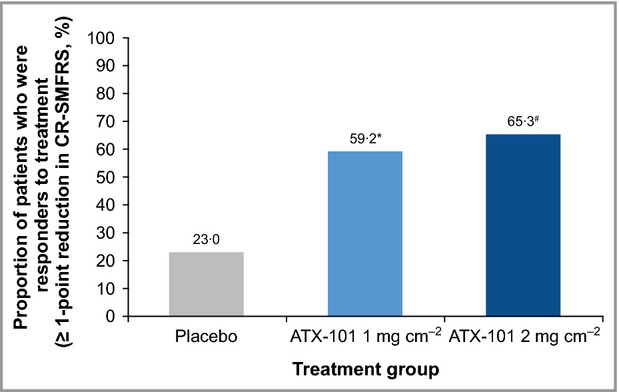
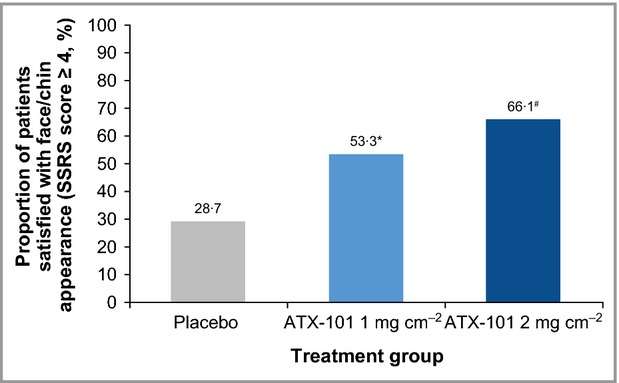
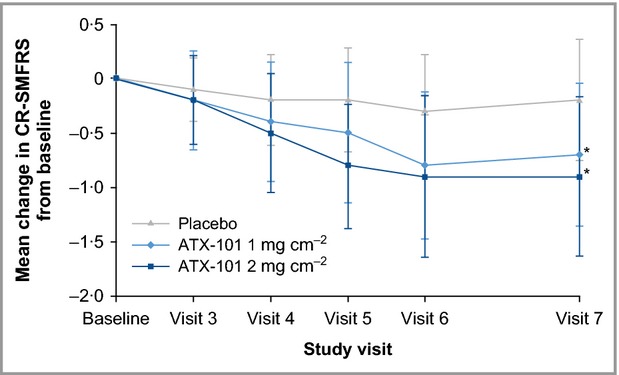
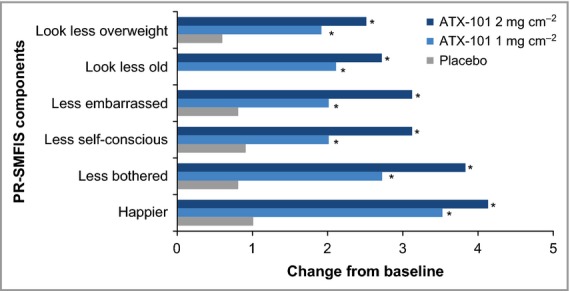
Results: Significantly more ATX-101 recipients met the primary endpoint criteria vs. placebo: on the clinician scale, 59·2% and 65·3% of patients treated with ATX-101 1 and 2 mg cm(-2) , respectively, were treatment responders vs. 23·0% for placebo (CR-SMFRS; P < 0·001); on the patient scale, 53·3% and 66·1%, respectively, vs. 28·7%, were satisfied with their face/chin appearance (SSRS; P < 0·001). Calliper measurements showed a significant reduction in SMF (P < 0·001), skin laxity was not worsened and patients reported improvements in the severity and psychological impact of SMF with ATX-101 vs. placebo. Most adverse events were transient and associated with the treatment area.
Conclusions: ATX-101 was effective and well tolerated for nonsurgical SMF reduction.
© 2013 The Authors. British Journal of Dermatology published by John Wiley & Sons Ltd on behalf of British Association of Dermatologists.
Figures
Comment in
-
Dissolving unwanted submental fat.Br J Dermatol. 2014 Feb;170(2):237-8. doi: 10.1111/bjd.12762. Br J Dermatol. 2014. PMID: 24547719 No abstract available.
References
-
- Co AC, Abad-Casintahan MF, Espinoza-Thaebtharm A. Submental fat reduction by mesotherapy using phosphatidylcholine alone vs. phosphatidylcholine and organic silicium: a pilot study. J Cosmet Dermatol. 2007;6:250–7. - PubMed
-
- Rzany B, Carruthers A, Carruthers J, et al. Validated composite assessment scales for the global face. Dermatol Surg. 2012;38:294–308. - PubMed
-
- Duncan DI, Chubaty R. Clinical safety data and standards of practice for injection lipolysis: a retrospective study. Aesthet Surg J. 2006;26:575–85. - PubMed
-
- Patel BCK. Aesthetic surgery of the aging neck: options and techniques. Orbit. 2006;25:327–56. - PubMed
Publication types
MeSH terms
Substances
LinkOut - more resources
Full Text Sources
Other Literature Sources
Miscellaneous
