Lifetime trauma exposure and prospective cardiovascular events and all-cause mortality: findings from the Heart and Soul Study
- PMID: 24149074
- PMCID: PMC4014357
- DOI: 10.1097/PSY.0b013e3182a88846
Lifetime trauma exposure and prospective cardiovascular events and all-cause mortality: findings from the Heart and Soul Study
Abstract
Objective: Little is known about the effect of cumulative psychological trauma on health outcomes in patients with cardiovascular disease. The objective of this study was to prospectively examine the association between lifetime trauma exposure and recurrent cardiovascular events or all-cause mortality in patients with existing cardiovascular disease.
Methods: A total of 1021 men and women with cardiovascular disease were recruited in 2000 to 2002 and followed annually. Trauma history and psychiatric comorbidities were assessed at baseline using the Computerized Diagnostic Interview Schedule for DSM-IV. Health behaviors were assessed using standardized questionnaires. Outcome data were collected annually, and all medical records were reviewed by two independent, blinded physician adjudicators. We used Cox proportional hazards models to evaluate the association between lifetime trauma exposure and the composite outcome of cardiovascular events and all-cause mortality.
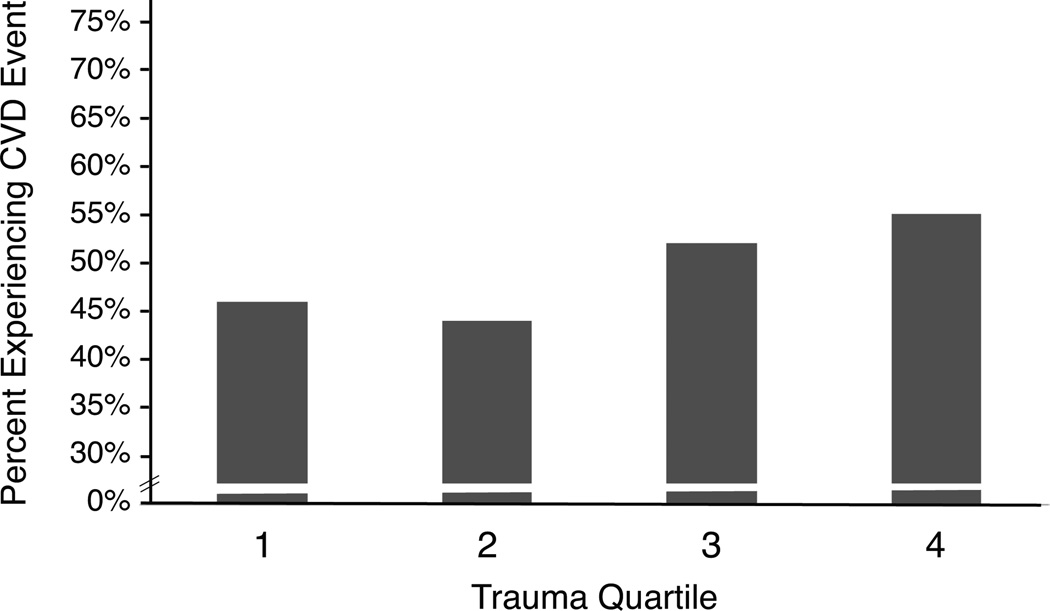
Results: During an average of 7.5 years of follow-up, there were 503 cardiovascular events and deaths. Compared with the 251 participants in the lowest trauma exposure quartile, the 256 participants in the highest exposure quartile had a 38% greater risk of adverse outcomes (hazard ratio = 1.38, 95% confidence interval = 1.06-1.81), adjusted for age, sex, race, income, education, depression, posttraumatic stress disorder, generalized anxiety disorder, smoking, physical inactivity, and illicit drug abuse.
Conclusions: Cumulative exposure to psychological trauma was associated with an increased risk of recurrent cardiovascular events and mortality, independent of psychiatric comorbidities and health behaviors. These data add to a growing literature showing enduring effects of repeated trauma exposure on health that are independent of trauma-related psychiatric disorders such as depression and posttraumatic stress disorder.
Keywords: cardiovascular disease; cardiovascular mortality; depression; myocardial infarction; posttraumatic stress disorder; psychological trauma.
Conflict of interest statement
Dr. Neylan has received investigational medication from Actelion and Glaxo Smith Kline. All other authors, including Hendrickson, Na, Regan, Zhang and Cohen report no biomedical financial interests or potential conflicts of interest.
Figures
References
-
- Kessler RC. Posttraumatic stress disorder: the burden to the individual and to society. J Clin Psychiatry. 2000;61(Suppl 5):4–12. discussion 3–4. - PubMed
-
- Breslau N, Davis GC, Andreski P, Peterson EL, Schultz LR. Sex differences in posttraumatic stress disorder. Arch Gen Psychiatry. 1997;54:1044–1048. - PubMed
-
- Resnick HS, Kilpatrick DG, Dansky BS, Saunders BE, Best CL. Prevalence of civilian trauma and posttraumatic stress disorder in a representative national sample of women. J Consult Clin Psychol. 1993;61:984–991. - PubMed
-
- Breslau N. Epidemiologic studies of trauma, posttraumatic stress disorder, and other psychiatric disorders. Can J Psychiatry. 2002;47:923–929. - PubMed
-
- Boscarino JA. Posttraumatic stress disorder and mortality among U.S. Army veterans 30 years after military service. Ann Epidemiol. 2006;16:248–256. - PubMed
Publication types
MeSH terms
Grants and funding
LinkOut - more resources
Full Text Sources
Other Literature Sources
Medical