


MRI Findings Do not Correlate with Outcome in Athletes with Chronic Groin Pain
- PMID: 24149227
- PMCID: PMC3778702
MRI Findings Do not Correlate with Outcome in Athletes with Chronic Groin Pain
Abstract
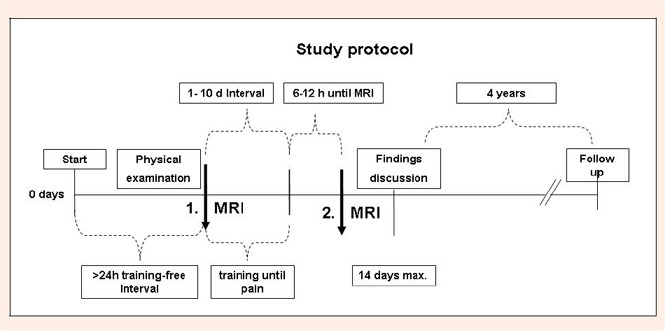
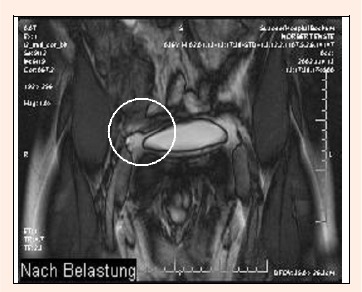
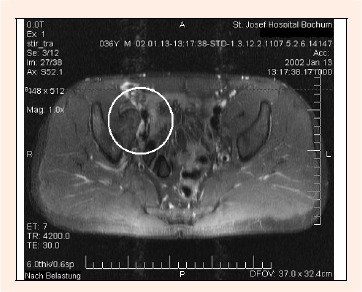
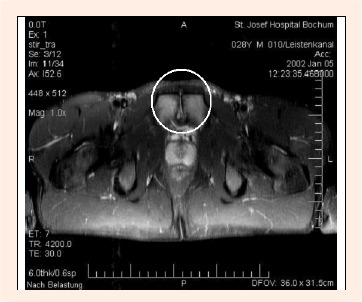
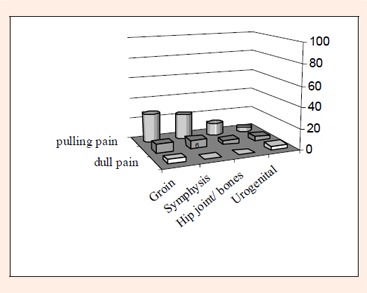
This trial aimed to assess the value of MRI in the differential diagnosis of chronic groin pain in athletes, a condition caused by various pathologies, the most common being posterior abdominal wall deficiency, osteitis pubis and muscular imbalance. Nineteen subjects with clinically ruled-out hernia and recurrent episodes of exercise-triggered groin pain were assessed. Dynamic MRI was performed under Valsalva manoeuver and at rest within a training- free period and after training activity. Follow-up was performed after 4 years using a questionnaire and physical examination. An incipient hernia was seen in one case, Valsalva manoeuver provoked a visible bulging in 7 others (3 bilateral). Eight athletes showed symphysitis (accompanied by bulging in 3 cases). MRI visualized one hydrocele, one osteoma of the left femur, one enchondroma of the pubic bone, and one dilated left ureter without clinical symptoms or therapeutic relevance. MRI findings after training and during the training free period did not vary. Fifteen participants were available for a follow-up control examination 4 years later - one suffered from ongoing pain, eleven were free of symptoms and three had improvement. However, most of them improved only with changing or reducing training. There were four participants with a specific therapy of their MRI findings. MRI revealed a variety of pathological findings in athletes suffering from chronic groin pain, but it was not reliable enough in differentiating between diagnoses requiring conservative or operative treatment. The MRI examination within the training interval did not have an advantage to that within the training-free period. Further randomized prospective trials with a long follow-up should establish whether MRI findings could be of help in the choice between conservative and surgical treatment for chronic groin pain. Key pointsMRI findings after training and during the train free period did not vary.MRI revealed a variety of pathological findings in athletes suffering from chronic groin pain, but it was not reliable enough in differentiating between diagnoses requiring conservative or operative treatment.
Keywords: MRI; athletes; chronic groin pain; hernia; symphysitis.
Figures
References
-
- Akita K., Niga S., Yamato Y., Muneta T., Sato T. (1999) Anatomic basis of chronic groin pain with special reference to sports hernia. Surgical and Radiologic Anatomie 21, 1-5 - PubMed
-
- Barry N.N., McGuire J.L. (1996) Acute injuries and specific problems in adult athletes. Rheumatic Disease Clinics of North America 22, 531-549 - PubMed
-
- Cabot J.R. (1966) Osteopatica dinamica del pubis. In: Proceedings of the XVI World Congress of Sports Medicine. Hannover, Deutscher Aerztverlag. Ed:Hanekopf G.359-364
-
- Edelman D.S., Selesnick H. (2006) “Sports” hernia: treatment with biologic mesh (Surgisis): A preliminary study. Surgical Endoscopy 20, 971-973 - PubMed
-
- Ekberg O., Sjoberg S., Westlin N. (1996) Sports-related groin pain: evaluation with MR imaging. European Radiology, 6, 52-55 - PubMed
LinkOut - more resources
Full Text Sources