


Bioharness(™) multivariable monitoring device: part. I: validity
- PMID: 24149346
- PMCID: PMC3737934
Bioharness(™) multivariable monitoring device: part. I: validity
Abstract
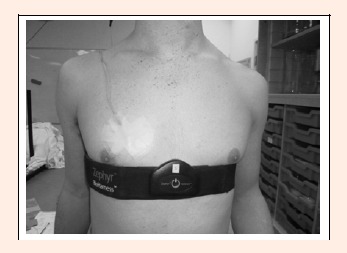
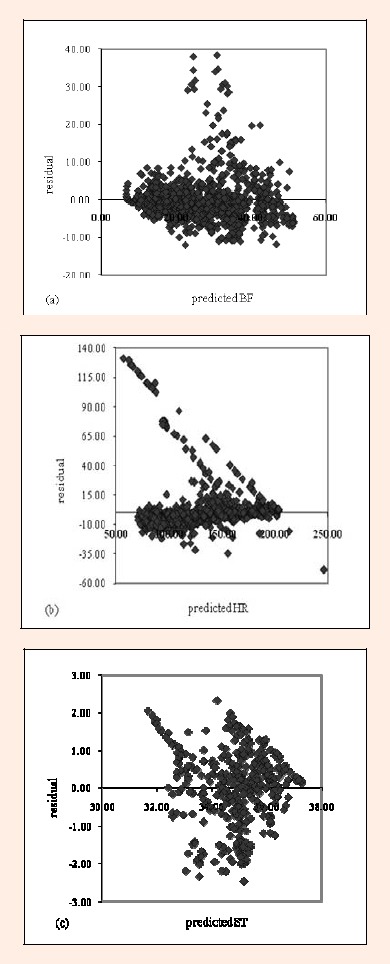
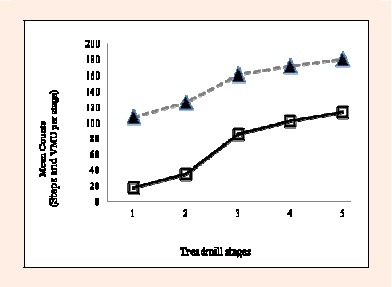
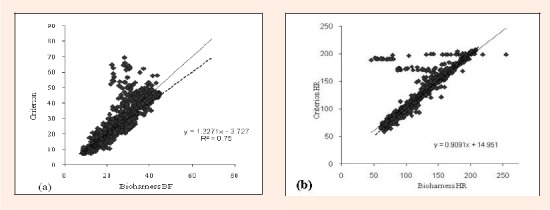
The Bioharness(™) monitoring system may provide physiological information on human performance but there is limited information on its validity. The objective of this study was to assess the validity of all 5 Bioharness(™) variables using a laboratory based treadmill protocol. 22 healthy males participated. Heart rate (HR), Breathing Frequency (BF) and Accelerometry (ACC) precision were assessed during a discontinuous incremental (0-12 km·h(-1)) treadmill protocol. Infra-red skin temperature (ST) was assessed during a 45 min(-1) sub-maximal cycle ergometer test, completed twice, with environmental temperature controlled at 20 ± 0.1 °C and 30 ± 0.1 °C. Posture (P) was assessed using a tilt table moved through 160°. Adopted precision of measurement devices were; HR: Polar T31 (Polar Electro), BF: Spirometer (Cortex Metalyser), ACC: Oxygen expenditure (Cortex Metalyser), ST: Skin thermistors (Grant Instruments), P:Goniometer (Leighton Flexometer). Strong relationships (r = .89 to .99, p < 0.01) were reported for HR, BF, ACC and P. Limits of agreement identified differences in HR (-3.05 ± 32.20 b·min(-1)), BF (-3.46 ± 43.70 br·min(-1)) and P (0.20 ± 2.62°). ST established a moderate relationships (-0.61 ± 1.98 °C; r = 0.76, p < 0.01). Higher velocities on the treadmill decreased the precision of measurement, especially HR and BF. Global results suggest that the BioharressTM is a valid multivariable monitoring device within the laboratory environment. Key pointsDifferent levels of precision exist for each variable in the Bioharness(™) (Version 1) multi-variable monitoring deviceAccelerometry and posture variables presented the most precise dataData from the heart rate and breathing frequency variable decrease in precision at velocities ≥ 10 km·h(-1)Clear understanding of the limitations of new applied monitoring technology is required before it is used by the exercise scientist.
Keywords: Physiological technology; exercise; precision of measurement.
Figures
References
-
- Achten J., Jeukendrup E.(2003) Heart rate monitoring: applications and limitations. Sports Medicine 333(7), 517–538 - PubMed
-
- Atkinson G., Nevill A.M.(1998) Statistical methods for assessing measurement error (reliability) in variables relevant to sports medicine. Sports Medicine 226(4), 217–238 - PubMed
-
- Bernmark E., Wiktorin C.(2002) A triaxial accelerometer for measuring arm movements. Applied Ergonomics 333, 541–547 - PubMed
-
- Bland J.M., Altman D.G.(1986) Statistical methods for assessing agreement between two methods of clinical measurement. The Lancet 3327(8476), 307–310 - PubMed
-
- Bland J.M., Altman D.G.(2003) Applying the right statistics: analysis of measurement studies. Ultrsound in Obstetric and Gynecology 222, 85–93 - PubMed
LinkOut - more resources
Full Text Sources
Other Literature Sources
Miscellaneous