


Do the elderly have a voice? Advance care planning discussions with frail and older individuals: a systematic literature review and narrative synthesis
- PMID: 24152480
- PMCID: PMC3782798
- DOI: 10.3399/bjgp13X673667
Do the elderly have a voice? Advance care planning discussions with frail and older individuals: a systematic literature review and narrative synthesis
Abstract
Background: Recent years have seen marked improvements in end-of-life care, however concerns have been expressed that services are focused on the needs of patients with cancer. This review focuses on conversations about end-of-life care with frail and older people who have no main overriding diagnosis who are estimated to account for around 40% of deaths.
Aim: To investigate the attitudes of the public and healthcare professionals to advance care planning discussions with frail and older people.
Design and setting: Systematic literature review and narrative synthesis.
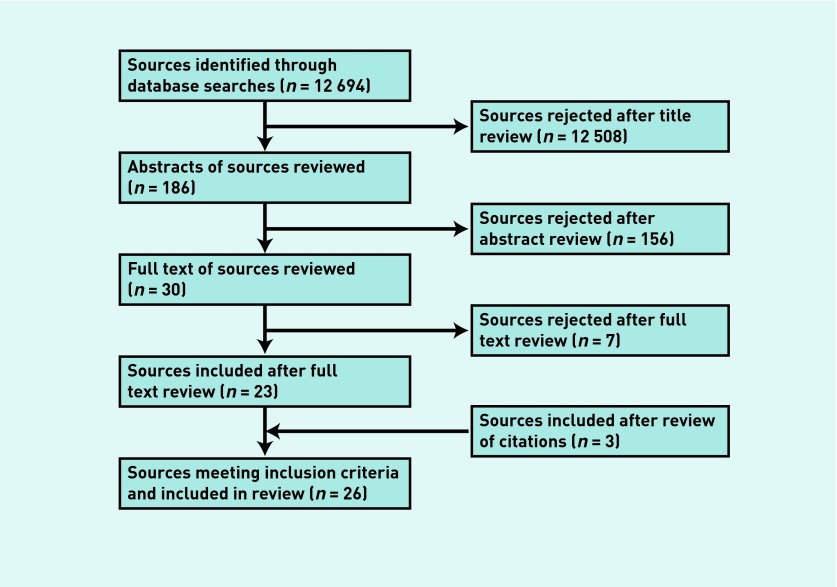
Method: Articles that related to frail or older individuals and either advance care plans or discussions on end-of-life care were included. Studies of specific conditions or that focused on prognosis, capacity, or resuscitation decisions were excluded.
Results: While a significant minority of frail older individuals would find them unwelcome, the majority would appreciate the chance to discuss end-of-life care, yet most do not have this opportunity. Attitudes to the timing of these discussions were variable, but most perceived the risk of leaving them too late. Most doctors believed it was their professional responsibility to initiate discussions, but felt limited by time pressures and the absence of a precipitating event. A wide range of barriers were identified including the reluctance of family members to discuss end-of-life care, the passive expectation that someone else would decide on an individual's behalf, and significant uncertainty concerning future illness and decline.
Conclusion: The marked disparity between the majority of older individuals who would like the opportunity to discuss their end-of-life care and the minority that currently have this opportunity raises important questions if the wishes of this large group in society are to be respected. The challenge is to find effective ways of encouraging dialogue and choice within the constraints of the current healthcare systems and personal circumstances.
Comment in
-
The right to die peacefully.Br J Gen Pract. 2013 Dec;63(617):629-30. doi: 10.3399/bjgp13X675287. Br J Gen Pract. 2013. PMID: 24351467 Free PMC article. No abstract available.
-
Response to 'Do the elderly have a voice'.Br J Gen Pract. 2013 Dec;63(617):630. doi: 10.3399/bjgp13X675296. Br J Gen Pract. 2013. PMID: 24351471 Free PMC article. No abstract available.
References
-
- National Audit Office . End of life care. London: NAO; 2008.
-
- Thomas PK, Clifford PC, Silva D De, et al. The national primary care snapshot audit in end of life care, England 2009–2010.
-
- Office for National Statistics . Mortality statistics: deaths registered in 2011. London: NAO; 2012.
-
- Department of Health . End of life care strategy. London: DoH; 2008.
Publication types
MeSH terms
LinkOut - more resources
Full Text Sources
Other Literature Sources
