


Feasibility of detection and intervention for alcohol-related liver disease in the community: the Alcohol and Liver Disease Detection study (ALDDeS)
- PMID: 24152485
- PMCID: PMC3782803
- DOI: 10.3399/bjgp13X673711
Feasibility of detection and intervention for alcohol-related liver disease in the community: the Alcohol and Liver Disease Detection study (ALDDeS)
Abstract
Background: In the past 15 years mortality rates from liver disease have doubled in the UK. Brief alcohol advice is cost effective, but clinically meaningful reductions in alcohol consumption only occur in around 1 in 10 individuals.
Aim: To provide evidence that detecting early liver disease in the community is feasible, practical, and that feedback of liver risk can increase the proportion of subjects reducing alcohol consumption.
Design and setting: A community feasibility study in nine general practice sites in Hampshire.
Method: Hazardous and harmful drinkers were identified by WHO AUDIT questionnaire and offered screening for liver fibrosis.
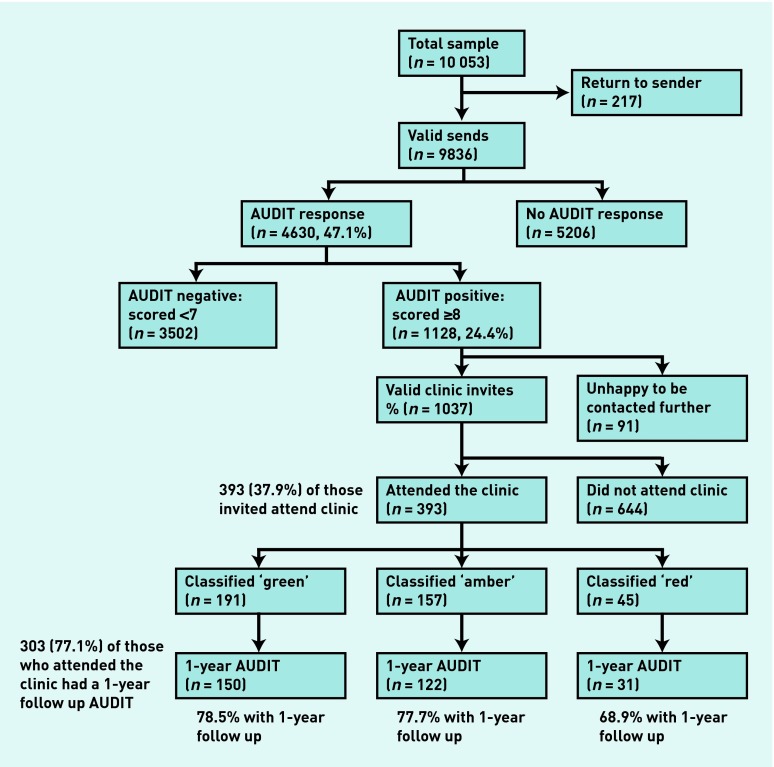
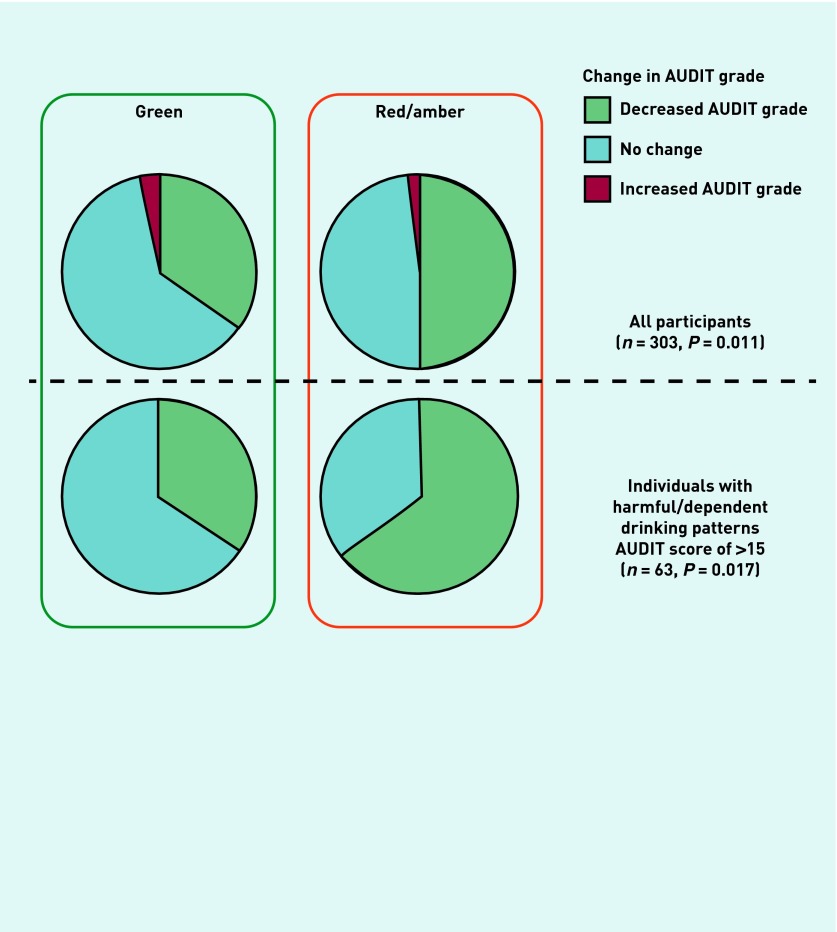
Results: In total, 4630 individuals responded, of whom 1128 (24%) hazardous or harmful drinkers were offered a liver fibrosis check using the Southampton Traffic Light (STL) test; 393 (38%) attended and test results were returned by post. The STL has a low threshold for liver fibrosis with 45 (11%) red, 157 (40%) amber, and 191 (49%) green results. Follow-up AUDIT data was obtained for 303/393 (77%) and 76/153 (50%) subjects with evidence of liver damage reduced drinking by at least one AUDIT category (harmful to hazardous, or hazardous to low risk) compared with 52/150 (35%, P<0.011) subjects without this evidence; in the subset of harmful drinkers patterns (AUDIT >15), 22/34 (65%) of STL positives, reduced drinking compared with 10/29 (35%, P<0.017) STL negatives.
Conclusion: Detection of liver disease in the community is feasible, and feedback of liver risk may reduce harmful drinking.
Figures
References
-
- Office for National Statistics . Mortality statistics: deaths registered in England and Wales (Series DR), 2010. Newport, South Wales: Office for National Statistics; 2011.
-
- Verrill C, Markham H, Templeton A, et al. Alcohol-related cirrhosis —early abstinence is a key factor in prognosis, even in the most severe cases. Addiction. 2009;104(5):768–774. - PubMed
-
- Kaner EF, Dickinson HO, Beyer F, et al. The effectiveness of brief alcohol interventions in primary care settings: a systematic review. Drug Alcohol Rev. 2009;28(3):301–323. - PubMed
Publication types
MeSH terms
LinkOut - more resources
Full Text Sources
Other Literature Sources
Medical
Miscellaneous
