


The angiogenic properties of mesenchymal stem/stromal cells and their therapeutic potential
- PMID: 24152971
- PMCID: PMC3842875
- DOI: 10.1093/bmb/ldt031
The angiogenic properties of mesenchymal stem/stromal cells and their therapeutic potential
Abstract
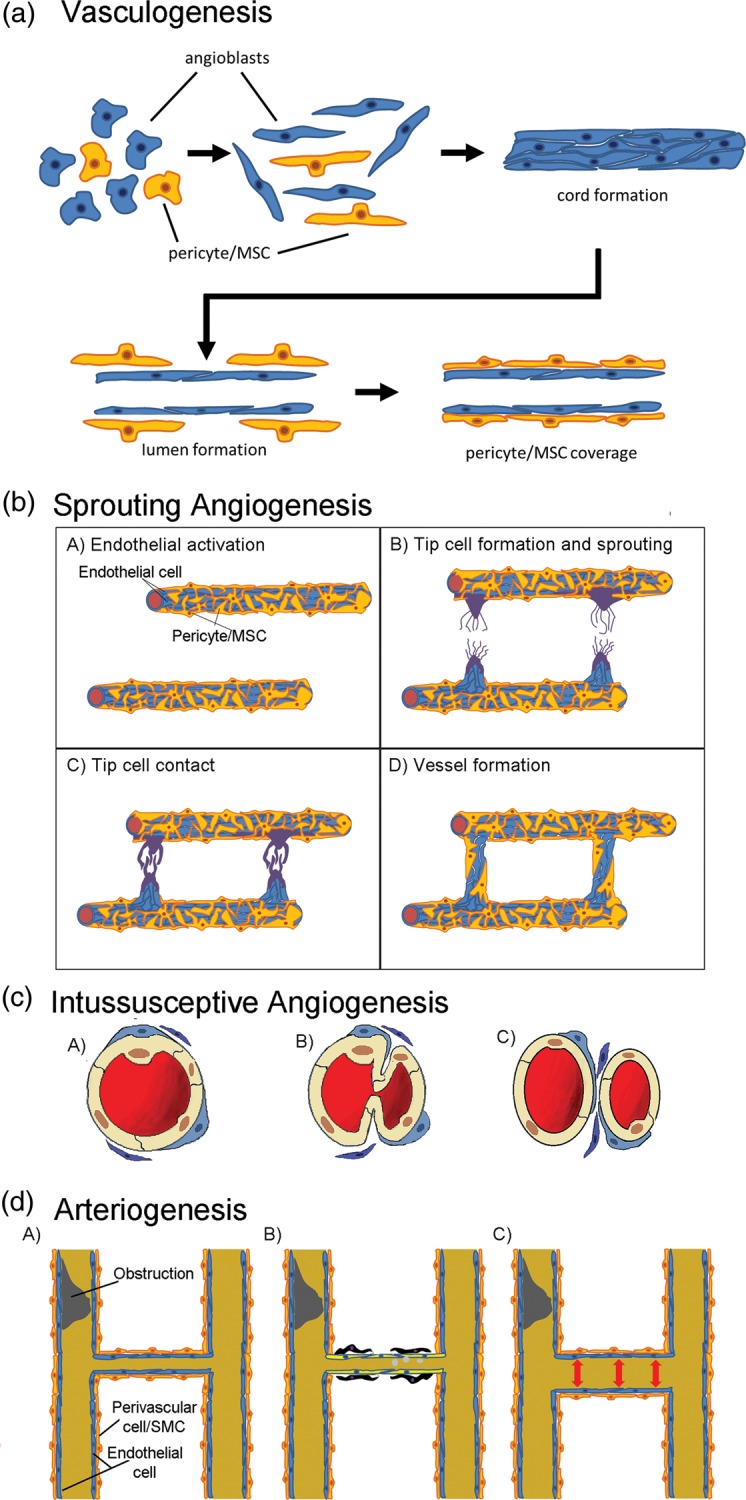
Background: Blood vessel formation is fundamental to development, while its dysregulation can contribute to serious disease. Expectations are that hundreds of millions of individuals will benefit from therapeutic developments in vascular biology. MSCs are central to the three main vascular repair mechanisms.
Sources of data: Key recent published literature and ClinicalTrials.gov.
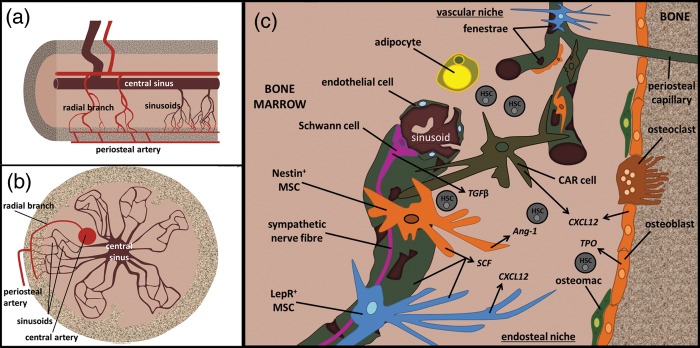
Areas of agreement: MSCs are heterogeneous, containing multi-lineage stem and partly differentiated progenitor cells, and are easily expandable ex vivo. There is no single marker defining native MSCs in vivo. Their phenotype is strongly determined by their specific microenvironment. Bone marrow MSCs have skeletal stem cell properties. Having a perivascular/vascular location, they contribute to vascular formation and function and might be harnessed to regenerate a blood supply to injured tissues.
Areas of controversy: These include MSC origin, phenotype and location in vivo and their ability to differentiate into functional cardiomyocytes and endothelial cells or act as vascular stem cells. In addition their efficacy, safety and potency in clinical trials in relation to cell source, dose, delivery route, passage and timing of administration, but probably even more on the local preconditioning and the mechanisms by which they exert their effects.
Growing points: Understanding the origin and the regenerative environment of MSCs, and manipulating their homing properties, proliferative ability and functionality through drug discovery and reprogramming strategies are important for their efficacy in vascular repair for regenerative medicine therapies and tissue engineering approaches.
Areas timely for developing research: Characterization of MSCs' in vivo origins and biological properties in relation to their localization within tissue niches, reprogramming strategies and newer imaging/bioengineering approaches.
Keywords: adventitial cells; angiogenesis; arteriogenesis; cancer; mesenchymal stem/stromal cells; pericytes; regenerative medicine; tissue engineering; transplantation; vasculogenesis.
Figures
References
-
- Friedenstein AJ, Petrakova KV, Kurolesova AI, et al. Heterotopic of bone marrow. Analysis of precursor cells for osteogenic and haemopoietic tissues. Transplantation. 1968;6:230–47. - PubMed
-
- Friedenstein AJ, Chailakhjan RK, Lalykina KS. The development of fibroblast colonies in monolayer cultures of guinea-pig bone marrow and spleen cells. Cell Tissue Kinet. 1970;3:393–403. - PubMed
-
- Friedenstein AJ, Gorskaja JF, Kulagina NN. Fibroblast precursors in normal and irradiated mouse haemopoietic organs. Exp Hematol. 1976;4:267–74. - PubMed
-
- Castro-Malaspina H, Gay RE, Resnick G, et al. Characterization of human bone marrow fibroblast colony-forming cells (CFU-F) and their progeny. Blood. 1980;56:289–301. - PubMed
-
- Friedenstein AJ, Chailakhyan RK, Latsinik NV, et al. Stromal cells responsible for transferring the microenvironment of the hemopoietic tissues. Cloning in vitro and retransplantation in vivo. Transplantation. 1974;17:331–40. - PubMed
Publication types
MeSH terms
Substances
Grants and funding
LinkOut - more resources
Full Text Sources
Other Literature Sources
Research Materials
