Clinical Trial
. 2013 Oct 23;5(208):208ra147.
doi: 10.1126/scitranslmed.3006941.

Major cancer regressions in mesothelioma after treatment with an anti-mesothelin immunotoxin and immune suppression

Affiliations
Clinical Trial

Major cancer regressions in mesothelioma after treatment with an anti-mesothelin immunotoxin and immune suppression

Raffit Hassan et al. Sci Transl Med. .

Abstract

Immunotoxins are potent anticancer agents with an unusual mechanism of action: inhibition of protein synthesis resulting in apoptotic cell death. Immunotoxins have produced many durable complete responses in refractory hairy cell leukemia, where patients rarely form antibodies to the bacterial toxin component of the immunotoxin. Patients with mesothelioma, however, have normal immune systems and form antibodies after one cycle, and tumor responses to the immunotoxin have not been observed in this disease. We describe the results of a trial in which major antitumor responses were seen in patients with advanced mesothelioma who received the anti-mesothelin immunotoxin SS1P, together with pentostatin and cyclophosphamide, to deplete T and B cells. Of 10 patients with chemotherapy-refractory mesothelioma, 3 have had major tumor regressions with 2 ongoing at 15 months, and 2 others responded to chemotherapy after discontinuing immunotoxin therapy. Antibody formation was markedly delayed, allowing more SS1P cycles to be given, but this alone does not appear to account for the marked antitumor activity observed.


Conflict of interest statement

Competing interests: I.P. is an inventor on patents on immunotoxins that have all been assigned to the NIH. Other authors declare that they have no competing financial interests.

Figures

Fig. 1.
Fig. 1.. Tumor response in a patient with extensive pleural mesothelioma.
(A to C) Compared with CT obtained before treatment (A), patient 3 had a rapidly progressive disease on day 12, after only one dose of SS1P, which was administeredon day 10 (B). (C)However, the patient had a marked decrease in tumor burden at the end of cycle 2, which had been maintained through last follow-up at 15 months. Representative tumor involvement is indicated by red asterisks. (D) The magnitude of tumor response in this patient is shown by graphing the sum of the target lesions at time points when CT scans were obtained. The horizontal dashed line represents partial response, defined as a 30% reduction in the sum of target lesions from pretreatment CT scan.
Fig. 2.
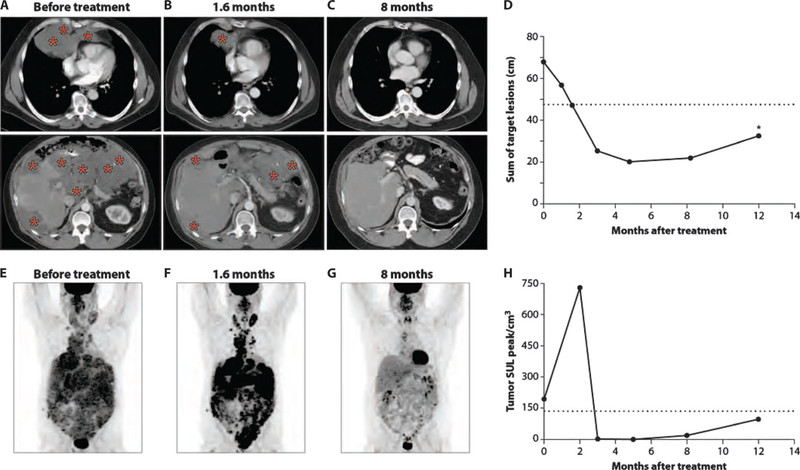
Fig. 2.. Early and sustained regression of a widely metastatic peritoneal mesothelioma.
(A to C) Representative axial CT images of chest and abdomen for patient 5 before treatment (A), after receiving two cycles of therapy (1.6 months) (B), and at 8 months of follow-up (C). Representative tumor involvement is indicated by red asterisks. (D) The magnitude of tumor response in this patient is shown by graphing the sum of target lesions at time points when CT scans were obtained. The horizontal dashed line represents partial response, defined as a 30% reduction in the sum of target lesions from pretreatment CT scan. The asterisk at 12 months of follow-up indicates tumor progression. (E to G) [18F]FDG PET images from time points corresponding to (A) to (C), respectively. (H) Change in tumor metabolic activity as measured by SULpeak/cm3 before therapy and at different time points after treatment. The horizontal dashed line represents metabolic partial response, as described in (25).
Fig. 3.
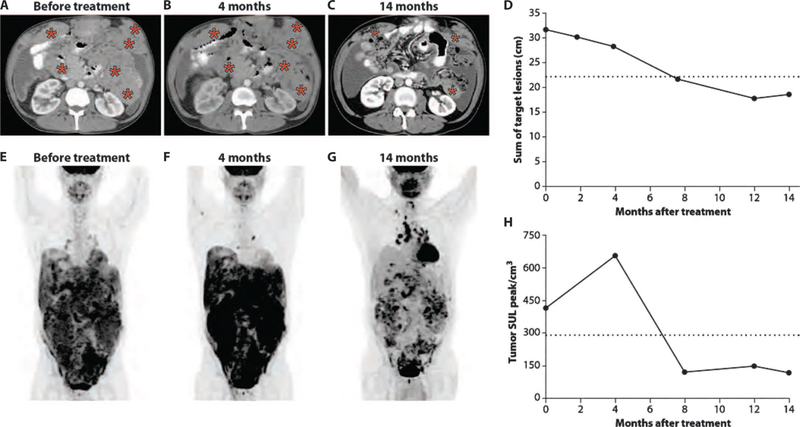
Fig. 3.. Delayed tumor response in a patient with peritoneal mesothelioma.
(A to C) Representative CT images of the abdomen for patient 2 before treatment and at 4 and 14 months after therapy, respectively. There was no objective tumor regression at 4 months (B), but a CT obtained at 7 months showed a partial response that had been maintained at 14 months of follow-up (C). Tumor involvement is indicated by red asterisks. (D) The magnitude of tumor response in this patient is shown by graphing the sum of target lesions to time points at which CT scans were obtained. The horizontal dashed line represents partial response, defined as a 30% reduction in the sum of target lesions from pretreatment CT scan. (E to G) PET images from the time points shown in (A) to (C), respectively. (H) Change in tumor metabolic activity as measured by SULpeak/cm3 before therapy and at different time points after treatment. The horizontal dashed line represents metabolic partial response, as described in (25).
Fig. 4.
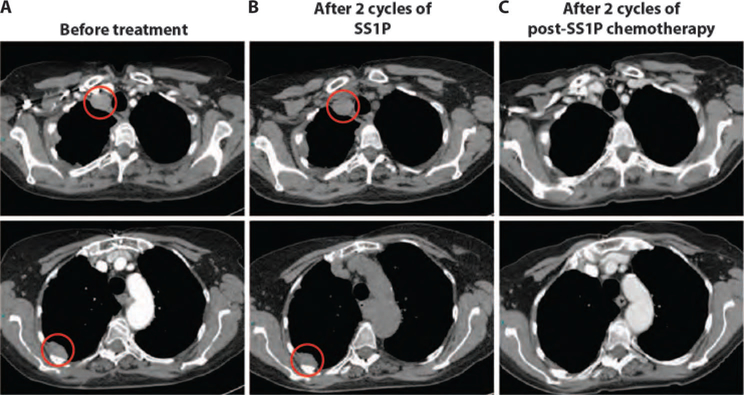
Fig. 4.. Tumor regression in a pleural mesothelioma patient treated with chemotherapy after SS1P.
(A to C) Representative axial CT images of the chest for patient 4 before treatment (A), after two cycles of SS1P (B), and after two cycles of post-SS1P chemotherapy (C). Areas of tumor involvement are indicated by red circles.
Fig. 5.
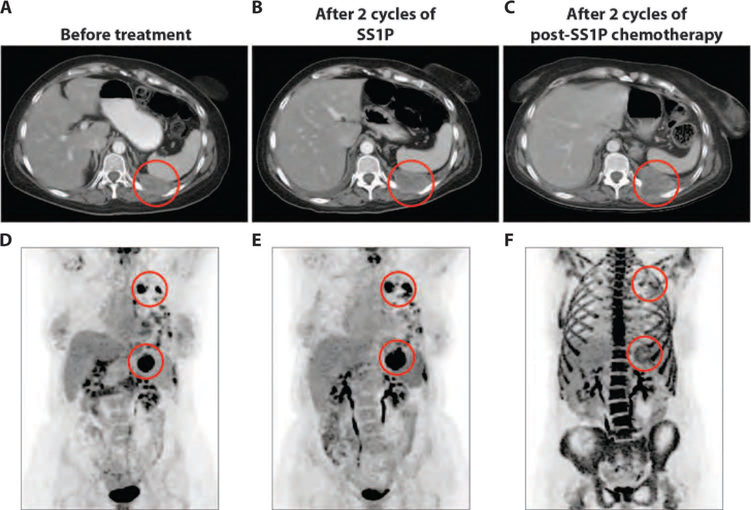
Fig. 5.. Tumor response to post-SS1P chemotherapy in a patient with pleural mesothelioma.
(A to C) Representative axial CT images of the chest for patient 9 before treatment (A), after two cycles of SS1P (B), and after two cycles of post-SS1P chemotherapy (C). Areas of tumor involvement are indicated by red circles. (D to F) [18F]FDG PET images from time points corresponding to (A) to (C), respectively. Areas of tumor involvement are indicated by red circles. (F) Image showing a marked reduction of [18F]FDG uptake in the highlighted areas after post-SS1P chemotherapy, compared to after two cycles of SS1P (E). Intense bone marrow metabolic activity in the axial and appendicular skeleton in (F) is secondary to recent administration of granulocyte colony-stimulating factor to prevent chemotherapy-induced neutropenia.
Fig. 6.
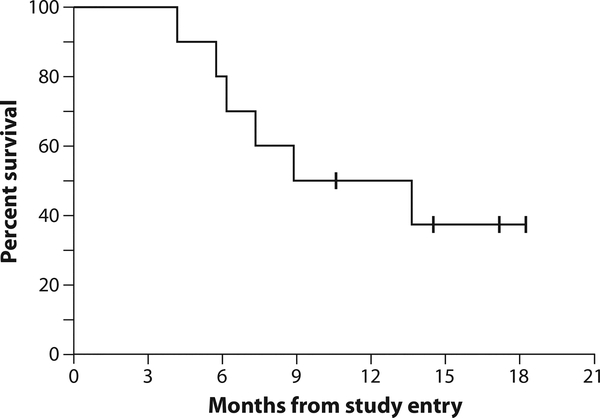
Fig. 6.. Kaplan-Meier plot of overall survival for all evaluable patients in the study.
As of last follow-up on 13 June 2013, two of eight patients with pleural mesothelioma and both patients with peritoneal mesothelioma are still alive.
Fig. 7.
Fig. 7.. Tumor mesothelin expression.
(A to C) Mesothelin positivity (indicated by brown staining of tumor cells), as detected by immunohistochemistry with the anti-mesothelin monoclonal antibody 5B2, is shown for patients 2 (A), 3 (B), and 5 (C).
Fig. 8.
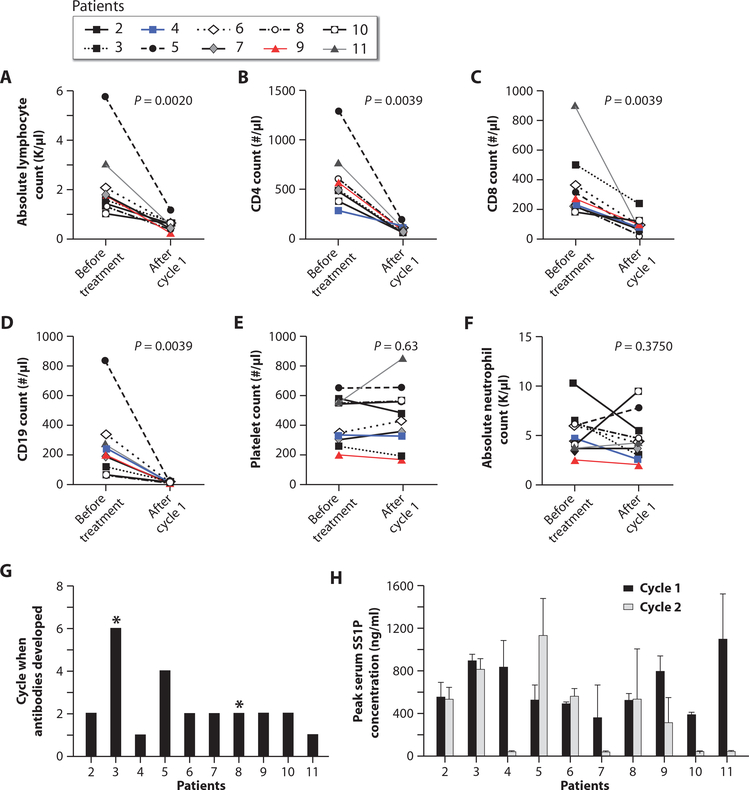
Fig. 8.. Blood counts, lymphocyte subsets, SS1P neutralizing antibodies, and serum SS1P concentrations.
(A to F) Effects of pentostatin and cyclophosphamide on ALC, CD4+ T cells, CD8+ T cells, CD19+ B cells, platelets, and ANC before treatment and at the end of cycle 1 (day 30). (G) The number of treatment cycles after which each patient developed anti-SS1P neutralizing antibodies. Asterisks indicate patients who did not develop antibodies. (H) Peak serum SS1P concentrations for each patient during cycles 1 and 2, calculated as mean serum SS1P concentration on days 1, 3, and 5 of each cycle. All patients had an SS1P serum concentration of >100 ng/ml during cycle 1. However, during cycle 2, four patients did not have an SS1P serum concentration of >100 ng/ml. Error bars indicate SD.

Comment in

  • A new hope for precision medicine.
    Salgia R, Sattler M. Salgia R, et al. Sci Transl Med. 2013 Oct 23;5(208):208fs38. doi: 10.1126/scitranslmed.3007622. Sci Transl Med. 2013. PMID: 24154598

References

    1. Robinson BW, Lake RA, Advances in malignant mesothelioma. N. Engl. J. Med 353, 1591–1603 (2005). - PubMed
    1. Vogelzang NJ, Rusthoven JJ, Symanowski J, Denham C, Kaukel E, Ruffie P, Gatzemeier U,Boyer M, Emri S, Manegold C, Niyikiza C, Paoletti P, Phase III study of pemetrexed in combination with cisplatin versus cisplatin alone in patients with malignant pleural mesothelioma. J. Clin. Oncol 21, 2636–2644 (2003). - PubMed
    1. Tsao A, Wistuba I, Roth JA, Kindler HL, Malignant pleural mesothelioma. J. Clin. Oncol 27, 2081–2090 (2009). - PMC - PubMed
    1. Yan TD, Deraco M, Baratti D, Kusamura S, Elias D, Glehen O, Gilly FN, Levine EA, Shen P,Mohamed F, Moran BJ, Morris DL, Chua TC, Piso P, Sugarbaker PH, Cytoreductive surgery and hyperthermic intaperitoneal chemotherapy for malignant peritoneal mesothelioma: Multi-institutional experience. J. Clin. Oncol 27, 6237–6242 (2009). - PubMed
    1. Chang K, Pastan I, Molecular cloning of mesothelin, a differentiation antigen present on mesothelium, mesotheliomas, and ovarian cancers. Proc. Natl. Acad. Sci. U.S.A 93, 136–140 (1996). - PMC - PubMed

Publication types

MeSH terms