. 2013 Dec 1;191(11):5542-50.
doi: 10.4049/jimmunol.1301810. Epub 2013 Oct 23.

Programmed death 1-mediated T cell exhaustion during visceral leishmaniasis impairs phagocyte function

Affiliations

Programmed death 1-mediated T cell exhaustion during visceral leishmaniasis impairs phagocyte function

Kevin J Esch et al. J Immunol. .

Abstract

Control of Leishmania infantum infection is dependent upon Th1 CD4(+) T cells to promote macrophage intracellular clearance of parasites. Deficient CD4(+) T cell effector responses during clinical visceral leishmaniasis (VL) are associated with elevated production of IL-10. In the primary domestic reservoir of VL, dogs, we define occurrence of both CD4(+) and CD8(+) T cell exhaustion as a significant stepwise loss of Ag-specific proliferation and IFN-γ production, corresponding to increasing VL symptoms. Exhaustion was associated with a 4-fold increase in the population of T cells with surface expression of programmed death 1 (PD-1) between control and symptomatic populations. Importantly, exhausted populations of CD8(+) T cells and to a lesser extent CD4(+) T cells were present prior to onset of clinical VL. VL-exhausted T cells did not undergo significant apoptosis ex vivo after Ag stimulation. Ab block of PD-1 ligand, B7.H1, promoted return of CD4(+) and CD8(+) T cell function and dramatically increased reactive oxygen species production in cocultured monocyte-derived phagocytes. As a result, these phagocytes had decreased parasite load. To our knowledge, we demonstrate for the first time that pan-T cell, PD-1-mediated, exhaustion during VL influenced macrophage-reactive oxygen intermediate production. Blockade of the PD-1 pathway improved the ability of phagocytes isolated from dogs presenting with clinical VL to clear intracellular parasites. T cell exhaustion during symptomatic canine leishmaniasis has implications for the response to vaccination and therapeutic strategies for control of Leishmania infantum in this important reservoir species.


Figures
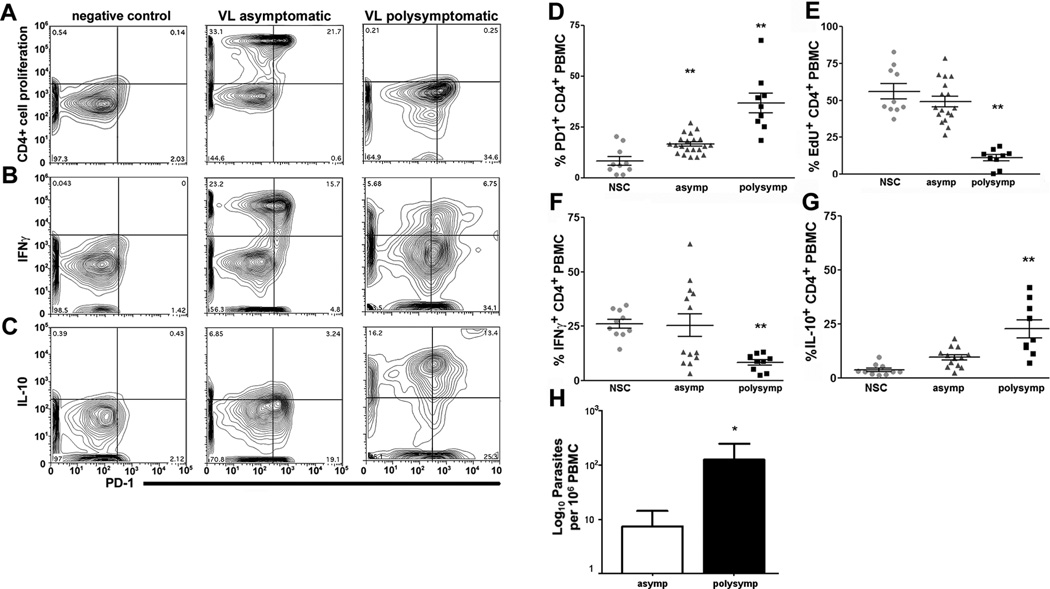
Figure I
Figure I. Leishmania infantum infection promotes progressive CD4+ T cell exhaustion
PBMC from L. infantum- infected dogs were stimulated with f-t L. infantum, or a non-mitogen antigen-specific positive control (NSC) (A–C) - CD4+ T cell plots of negative control (left), asymptomatic (middle), and symptomatic (right) dog PBMC for (A) CD4+ proliferation via EdU incorporation, (B) CD4+ IFNγ+, and (C) CD4+ IL-10+, vs. PD-1+ in response to f-t L.i. (D–G) - Population graphs of CD4+ T cell (D) PD-1 surface expression, (E) proliferation measured via EdU incorporation, (F) IFNγ expression, and (G) IL-10 from NSC-stimulated, asymptomatic and symptomatic animals. (H) Peripheral blood parasite levels in asymptomatic and symptomatic dogs measured by qPCR, expressed as log number of parasites. All experiments included n>21 dogs, 10 asymptomatic dogs for NSC. *p<0.05, **p<0.01 via one-way ANOVA with Tukey’s post-test (A–G), or un-paired Student’s-test (H).
Figure II
Figure II. Leishmania infantum infection promotes progressive CD8+ T cell exhaustion
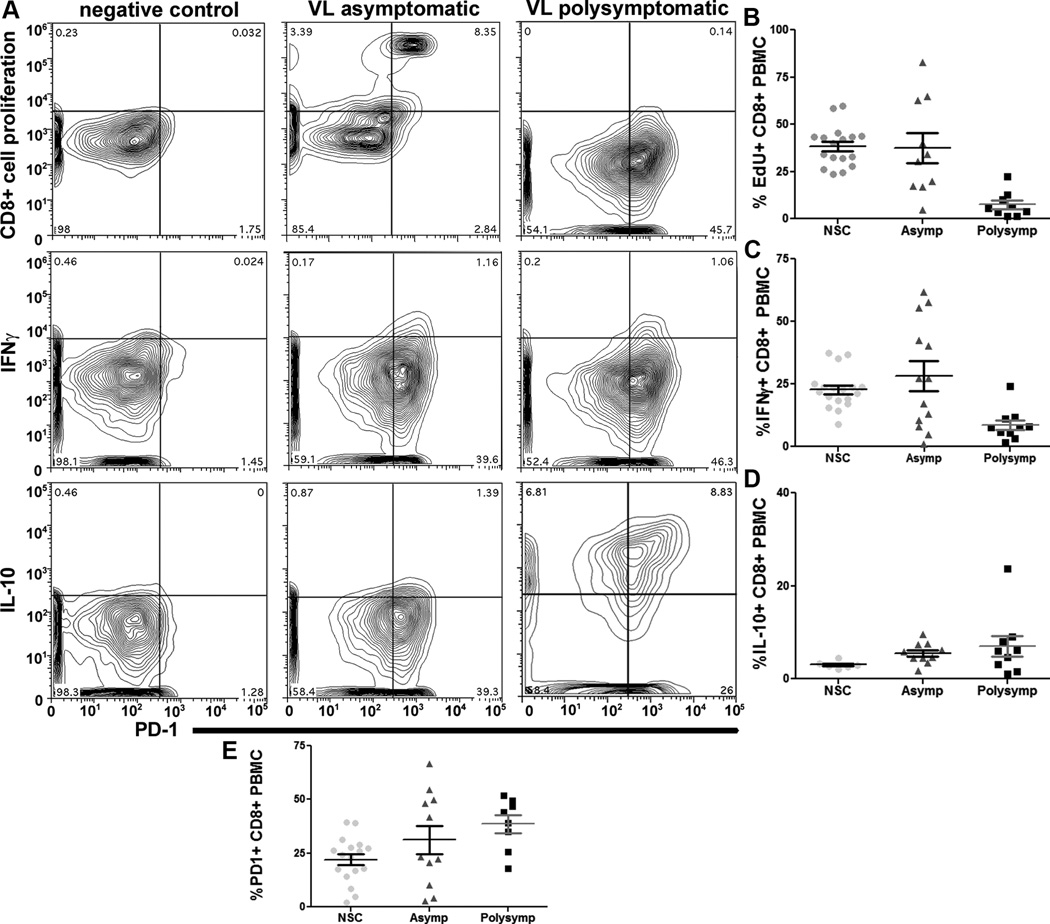
PBMC from L. infantum-infected dogs were stimulated with f-t L. infantum, or a non-mitogen antigen-specific positive control (NSC) (A) – CD8+ T cell plots of negative control (left), asymptomatic (middle), and symptomatic (right) dog PBMC for (top) CD8+ proliferation via EdU incorporation, (middle) CD8+ IFNγ+, and (bottom) CD8+ IL-10+, vs. PD-1+ in response to f-t L.i. (B-E) - Population graphs of CD8+ T cell (B) proliferation measured via EdU incorporation, (C) IFNγ expression, (D) IL-10, and (E) PD-1 surface expression from NSC-stimulated, asymptomatic and symptomatic animals. All experiments included n>18 dogs, 6 (D) and 17 (B, C, E) asymptomatic dogs for NSC. *p<0.05, **p<0.01 via one-way ANOVA with Tukey’s post-test.
Figure III
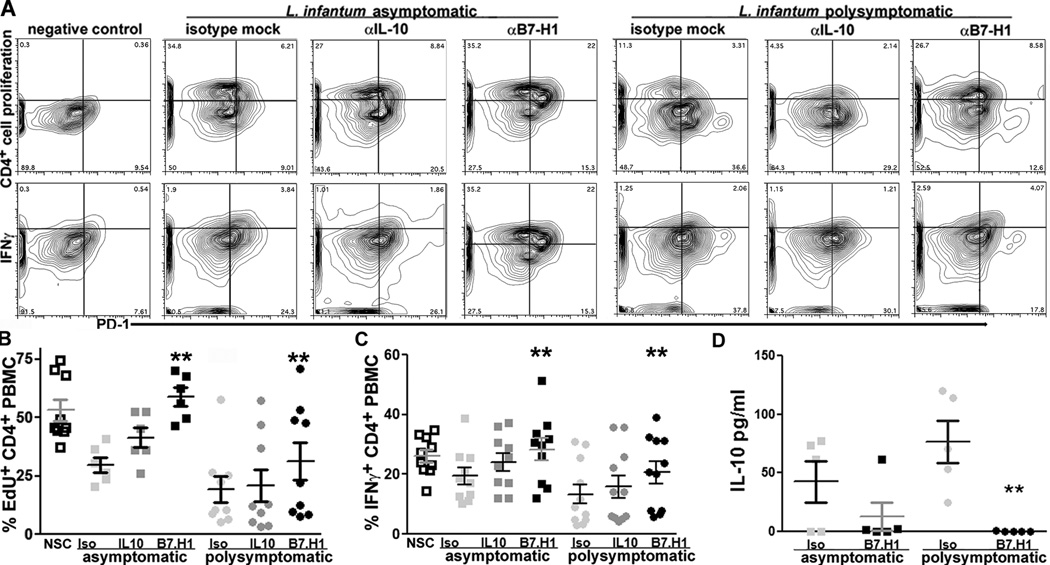
Figure III. PD-1/B7.H1 interaction necessary for CD4+ T cell exhaustion during symptomatic VL
Adherent PBMC treated with B7.H1 blocking antibody or IL-10 blocking antibody. PBMC stimulated as previous. (A) CD4+ cellular proliferation (top row) and CD4+ T cell IFNγ (bottom row), compared to PD-1 (x-axis) in PBMC from negative control (left), asymptomatic VL (middle), and symptomatic VL (right) dogs, with isotype control (left), anti-IL-10 antibody (center), or anti-B7.H1 antibody treatment (right). (B) CD4+ cellular proliferation, n=15. (C) CD4+ PBMC IFNγ intracellular production, n=21. (D) Production of IL-10 via ELISA, n=11. **p<0.01, via one way ANOVA with Tukey’s post-test.
Figure IV
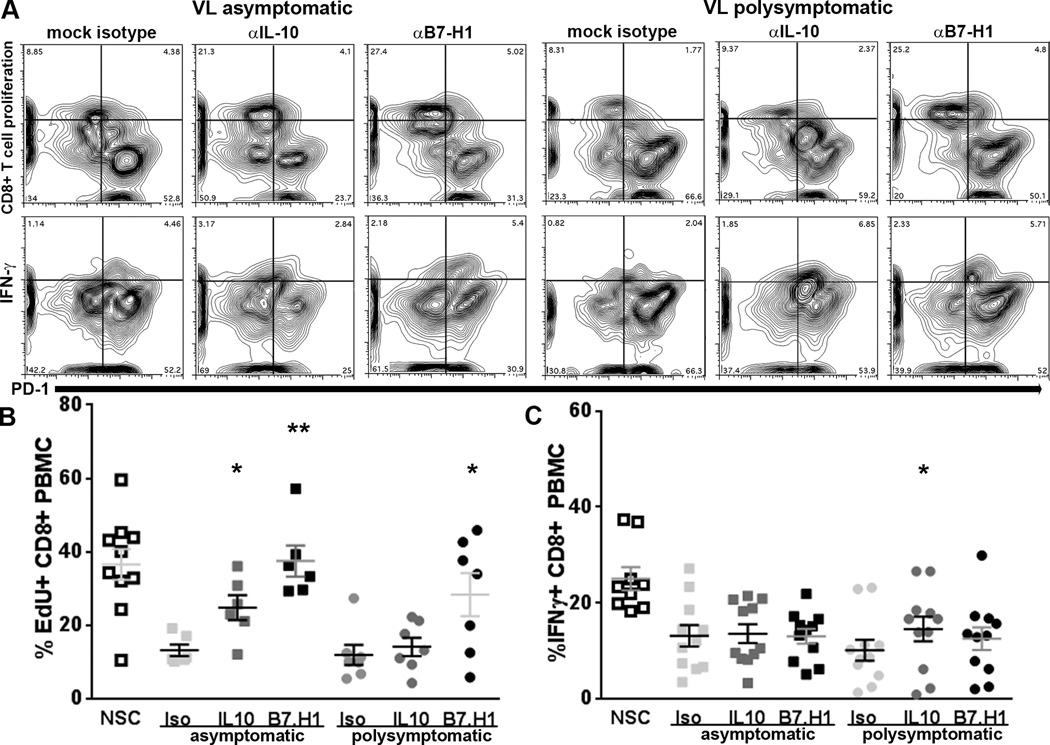
Figure IV. PD-1/B7.H1 interaction necessary for suppression of proliferation but not IFNγ production during symptomatic VL– associated CD8+ T cell exhaustion
Adherent PBMC treated with B7.H1 blocking antibody or IL-10 blocking antibody. PBMC stimulated as previous. (A) CD8+ cellular proliferation (top row) and CD8+ T cell IFNγ (bottom row), compared to PD-1 (x-axis) in PBMC from negative control (left), asymptomatic VL (middle), and symptomatic VL (right) dogs, with isotype control (left), anti-IL-10 antibody (center), or anti-B7.H1 antibody treatment (right). (B) CD8+ cellular proliferation, n=13. (C) CD8+ PBMC IFNγ intracellular production, n=22. *p<0.05, **p<0.01, via one way ANOVA with Tukey’s post-test.
Figure V
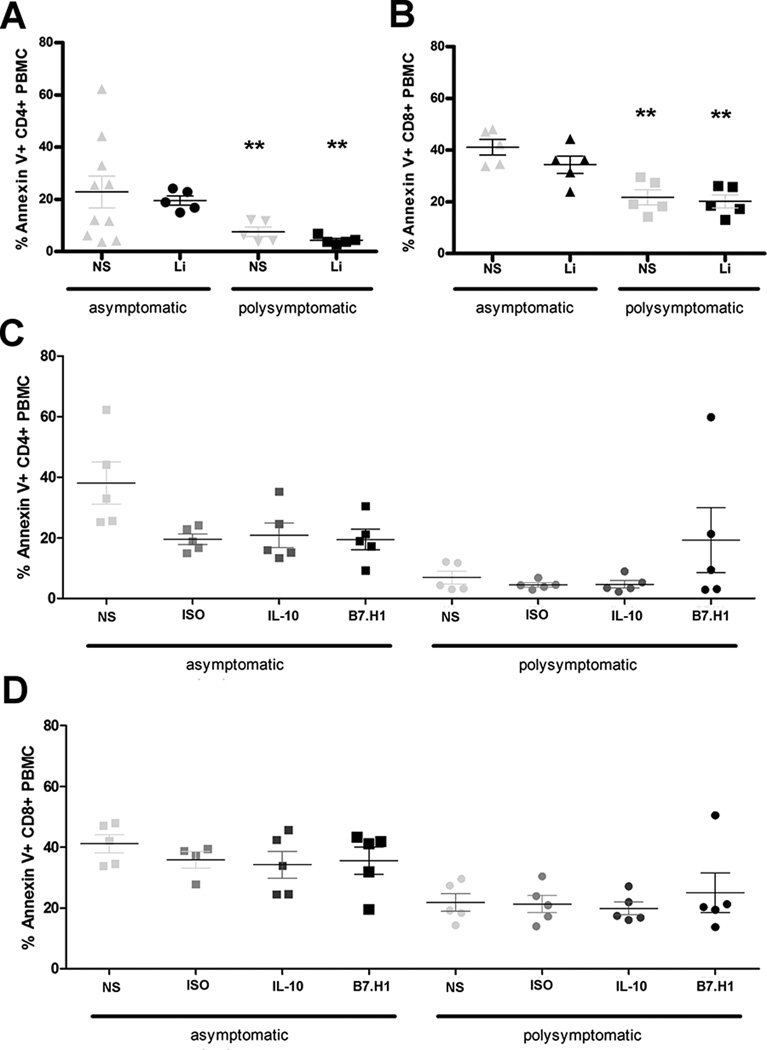
Figure V. L. infantum exhausted T cells do not undergo apoptosis or cell death in response to antigen stimulation
(A, B) Annexin V and PI (not shown) positivity was measured in asymptomatic or poly-symptomatic VL dogs after no stimulation and stimulation with 10 µg/ml f-t L.i. for 7 days. PBMC were gated on CD4+ (A) or CD8+ (B) live lymphocytes based on isotype control. (C, D) Annexin V positivity was measured similarly to 3A, after blocking with isotype, IL-10, or B7.H1 blocking antibodies in CD4+ (C) and CD8+ (D). **p<0.01 via one way ANOVA with Tukey’s post-test in GraphPad Prism 5. Experiments included n=10.
Figure VI
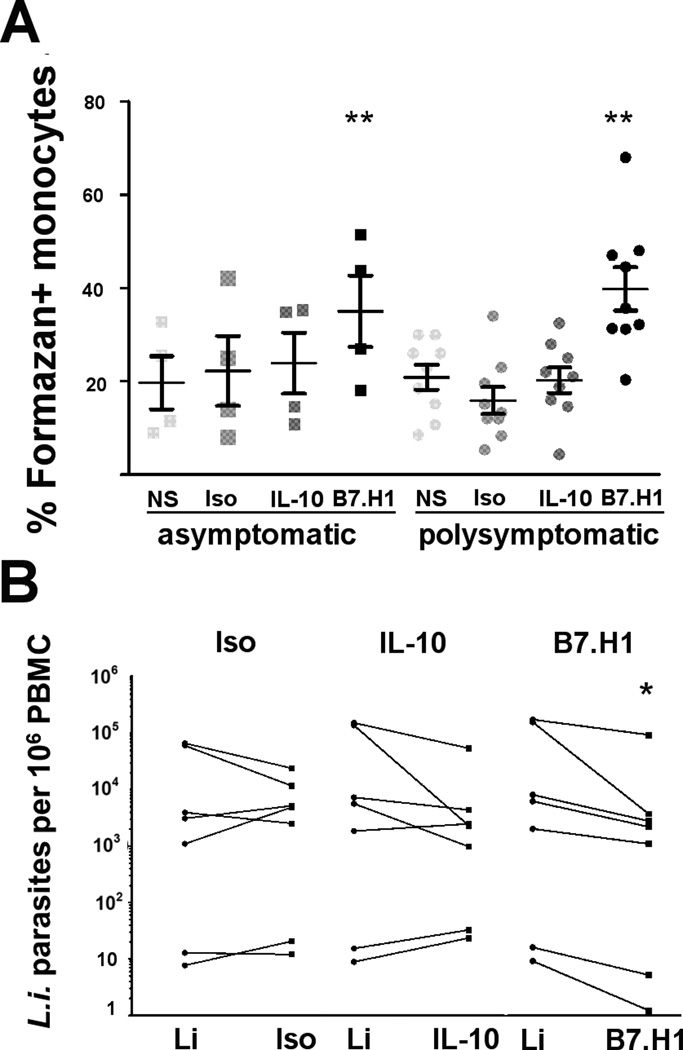
Figure VI. B7.H1 block increased phagocyte superoxide production and decreased parasite load
(A) NBT assay performed on adherent PBMC from asymptomatic and symptomatic VL dogs after isotype, B7.H1, or IL-10 antibody treatment and stimulation with f-t L.i.. (B) L. infantum-specific quantitative RT-PCR performed on PBMC DNA. Data presented as number of genomic copies of L. infantum/106 PBMC from symptomatic dogs, after f-t L.i. stimulation (Li) compared to stimulation and addition of isotype, (left, Iso), anti-IL-10 (middle, IL-10), or anti-B7.H1antibody (right, B7.H1). (A) n=13 and (B) n=7. *p<0.05, **p<0.01, via one way ANOVA with Tukey’s post-test on averaged (A) or log-transformed (B) data.

References

    1. Kaye P, Scott P. Leishmaniasis: complexity at the host-pathogen interface. Nat Rev Microbiol. 2011;9:604–615. - PubMed
    1. Nylen S, Maurya R, Eidsmo L, Manandhar KD, Sundar S, Sacks D. Splenic accumulation of IL-10 mRNA in T cells distinct from CD4+CD25+ (Foxp3) regulatory T cells in human visceral leishmaniasis. J Exp Med. 2007;204:805–817. - PMC - PubMed
    1. Wilson ME, Recker TJ, Rodriguez NE, Young BM, Burnell KK, Streit JA, Kline JN. The TGF-beta response to Leishmania chagasi in the absence of IL-12. Eur J Immunol. 2002;32:3556–3565. - PubMed
    1. Gomez MA, Contreras I, Halle M, Tremblay ML, McMaster RW, Olivier M. Leishmania GP63 alters host signaling through cleavage-activated protein tyrosine phosphatases. Sci Signal. 2009;2:ra58. - PubMed
    1. Boggiatto PM, Ramer-Tait AE, Metz K, Kramer EE, Gibson-Corley K, Mullin K, Hostetter JM, Gallup JM, Jones DE, Petersen CA. Immunologic indicators of clinical progression during canine Leishmania infantum infection. Clin Vaccine Immunol. 2010;17:267–273. - PMC - PubMed

Publication types

MeSH terms