


Activation of influenza A viruses by host proteases from swine airway epithelium
- PMID: 24155384
- PMCID: PMC3911738
- DOI: 10.1128/JVI.01635-13
Activation of influenza A viruses by host proteases from swine airway epithelium
Abstract
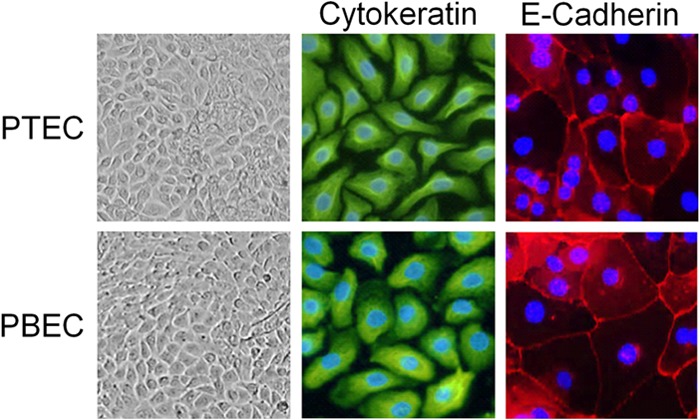
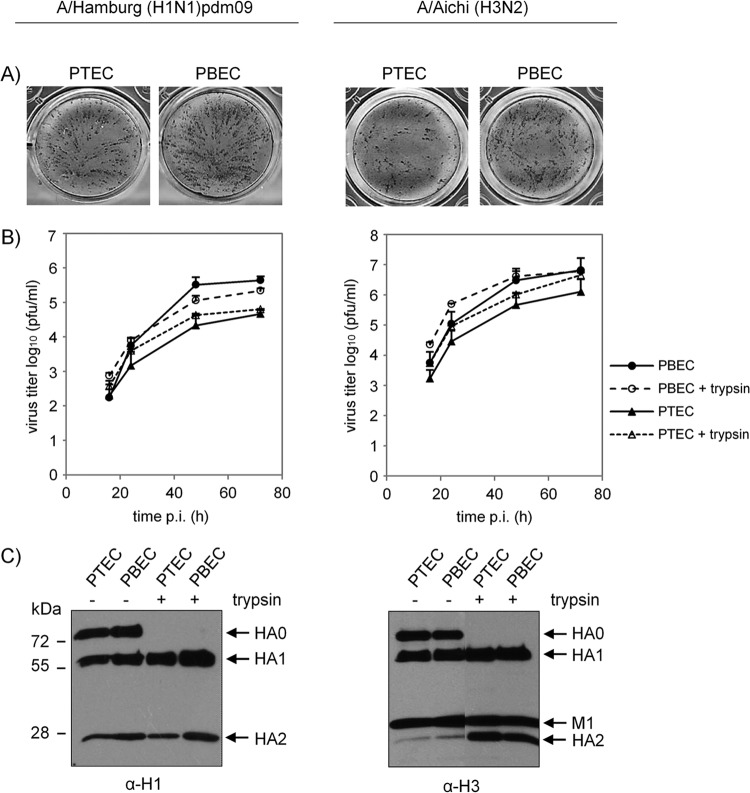
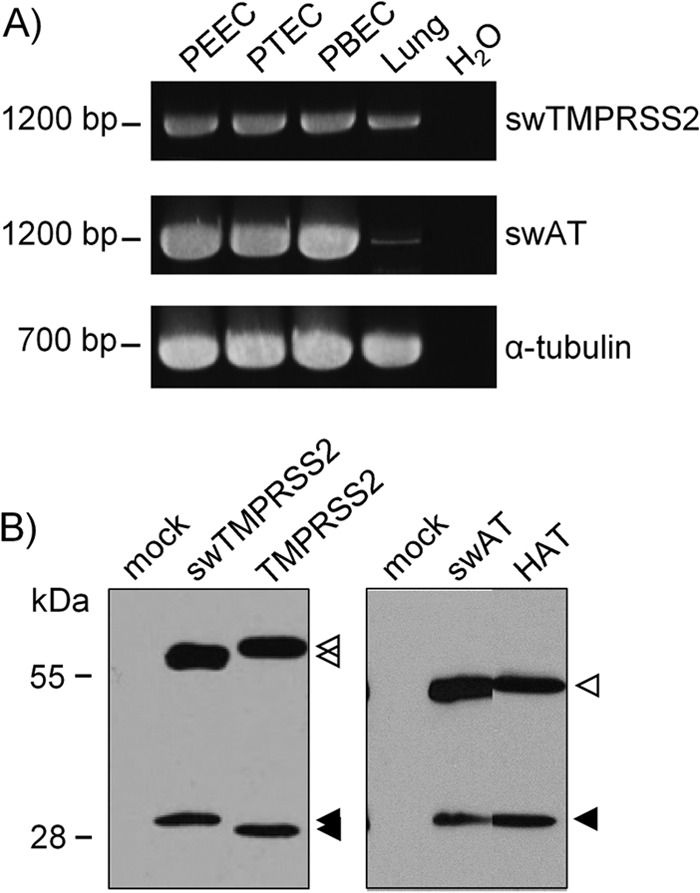
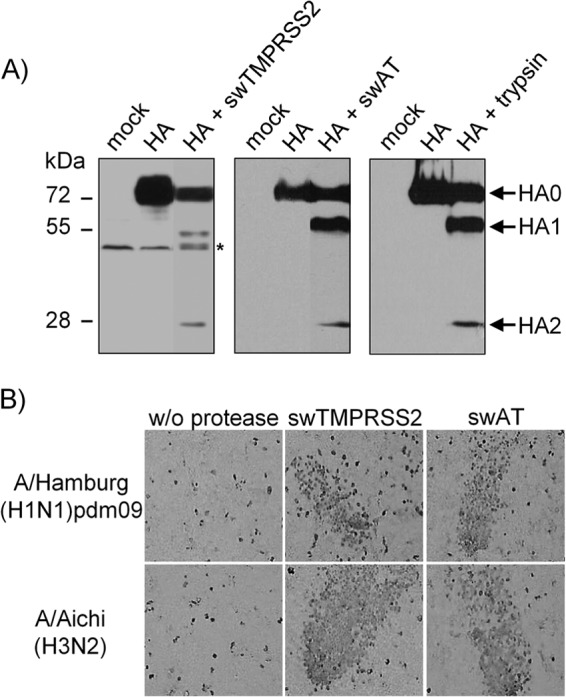
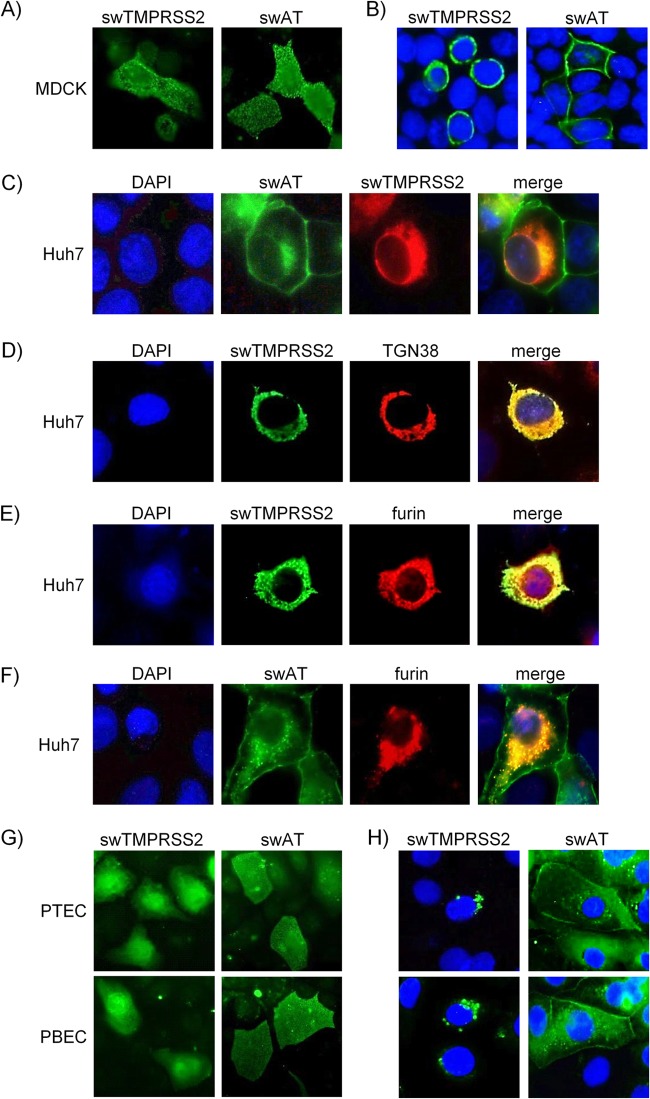
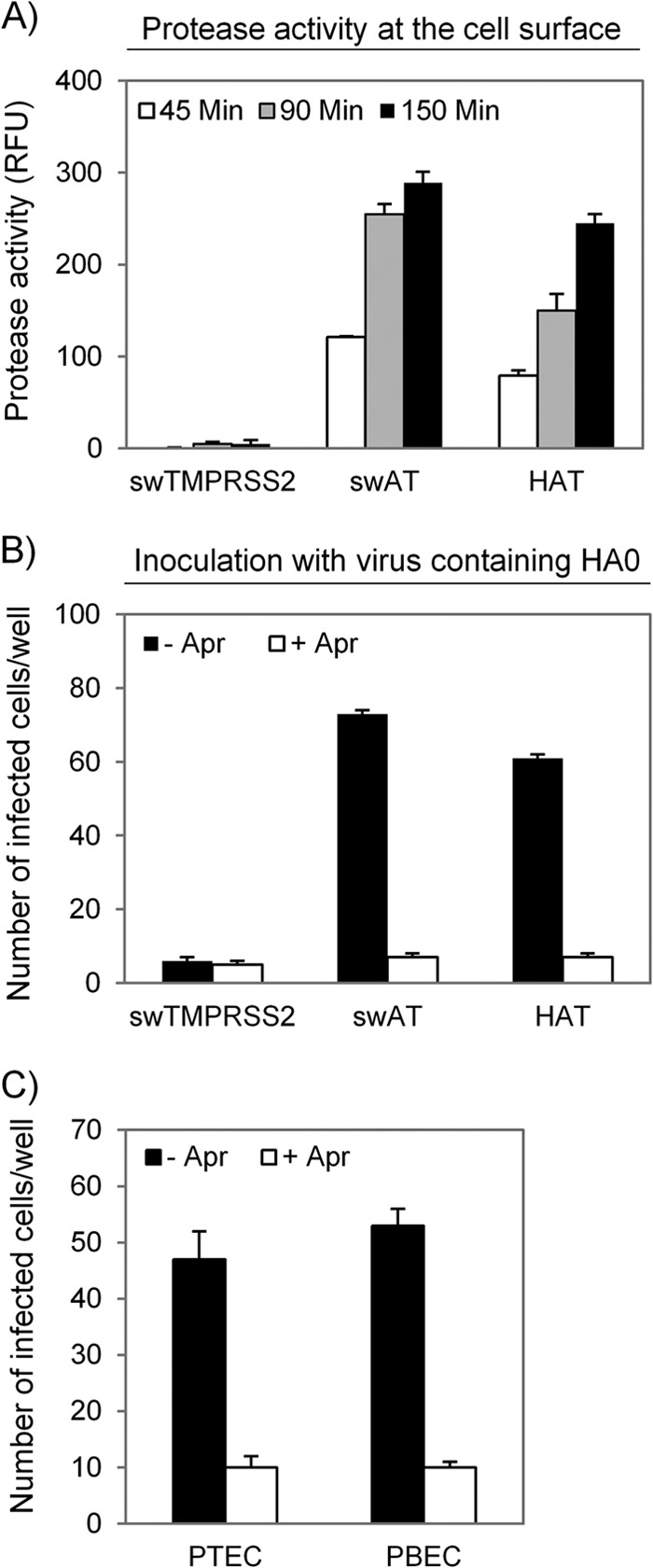
Pigs are important natural hosts of influenza A viruses, and due to their susceptibility to swine, avian, and human viruses, they may serve as intermediate hosts supporting adaptation and genetic reassortment. Cleavage of the influenza virus surface glycoprotein hemagglutinin (HA) by host cell proteases is essential for viral infectivity. Most influenza viruses, including human and swine viruses, are activated at a monobasic HA cleavage site, and we previously identified TMPRSS2 and HAT to be relevant proteases present in human airways. We investigated the proteolytic activation of influenza viruses in primary porcine tracheal and bronchial epithelial cells (PTEC and PBEC, respectively). Human H1N1 and H3N2 viruses replicated efficiently in PTECs and PBECs, and viruses containing cleaved HA were released from infected cells. Moreover, the cells supported the proteolytic activation of HA at the stage of entry. We found that swine proteases homologous to TMPRSS2 and HAT, designated swTMPRSS2 and swAT, respectively, were expressed in several parts of the porcine respiratory tract. Both proteases cloned from primary PBECs were shown to activate HA with a monobasic cleavage site upon coexpression and support multicycle replication of influenza viruses. swAT was predominantly localized at the plasma membrane, where it was present as an active protease that mediated activation of incoming virus. In contrast, swTMPRSS2 accumulated in the trans-Golgi network, suggesting that it cleaves HA in this compartment. In conclusion, our data show that HA activation in porcine airways may occur by similar proteases and at similar stages of the viral life cycle as in human airways.
Figures
References
-
- Jagger BW, Wise HM, Kash JC, Walters KA, Wills NM, Xiao YL, Dunfee RL, Schwartzman LM, Ozinsky A, Bell GL, Dalton RM, Lo A, Efstathiou S, Atkins JF, Firth AE, Taubenberger JK, Digard P. 2012. An overlapping protein-coding region in influenza A virus segment 3 modulates the host response. Science 337:199–204. 10.1126/science.1222213 - DOI - PMC - PubMed
-
- Tong S, Li Y, Rivailler P, Conrardy C, Castillo DA, Chen LM, Recuenco S, Ellison JA, Davis CT, York IA, Turmelle AS, Moran D, Rogers S, Shi M, Tao Y, Weil MR, Tang K, Rowe LA, Sammons S, Xu X, Frace M, Lindblade KA, Cox NJ, Anderson LJ, Rupprecht CE, Donis RO. 2012. A distinct lineage of influenza A virus from bats. Proc. Natl. Acad. Sci. U. S. A. 109:4269–4274. 10.1073/pnas.1116200109 - DOI - PMC - PubMed
-
- Matrosovich M, Stech J, Klenk HD. 2009. Influenza receptors, polymerase and host range. Rev. Sci. Tech. 28:203–217 - PubMed
Publication types
MeSH terms
Substances
LinkOut - more resources
Full Text Sources
Other Literature Sources
