


Recurrent nasopharyngeal carcinoma: a clinical dilemma and challenge
- PMID: 24155638
- PMCID: PMC3805410
- DOI: 10.3747/co.20.1456
Recurrent nasopharyngeal carcinoma: a clinical dilemma and challenge
Abstract
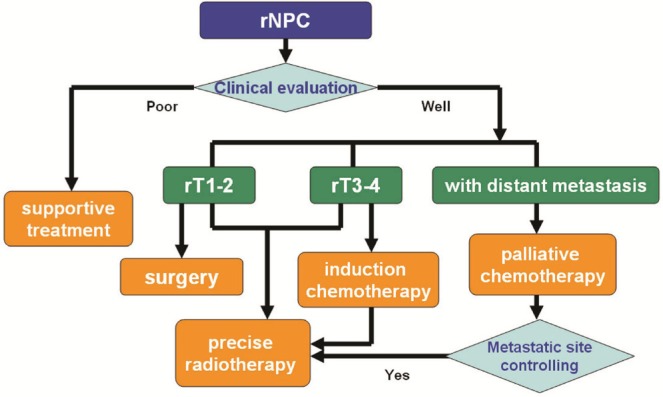
Recurrent nasopharyngeal carcinoma, which represents a small proportion of head-and-neck cancers, has a unique set of patho-clinical characteristics. The management of recurrent nasopharyngeal carcinoma remains a challenging clinical problem. Traditional treatments offer limited local control and survival benefits; more seriously, they frequently induce severe late complications. Recently, novel treatment techniques and strategies-including precision radiotherapy, endoscopic surgery or transoral robotic resection, third-generation chemotherapy regimens, and targeted therapies and immunotherapy-have provided new hope for patients with recurrent nasopharyngeal carcinoma. Some of these patients can potentially be cured with modern treatments. However, a lack of adequate evidence makes it difficult for clinicians to apply these powerful techniques and strategies. Individualized management guidelines, full evaluation of quality of life in these patients, and a further understanding of the mechanisms underlying recurrence are future directions for research into recurrent nasopharyngeal carcinoma.
Keywords: Nasopharyngeal carcinoma; biotherapy; chemotherapy; radiotherapy; recurrence; surgery.
Figures

References
Publication types
LinkOut - more resources
Full Text Sources
Other Literature Sources
Medical
