


Outcome of tuberculosis treatment in patients with diabetes mellitus treated in the revised national tuberculosis control programme in Malappuram District, Kerala, India
- PMID: 24155897
- PMCID: PMC3796581
- DOI: 10.1371/journal.pone.0076275
Outcome of tuberculosis treatment in patients with diabetes mellitus treated in the revised national tuberculosis control programme in Malappuram District, Kerala, India
Abstract
Settings: Kerala State, India has reported the greatest dual burden of Tuberculosis (TB) and Diabetes Mellitus (DM). Malappuram district in Kerala has monitored and recorded DM status and its control from 2010 under Revised National Tuberculosis Control Program (RNTCP).
Objectives: To assess, under programme conditions, comprehensiveness of recording DM status among TB cases and the TB treatment outcomes among DM patients (disaggregated by glycemic control) and compare with-non DM patients.
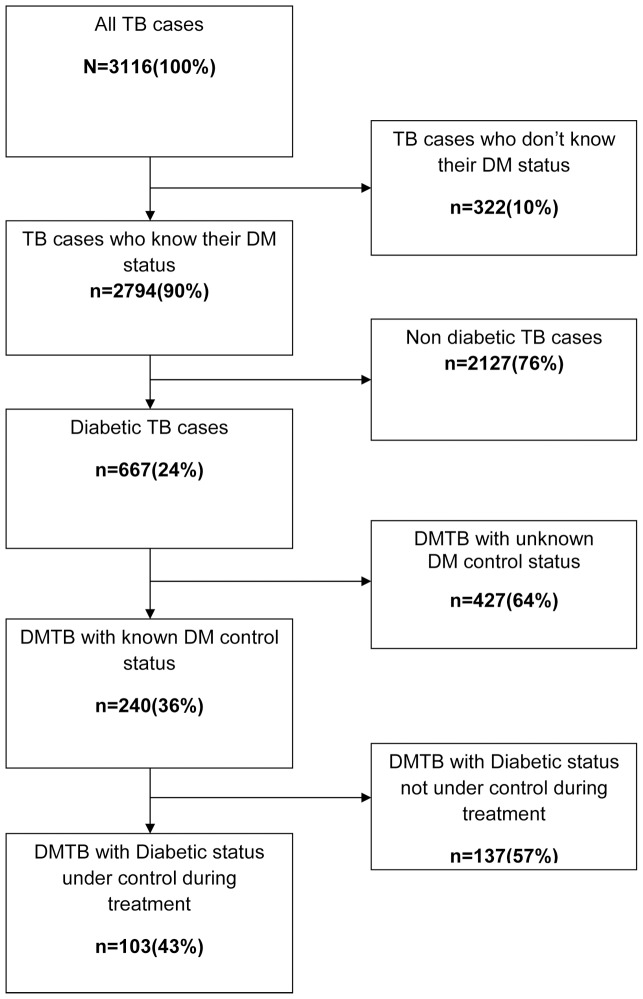
Design: This retrospective record review included 3,116TB patients from April 2010 to September 2011.DM was defined as per international guidelines and TB treatment outcomes were categorized as favourable(cured and treatment completed) and unfavourable(death, default, failure and transfer out). Relative Risk (RR) and 95% confidence intervals(CI) were calculated to assess the risk of unfavourable outcomes.
Results: DM status was recorded in 90% of TB cases and 667 (24%) had DM. 17% of DM patients and 23% of patients with unknown DM status had unfavourable outcomes but this difference was not statistically significant. Unadjusted RR for poor glycemic control or unknown control status for unfavourable outcome were (2.00; 95% CI 0.97-4.13) and (2.14; 95% CI 1.11-4.13).
Conclusion: This study could not confirm an adverse association between DM or its control during treatment and the course of response to TB treatment.DM screening in TB cases and recording of DM care needs to be improved to enable more conclusive evidence.
Conflict of interest statement
Figures
References
-
- Sen T, Joshi SR, Udwadia ZF (2009) Tuberculosis and Diabetes Mellitus: Merging Epidemics. JAPI 57,399–404. - PubMed
Publication types
MeSH terms
LinkOut - more resources
Full Text Sources
Other Literature Sources
Medical
Miscellaneous
