Review
. 2013 Dec;13(12):851-61.
doi: 10.1038/nri3551. Epub 2013 Oct 25.

Studying immunity to zoonotic diseases in the natural host - keeping it real

Affiliations
Review

Studying immunity to zoonotic diseases in the natural host - keeping it real

Andrew G D Bean et al. Nat Rev Immunol. 2013 Dec.

Abstract

Zoonotic viruses that emerge from wildlife and domesticated animals pose a serious threat to human and animal health. In many instances, mouse models have improved our understanding of the human immune response to infection; however, when dealing with emerging zoonotic diseases, they may be of limited use. This is particularly the case when the model fails to reproduce the disease status that is seen in the natural reservoir, transmission species or human host. In this Review, we discuss how researchers are placing more emphasis on the study of the immune response to zoonotic infections in the natural reservoir hosts and spillover species. Such studies will not only lead to a greater understanding of how these infections induce variable disease and immune responses in distinct species but also offer important insights into the evolution of mammalian immune systems.


Conflict of interest statement

The authors declare no competing financial interests.

Figures
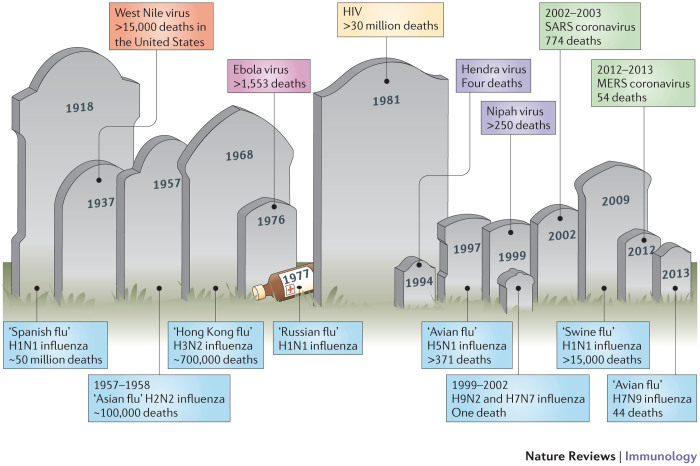
Figure 1
Figure 1. Emergence of zoonoses.
Over the past century, humanity has witnessed the emergence of numerous zoonotic infections that have resulted in varying numbers of human fatalities. Influenza viruses that originate from birds account for an important proportion of these deaths, and recently many new zoonotic viruses that originate in bats, such as Hendra virus, Nipah virus and severe acute respiratory syndrome (SARS) coronavirus, have caused outbreaks with high mortality rates. Hyperlinks to World Health Organization disease report updates are provided in Box 1. MERS, Middle East respiratory syndrome coronavirus. PowerPoint slide
Figure 2
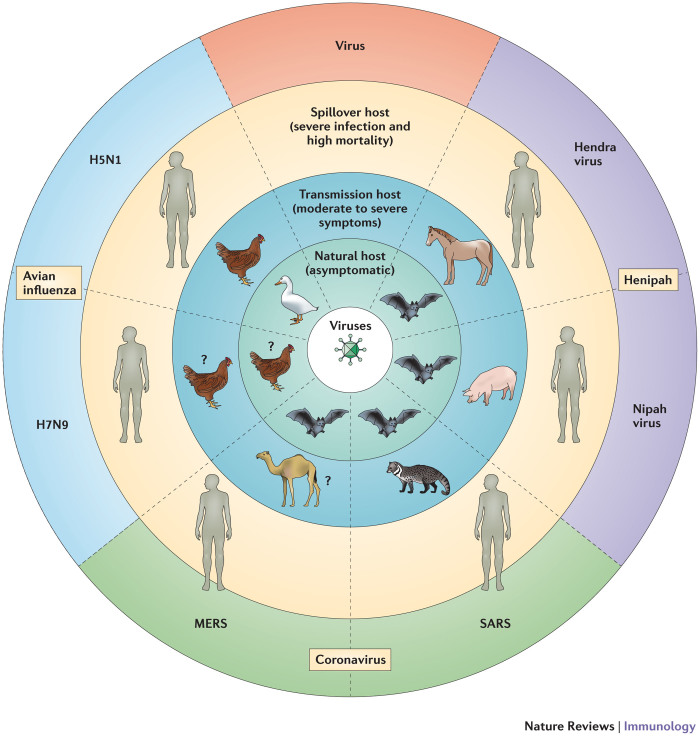
Figure 2. The severity of emerging infectious diseases is influenced by the host–pathogen interaction.
Many zoonotic agents cause little or no signs of disease in their natural hosts, such as wild birds and bats, but transmission hosts might present with disease symptoms ranging from moderate (for example, pigs infected with avian influenza virus) to severe (for example, horses infected with Hendra virus). The terminal or spillover host can present with severe symptoms and high mortality rates (for example, in the case of humans infected with H5N1 influenza and Hendra virus). For some of the most recently identified emerging infectious diseases, such as H7N9 influenza and Middle East respiratory syndrome (MERS) coronavirus, natural and transmission hosts have not been conclusively identified (indicated by a question mark). SARS, severe acute respiratory syndrome. PowerPoint slide
Figure 3
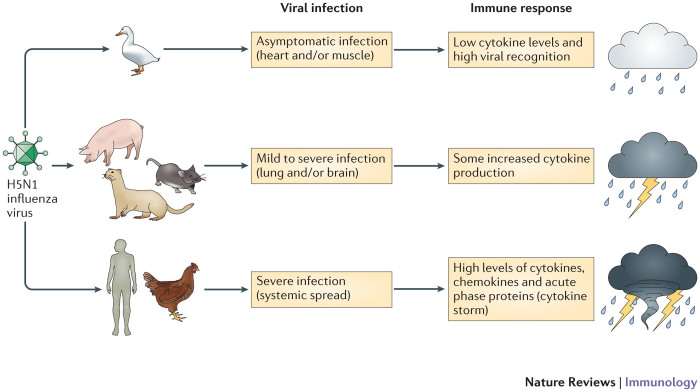
Figure 3. The host immune response to an infection influences the disease outcome.
Infection with H5N1 influenza virus can cause very different disease outcomes in different reservoir and spillover host species. Waterfowl, such as wild ducks, are the natural host for this virus and develop a limited inflammatory response that is associated with low levels of cytokine expression. Intermediate hosts, including mice, pigs and ferrets, are often used to study this infection and display mild to severe disease symptoms (depending on the H5N1 virus strain used) that are associated with increased levels of pro-inflammatory cytokines. By contrast, spillover hosts such as chickens and humans display a rapid and strong inflammatory response, often referred to as hypercytokinaemia (or cytokine storm) and the infection becomes systemic, causing severe disease symptoms and high mortality rates. PowerPoint slide
Figure 4
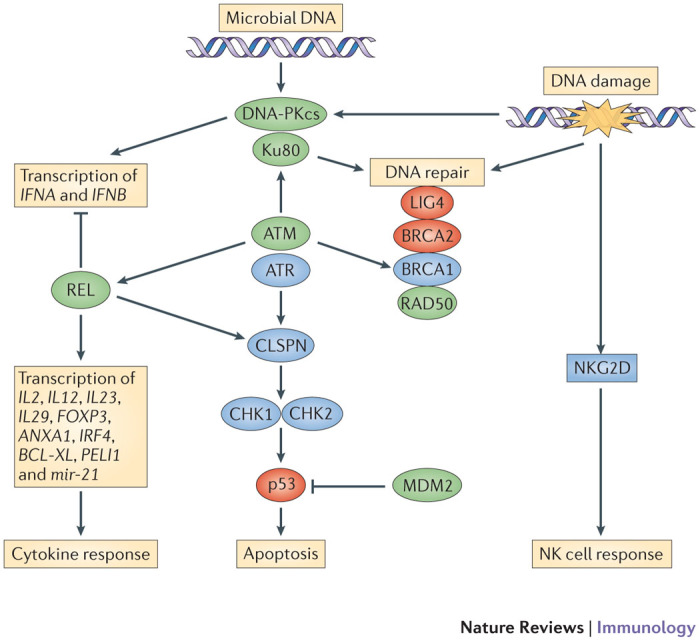
Figure 4. Positive selection of bat genes.
The figure illustrates key components of the DNA damage response and DNA repair pathways. Whole-genome analysis of two bat species (Pteropus alecto and Myotis davidii) showed that a high number of genes encoding components of these pathways are positively selected in P. alecto and M. davidii. Many of these genes are positively selected in both species (these encode proteins that are highlighted in green), whereas others have been positively selected in only one of the species (these encode proteins that are highlighted in red). Bat-specific differences in these genes include unique changes to the nuclear localization signals in p53 and the E3 ubiquitin-protein ligase MDM2. The impact of these changes on host–pathogen interactions is currently under investigation. The transcription factor REL (which is a member of the NF-κB family) regulates many effector proteins of the innate immune system, including type I interferons (IFNs), and it also participates in the DNA damage response. The gene encoding REL is under positive selection in bats and contains unique amino acid changes that might affect the interaction of REL with inhibitor of NF-κB (IκB). DNA-dependent protein kinase catalytic subunit (DNA-PKcs) and Ku80 are crucial to the DNA damage response but also form a microbial DNA-sensing complex connected to the type I IFN system. The relationship between innate immunity and the DNA damage response is well established, and unique changes in this pathway in bats might influence the outcomes of viral infection. It was proposed that these differences might reflect adaptations to the increased oxidative metabolism that accompanied the evolution of flight in bats. ATM, ataxia telangiectasia mutated; ATR, ataxia telangiectasia and Rad3-related protein; CHK, checkpoint kinase; CLSPN, claspin; FOXP3, forkhead box P3; IL, interleukin; LIG4, DNA ligase 4; MRE11, meiotic recombination 11 homologue; NBS1, Nijmegen breakage syndrome protein 1 (also known as nibrin). PowerPoint slide

References

    1. Taylor LH, Latham SM, Woolhouse ME. Risk factors for human disease emergence. Phil. Trans. R. Soc. Lond. B. 2001;356:983–989. doi: 10.1098/rstb.2001.0888. - DOI - PMC - PubMed
    1. Jones KE, et al. Global trends in emerging infectious diseases. Nature. 2008;451:990–993. doi: 10.1038/nature06536. - DOI - PMC - PubMed
    1. Legrand N, Weijer K, Spits H. Experimental models to study development and function of the human immune system in vivo. J. Immunol. 2006;176:2053–2058. doi: 10.4049/jimmunol.176.4.2053. - DOI - PubMed
    1. Cooper MD, Herrin BR. How did our complex immune system evolve? Nature Rev. Immunol. 2010;10:2–3. doi: 10.1038/nri2686. - DOI - PubMed
    1. Medzhitov R, Preston-Hurlburt P, Janeway CA., Jr. A human homologue of the Drosophila Toll protein signals activation of adaptive immunity. Nature. 1997;388:394–397. doi: 10.1038/41131. - DOI - PubMed