


Longitudinal trajectory of sexual functioning after hematopoietic cell transplantation: impact of chronic graft-versus-host disease and total body irradiation
- PMID: 24159171
- PMCID: PMC3854115
- DOI: 10.1182/blood-2013-05-499806
Longitudinal trajectory of sexual functioning after hematopoietic cell transplantation: impact of chronic graft-versus-host disease and total body irradiation
Abstract
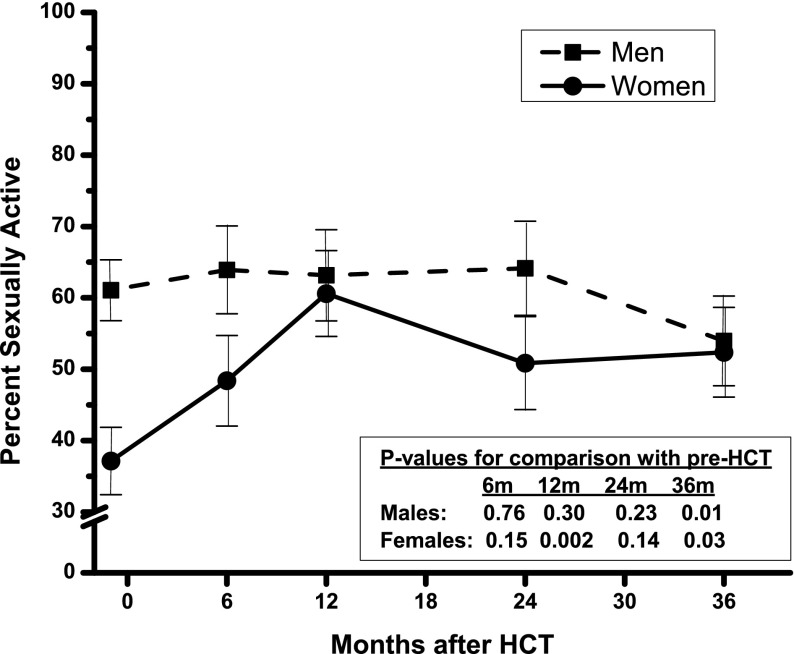
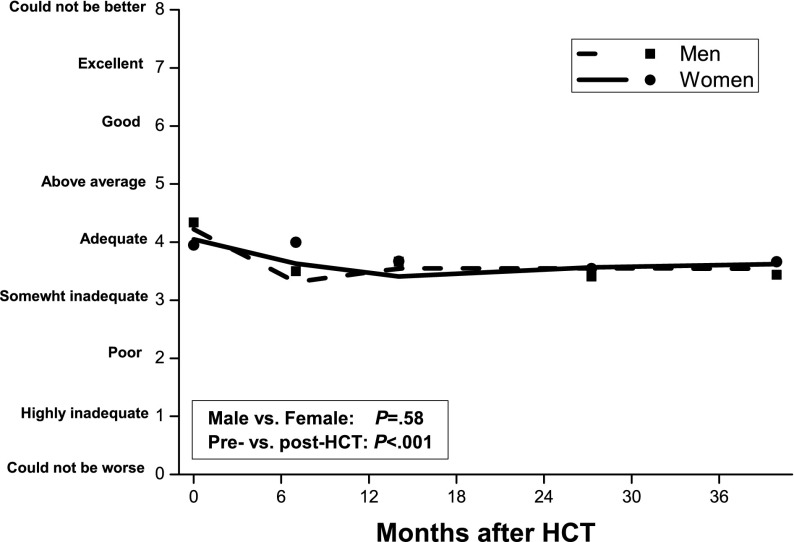
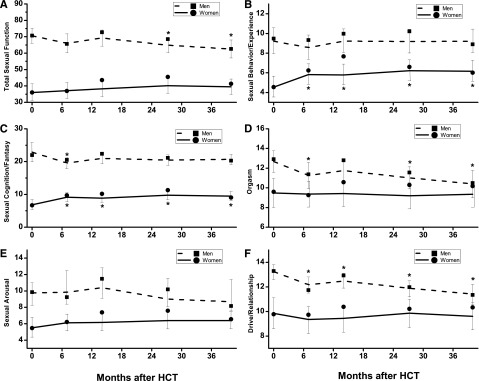
This prospective study described the trajectory of sexual well-being from before hematopoietic cell transplantation (HCT) to 3 years after in 131 allogeneic and 146 autologous HCT recipients using Derogatis Interview for Sexual Function and Derogatis Global Sexual Satisfaction Index. Sixty-one percent of men and 37% of women were sexually active pre-HCT; the prevalence declined to 51% (P = .01) in men and increased to 48% (P = .02) in women at 3 years post-HCT. After HCT, sexual satisfaction declined in both sexes (P < .001). All sexual function domains were worse in women compared with men (P ≤ .001). Orgasm (P = .002) and drive/relationship (P < .001) declined in men, but sexual cognition/fantasy (P = .01) and sexual behavior/experience (P = .01) improved in women. Older age negatively impacted sexual function post-HCT in both sexes (P < .01). Chronic graft-versus-host disease was associated with lower sexual cognition/fantasy (P = .003) and orgasm (P = .006) in men and sexual arousal (P = .05) and sexual satisfaction (P = .005) in women. All male sexual function domains declined after total body irradiation (P < .05). This study identifies vulnerable subpopulations that could benefit from interventional strategies to improve sexual well-being.
Figures
References
-
- Thygesen KH, Schjødt I, Jarden M. The impact of hematopoietic stem cell transplantation on sexuality: a systematic review of the literature. Bone Marrow Transplant. 2012;47(5):716–724. - PubMed
-
- Tierney DK. Sexuality following hematopoietic cell transplantation. Clin J Oncol Nurs. 2004;8(1):43–47. - PubMed
-
- Syrjala KL, Roth-Roemer SL, Abrams JR, et al. Prevalence and predictors of sexual dysfunction in long-term survivors of marrow transplantation. J Clin Oncol. 1998;16(9):3148–3157. - PubMed
-
- Humphreys CT, Tallman B, Altmaier EM, Barnette V. Sexual functioning in patients undergoing bone marrow transplantation: a longitudinal study. Bone Marrow Transplant. 2007;39(8):491–496. - PubMed
Publication types
MeSH terms
Grants and funding
LinkOut - more resources
Full Text Sources
Other Literature Sources
Medical
