


Epidemiology and surveillance of hepatocellular carcinoma
- PMID: 24159567
- PMCID: PMC3747543
- DOI: 10.1159/000339016
Epidemiology and surveillance of hepatocellular carcinoma
Abstract
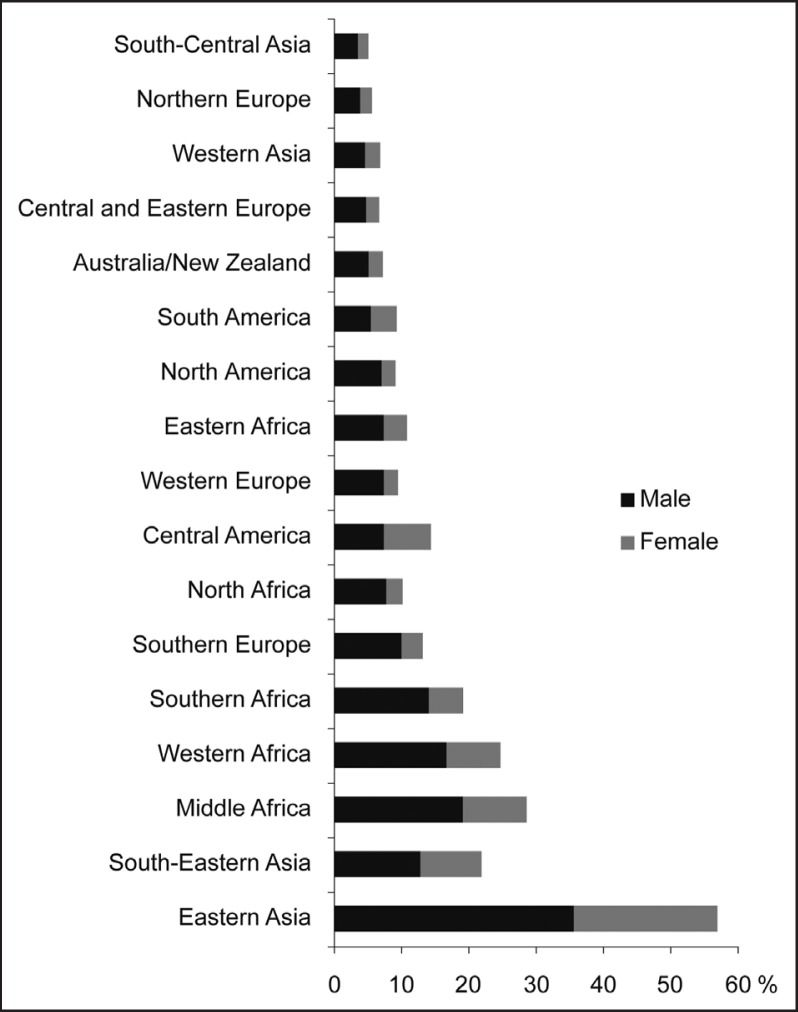
Hepatocellular carcinoma (HCC) is one of the most frequently occurring malignancies and has a high mortality rate. The incidence of HCC differs greatly according to the geographic area. East and Southeast Asia, as well as middle and West Africas have the highest prevalence of HCC. The risk factors for developing HCC are well known and include cirrhosis, hepatitis B virus (HBV) infection, hepatitis C virus (HCV) infection, alcohol consumption, smoking, diabetes, and nonalcoholic steatohepatitis. Cirrhosis is the most significant risk factor, and there is a correlation between the degree of noninvasively measured liver fibrosis and the risk of HCC occurrence. HBV exerts carcinogenic effects by several mechanisms, including host genome integration, and studies have revealed that HBV replication predicts HCC development. HCV induces multistep carcinogenesis from inflammation, to fibrosis and liver cancer. HCC is an appropriate target for surveillance programs for early cancer detection. Currently, liver ultrasonography (US) combined with serum alpha-fetoprotein (AFP, a biomarker of HCC) measurement every 6 months is the standard method of HCC surveillance. Although US is the most widely used tool, its sensitivity in detecting early HCC (i.e., within the Milan criteria) during surveillance is only 63%. AFP is the representative biomarker for both HCC surveillance and diagnosis; however, the unsatisfactory performance of AFP as a surveillance tool means that a novel biomarker or combination with other serum markers is required. Des-gamma-carboxy prothrombin and AFP-L3 are candidate biomarkers that are complementary to AFP. The strategies of HCC surveillance vary in different countries according to the healthcare system, the resources available, and health insurance coverage. Many studies have shown that the rate of early cancer detection and rate of application of curative therapies were increased, as was the survival time, by HCC surveillance, which should now become a part of standard care, rather than just a recommendation. Improved US technology and the discovery of new biomarkers are necessary to make further progress in HCC surveillance.
Keywords: Biomarker; Epidemiology; Hepatocellular carcinoma; Surveillance; Ultrasound.
Figures
References
-
- Ferlay J, Shin HR, Bray F, Forman D, Mathers CD, Parkin D: GLOBOCAN 2008, Cancer Incidence and Mortality Worldwide: IARC CancerBase No. 10. Lyon, France: International Agency for Research on Cancer; Year. Available at: http://globocan.ia.rc.fr.2010 Last accessed 8/17/2010.
-
- Ahmed F, Perz JF, Kwong S, Jamison PM, Friedman C, Bell BP: National trends and disparities in the incidence of hepatocellular carcinoma, 1998-2003. Prev Chronic Dis 2008;5:A74 Available at http://www.cdc.gov/pcd/issues/2008/jul/07_0115.htm Accessed on May 19, 2011. - PMC - PubMed
-
- Stravitz RT, Heuman DM, Chand N, et al. Surveillance for hepatocelluar carcinoma in patients with cirrhosis improves outcome. Am J Med. 2008;121:119–126. - PubMed
-
- Liu JH, Chen PW, Asch SM, Busuttil RW, Ko CY. Surgery for hepatocellular carcinoma: does it improve survival? Ann Surg Oncol. 2004;11:298–303. - PubMed
-
- Srinivas PR, Kramer BS, Srivastava S. Trends in biomarker research for cancer detection. Lancet Oncol. 2001;2:698–704. - PubMed
Publication types
LinkOut - more resources
Full Text Sources
