


A feasibility study of short message service text messaging as a surveillance tool for alcohol consumption and vehicle for interventions in university students
- PMID: 24160674
- PMCID: PMC4137472
- DOI: 10.1186/1471-2458-13-1011
A feasibility study of short message service text messaging as a surveillance tool for alcohol consumption and vehicle for interventions in university students
Abstract
Background: Practitioners who come into contact with the intoxicated, such as those in unscheduled care, often have limited resources to provide structured interventions. There is therefore a need for cost-effective alcohol interventions requiring minimal input. This study assesses the barriers, acceptability and validity of text messaging to collect daily alcohol consumption data and explores the feasibility of a text-delivered intervention in an exploratory randomised controlled trial.
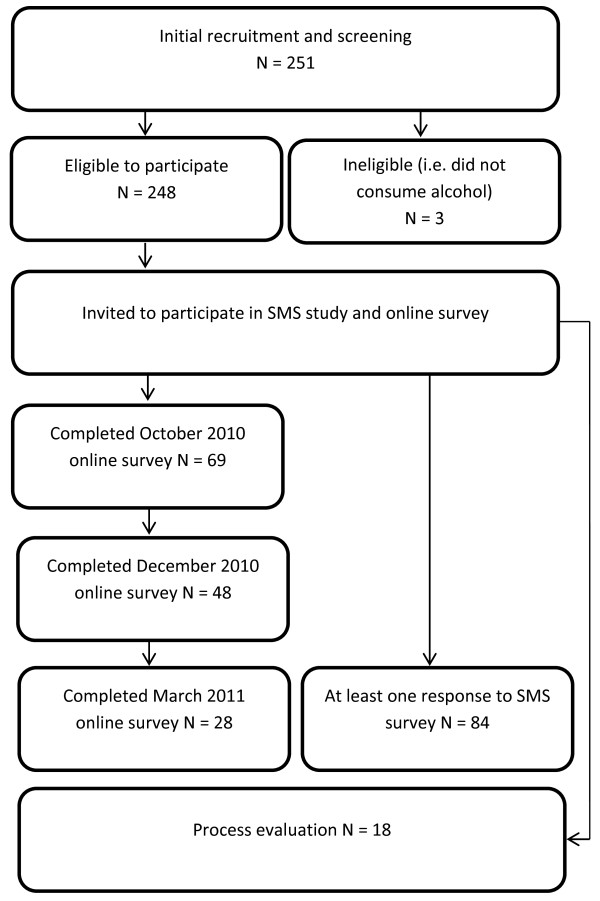
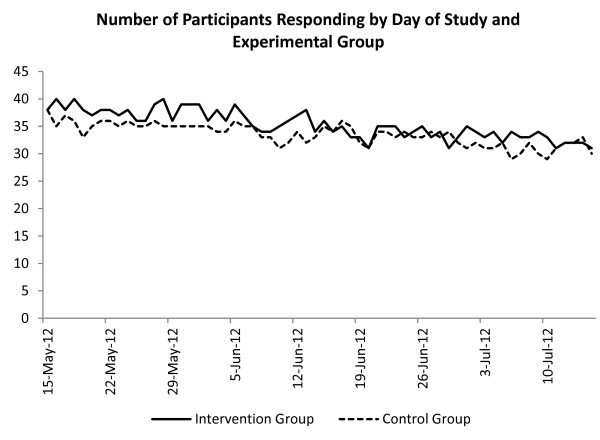
Methods: Study I. Participants (n = 82) completed the initial online screening survey and those eligible were asked each day, for 157 days via text message, to reply with the number of alcohol units consumed the previous day. Analyses compared standard measures of hazardous consumption with self-report alcohol use. Attrition and sampling biases were examined. Study I included secondary exploratory analyses using data from 70 participants to determine associations between events (including Christmas and other celebratory occasions) and consumption. Study I further included the thematic analysis of semi-structured interview data and assessed the feasibility of and barriers to surveillance and interventions delivered through text messaging. Developing findings from Study I, Study II developed an exploratory randomised control trial that delivered a single message on monthly alcohol expenditure in order to assess effect size and test generalisability.
Results: Self-report alcohol consumption data was significantly associated with FAST and AUDIT scores. Attrition from the study was not associated with greater alcohol use. Greater alcohol use was observed on Fridays, Saturdays and Wednesdays as were notable celebratory events. Interview data indicated that text messaging was acceptable to participants and preferred over email and web-based methods. The exploratory randomised controlled trial suggested that a simple text delivered intervention might be effective in eliciting a reduction in alcohol consumption in a future trial.
Conclusions: The ubiquity of mobile telephones and the acceptability of text messaging suggests that this approach can be developed as a surveillance tool to collect high frequency consumption data to identify periods of vulnerability and that it can offer a platform through which targeted interventions can be delivered.
Figures


References
-
- World Data Bank. Mobile cellular subscriptions (per 100 people) 2011. Archived by WebCite at http://www.webcitation.org/62EcIQ7q7.
-
- Nielsen. In U.S., SMS Text Messaging Tops Mobile Phone Calling. 2012. Archived by WebCite at http://www.webcitation.org/62EcoS3VX.
Publication types
MeSH terms
LinkOut - more resources
Full Text Sources
Other Literature Sources
Medical
