


Neurovascular signaling in the brain and the pathological consequences of hypertension
- PMID: 24163077
- PMCID: PMC3920149
- DOI: 10.1152/ajpheart.00364.2013
Neurovascular signaling in the brain and the pathological consequences of hypertension
Abstract
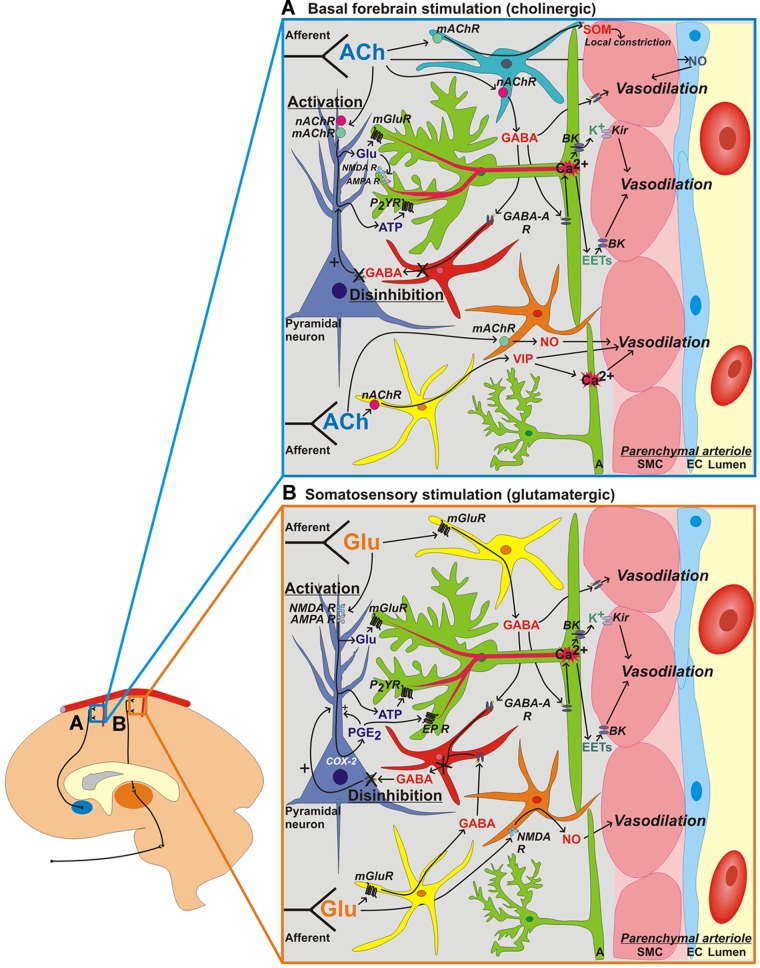
The execution and maintenance of all brain functions are dependent on a continuous flow of blood to meet the metabolic needs of the tissue. To ensure the delivery of resources required for neural processing and the maintenance of neural homeostasis, the cerebral vasculature is elaborately and extensively regulated by signaling from neurons, glia, interneurons, and perivascular nerves. Hypertension is associated with impaired neurovascular regulation of the cerebral circulation and culminates in neurodegeneration and cognitive dysfunction. Here, we review the physiological processes of neurovascular signaling in the brain and discuss mechanisms of hypertensive neurovascular dysfunction.
Keywords: astrocyte; cerebral blood flow; hypertension; neurovascular coupling; parenchymal arteriole.
Figures
References
-
- Abe T, Sugihara H, Nawa H, Shigemoto R, Mizuno N, Nakanishi S. Molecular characterization of a novel metabotropic glutamate receptor mGluR5 coupled to inositol phosphate/Ca2+ signal transduction. J Biol Chem 267: 13361–13368, 1992 - PubMed
-
- Alkayed NJ, Birks EK, Narayanan J, Petrie KA, Kohler-Cabot AE, Harder DR. Role of P-450 arachidonic acid epoxygenase in the response of cerebral blood flow to glutamate in rats. Stroke 28: 1066–1072, 1997 - PubMed
-
- Amenta F, Strocchi P, Sabbatini M. Vascular and neuronal hypertensive brain damage: protective effect of treatment with nicardipine. J Hypertens Suppl 14: S29–S35, 1996 - PubMed
-
- Ayata C, Ma J, Meng W, Huang P, Moskowitz MA. l-NA-sensitive rCBF augmentation during vibrissal stimulation in type III nitric oxide synthase mutant mice. J Cereb Blood Flow Metab 16: 539–541, 1996 - PubMed
-
- Baba A, Saga H, Hashimoto H. Inhibitory glutamate response on cyclic AMP formation in cultured astrocytes. Neurosci Lett 149: 182–184, 1993 - PubMed
Publication types
MeSH terms
Grants and funding
LinkOut - more resources
Full Text Sources
Other Literature Sources
Medical
