. 2013 Oct;25(10):4000-13.
doi: 10.1105/tpc.113.117648. Epub 2013 Oct 25.

An ATP binding cassette transporter is required for cuticular wax deposition and desiccation tolerance in the moss Physcomitrella patens

Affiliations

An ATP binding cassette transporter is required for cuticular wax deposition and desiccation tolerance in the moss Physcomitrella patens

Gregory J Buda et al. Plant Cell. 2013 Oct.

Abstract

The plant cuticle is thought to be a critical evolutionary adaptation that allowed the first plants to colonize land, because of its key roles in regulating plant water status and providing protection from biotic and abiotic stresses. Much has been learned about cuticle composition and structure through genetic and biochemical studies of angiosperms, as well as underlying genetic pathways, but little is known about the cuticles of early diverging plant lineages. Here, we demonstrate that the moss Physcomitrella patens, an extant relative of the earliest terrestrial plants, has a cuticle that is analogous in both structure and chemical composition to those of angiosperms. To test whether the underlying cuticle biosynthetic pathways were also shared among distant plant lineages, we generated a genetic knockout of the moss ATP binding cassette subfamily G (ABCG) transporter Pp-ABCG7, a putative ortholog of Arabidopsis thaliana ABCG transporters involved in cuticle precursor trafficking. We show that this mutant is severely deficient in cuticular wax accumulation and has a reduced tolerance of desiccation stress compared with the wild type. This work provides evidence that the cuticle was an adaptive feature present in the first terrestrial plants and that the genes involved in their formation have been functionally conserved for over 450 million years.


Figures
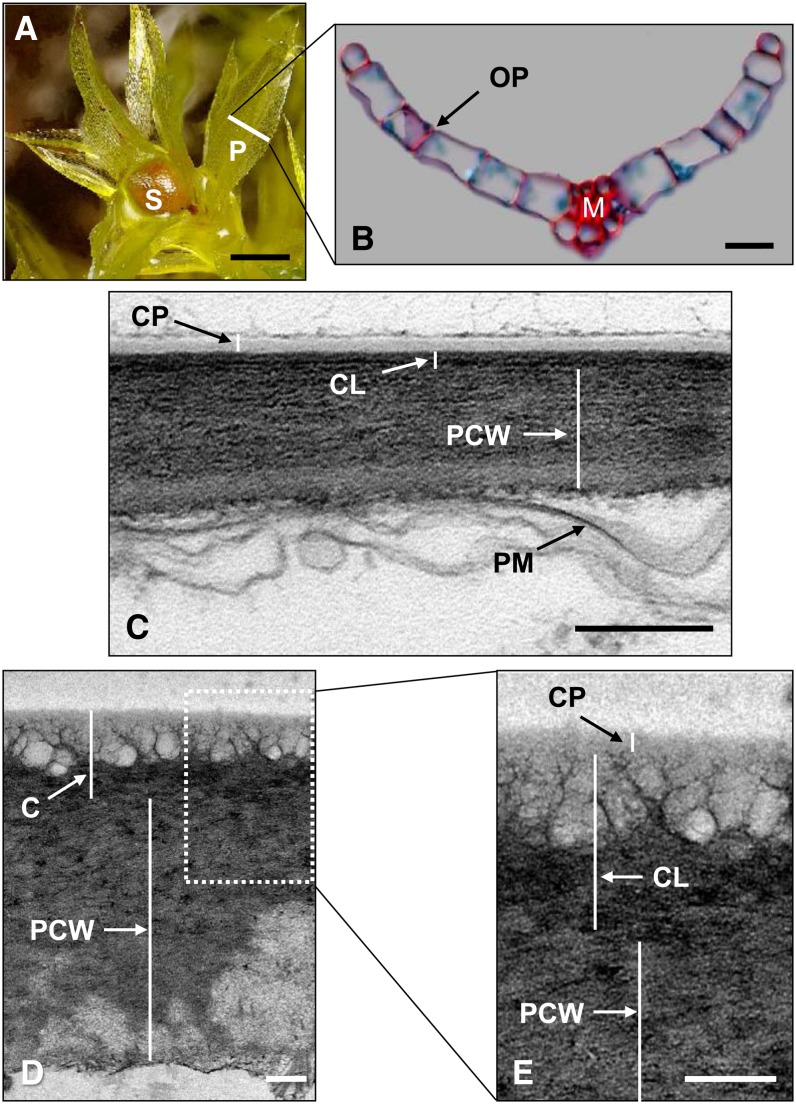
Figure 1.
Figure 1.
P. patens Morphology and Cuticle Structure. (A) P. patens gametophore with several phyllids (P) and an immature sporophyte (S) growing from the apex. (B) P. patens phyllid shown in transverse section, corresponding to the white line in (A), consisting of a single-cell-layer-thick lamina attached to a central midrib (M). Cell walls are stained red and intracellular contents blue. OP, outer periclinal wall. (C) Transmission electron micrograph of the phyllid outer periclinal cell wall, showing the layers of the cuticle (CL), polysaccharide cell wall (PCW), and plasma membrane (PM). (D) Transmission electron micrograph of the sporophyte capsule outer periclinal cell wall (cuticle [C]). (E) Expanded view of the box in (D). Bars = 750 μm in (A), 20 μm in (B), and 200 nm in (C) to (E).
Figure 2.
Figure 2.
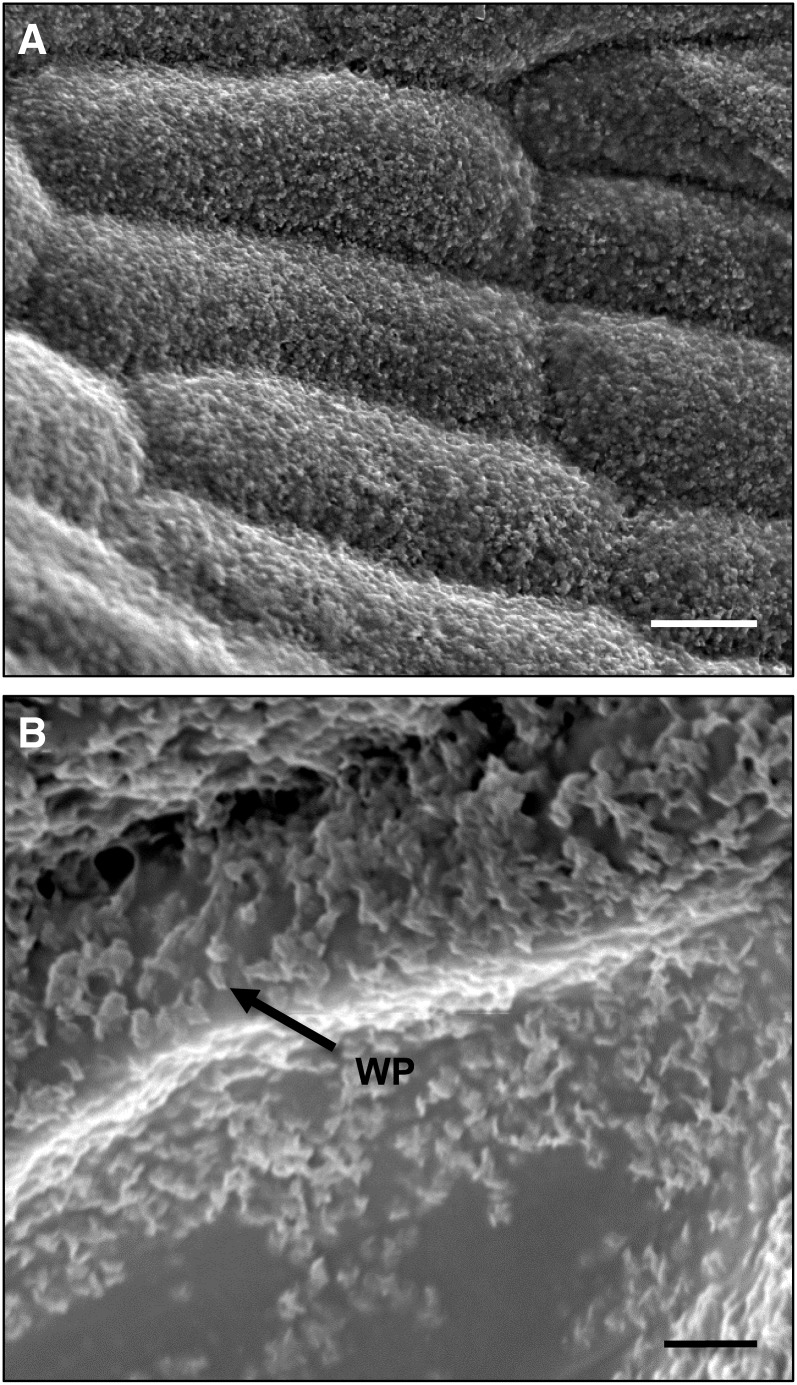
P. patens Epicuticular Wax. (A) Scanning electron micrograph of phyllid epidermal cells densely covered in wax platelets. (B) Higher magnification scanning electron micrograph showing morphology of wax platelets (WP; arrow). Bars = 10 μm in (A) and 2 μm in (B).
Figure 3.
Figure 3.
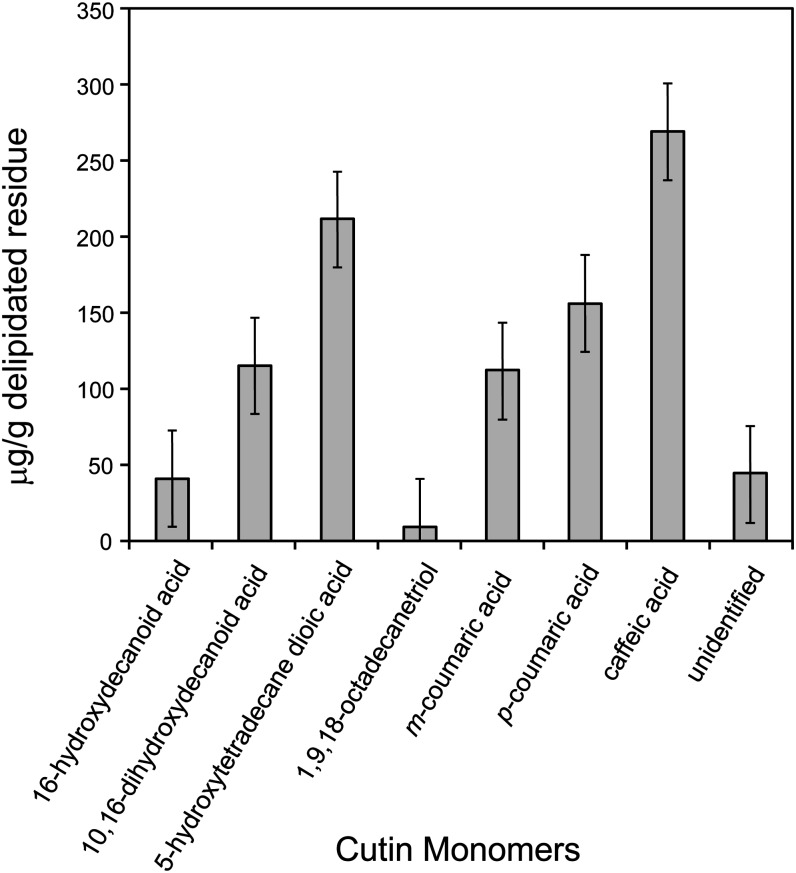
P. patens Cutin Monomer Composition and Amount, as Determined by GC-MS. Error bars indicate se; n = 4.
Figure 4.
Figure 4.
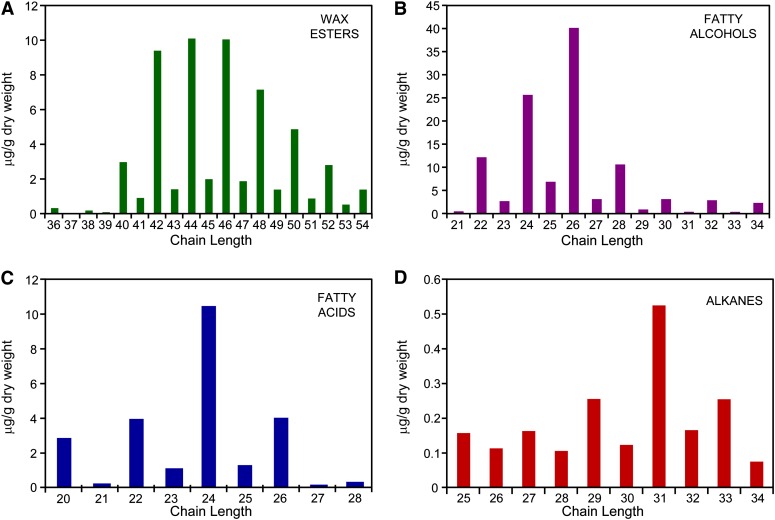
P. patens Wax Composition and Amount, as Determined by GC-MS. Homolog series for wax esters (A), fatty alcohols (B), fatty acids (C), and alkanes (D).
Figure 5.
Figure 5.
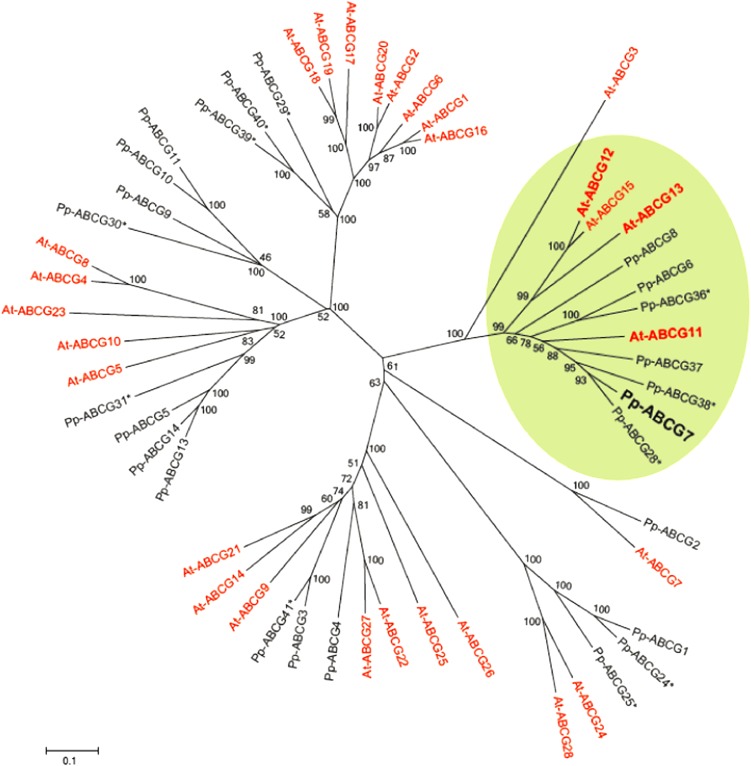
Unrooted Neighbor Joining Protein Phylogeny of Predicted ABCG Half Transporters from Arabidopsis and P. patens. Arabidopsis subfamily members are shown in red and P. patens subfamily members in black. Those marked by an asterisk are not supported by EST evidence. The clade highlighted by a green background contains all of the Arabidopsis ABCG half transporters known to be involved in cuticle precursor export (bold), as well as the putative moss wax transporter Pp-ABCG7. Bootstrap values (1000 replicates) are given for each node. Bar indicates 0.1 amino acid substitutions per site.
Figure 6.
Figure 6.
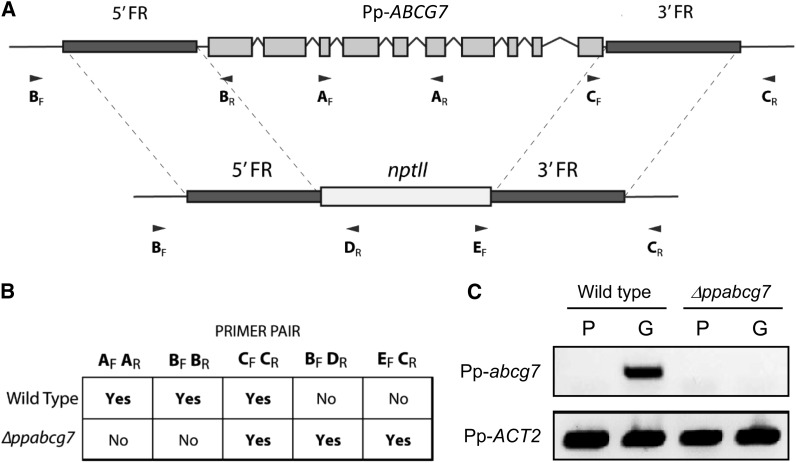
Generation of the Δppabcg7 Knockout Mutant. (A) Schematic diagram depicting the targeted replacement of Pp-ABCG7 with the nptII selectable marker by homologous recombination to yield a stable P. patens knockout mutant. (FR, flanking region). (B) PCR screening of wild-type and Δppabcg7 genomic DNA with the PCR primer pairs shown in (A) showing the presence (Yes) or absence (No) of an amplified product. Primer pairs specific to Pp-ABCG7 generate a PCR product in the wild type but not in Δppabcg7. (C) PCR screening of wild-type and Δppabcg7 cDNA with Pp-ABCG7 transcript-specific primers, showing that Pp-ABCG7 expression is abolished in Δppabcg7 (P, protonema; G, gametophore). Primers specific to P. patens actin (Pp-ACT2) were used as a control for cDNA quality.
Figure 7.
Figure 7.
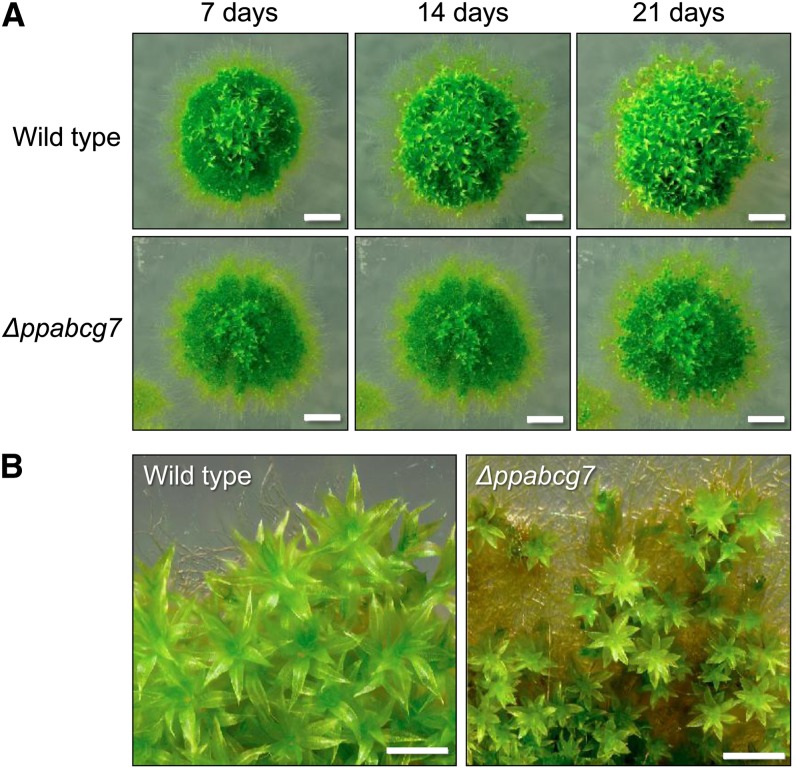
Stunted Growth Phenotype of Δppabcg7. (A) Development of wild-type and Δppabcg7 colonies over a 21-d time period showing stunted growth of the Δppabcg7 gametophores. (B) Close-up view of wild-type and Δppabcg7 colonies, showing stunted growth of gametophores in the mutant line. Bars = 5 mm in (A) and 2 mm in (B).
Figure 8.
Figure 8.
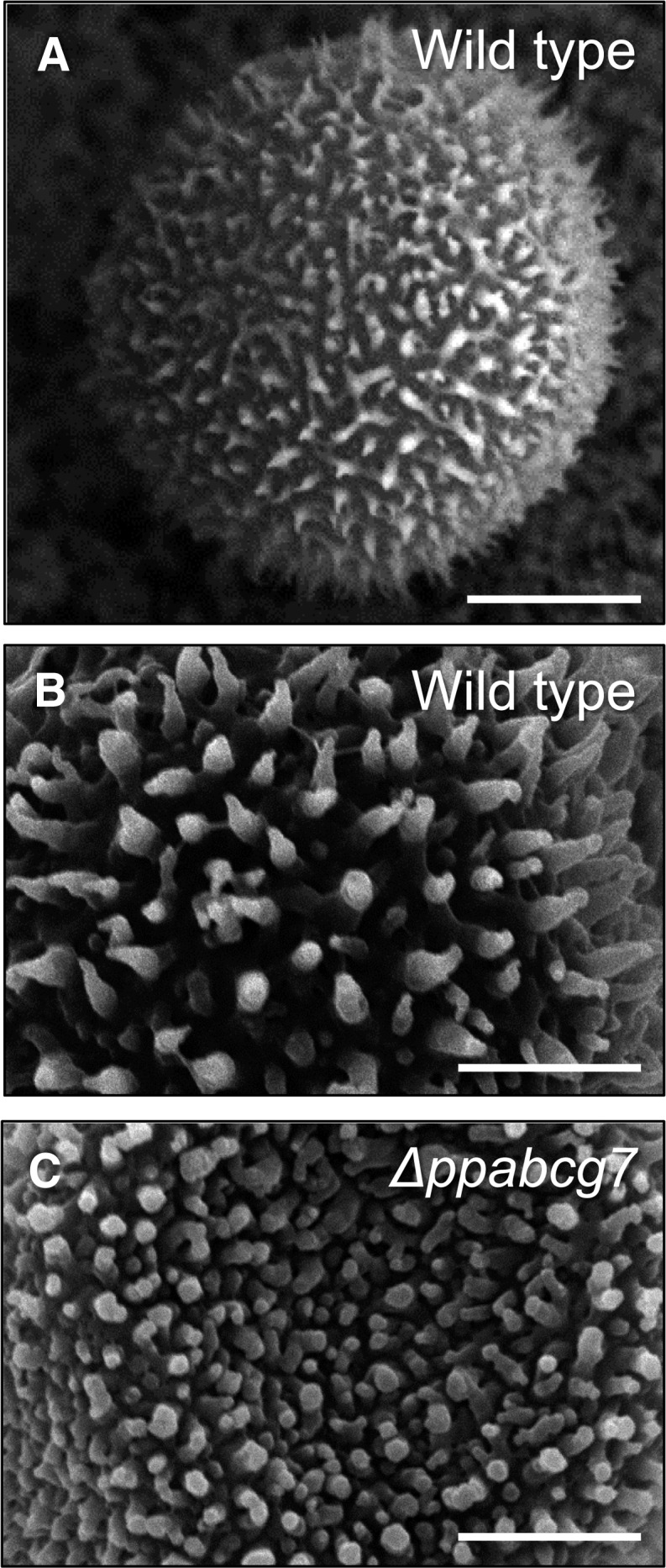
P. patens Spore Phenotypic Analysis. Scanning electron micrographs of spore surface decorations in the wild type ([A] and [B]) and Δppabcg7 (C), showing irregular and rounded protrusions in the mutant. Bars = 10 μm in (A) and 5 μm in (B) and (C).
Figure 9.
Figure 9.
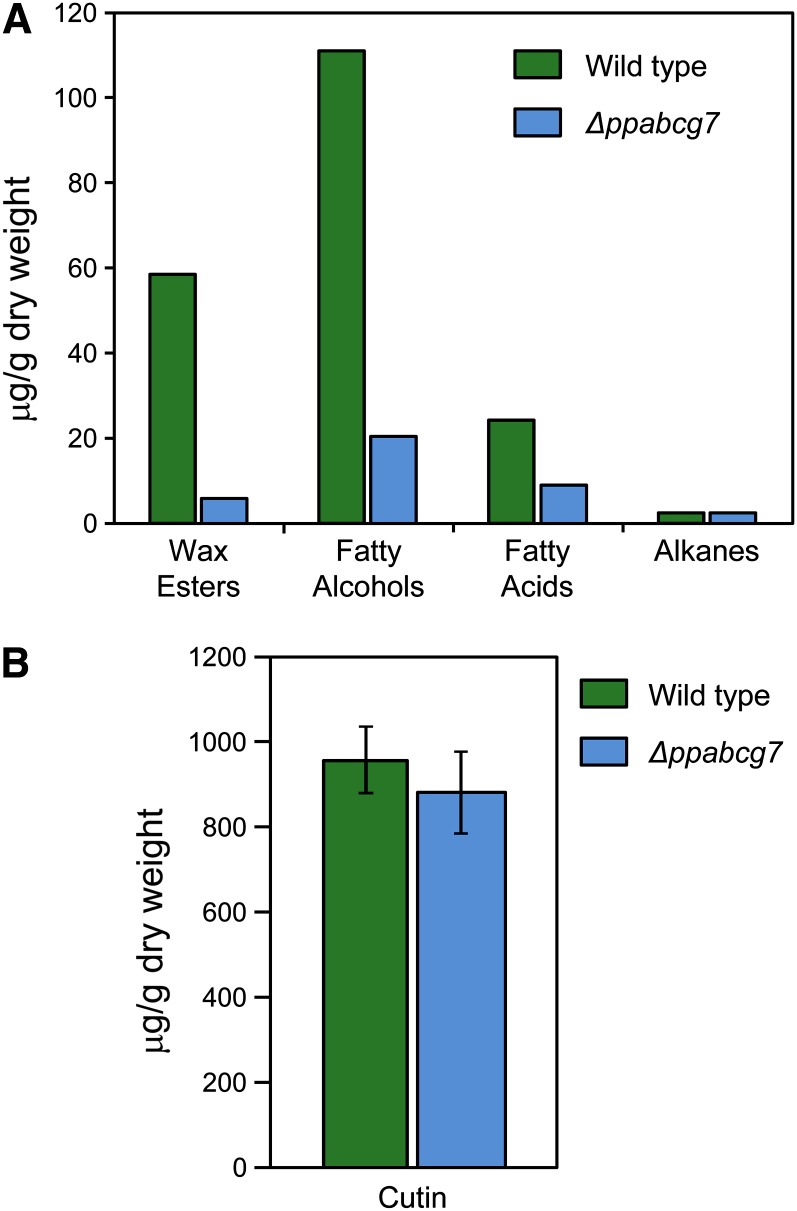
Cuticle Composition Analysis. (A) Cuticular wax levels in wild-type and Δppabcg7 moss. (B) Cutin monomer levels in the wild type and Δppabcg7. Error bars indicate se; n = 4.
Figure 10.
Figure 10.
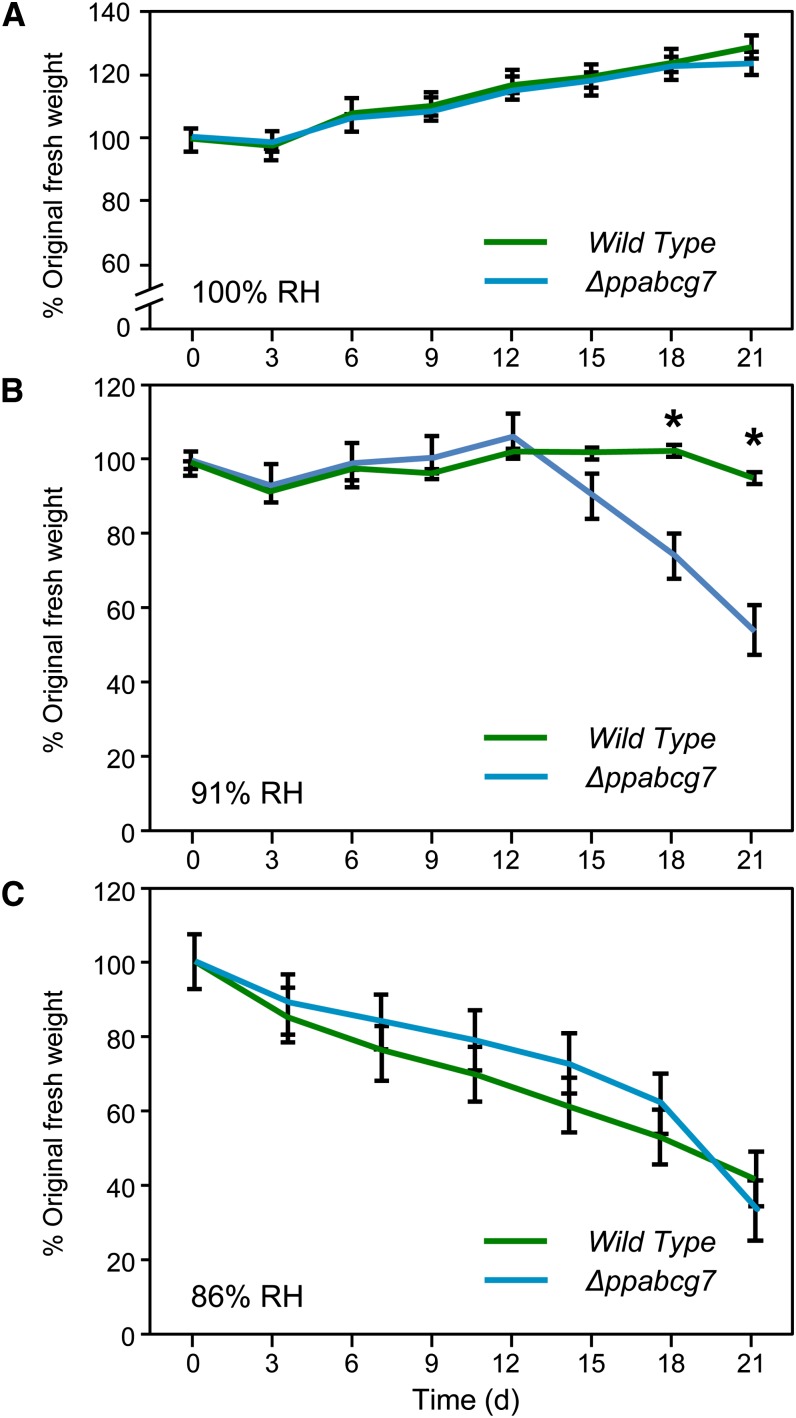
Response of Wild-Type and Mutant Moss Colonies to Desiccation Stress. Fresh weight of wild-type and Δppabcg7 moss colonies at 100% RH (A), 91% RH (B), and 86% RH (C) was measured over a 21-d period. Asterisks indicate statistically significant differences between wild-type and transgenic lines (P < 0.05, Student’s t test). Error bars indicate se; 3 ≤ n ≤ 5.

References

    1. Baker E.A., Gaskin R.E. (1987). Composition of leaf epicuticular waxes of Pteridium subspecies. Phytochemistry 26: 2847–2848
    1. Barthlott W., Neinhuis C. (1997). Purity of the sacred lotus, or escape from contamination in biological surfaces. Planta 202: 1–8
    1. Beerling D.J., Franks P.J. (2009). Evolution of stomatal function in ‘lower’ land plants. New Phytol. 183: 921–925 - PubMed
    1. Beisson F., Li-Beisson Y., Pollard M. (2012). Solving the puzzles of cutin and suberin polymer biosynthesis. Curr. Opin. Plant Biol. 15: 329–337 - PubMed
    1. Bird D., Beisson F., Brigham A., Shin J., Greer S., Jetter R., Kunst L., Wu X., Yephremov A., Samuels L. (2007). Characterization of Arabidopsis ABCG11/WBC11, an ATP binding cassette (ABC) transporter that is required for cuticular lipid secretion. Plant J. 52: 485–498 - PubMed

Publication types

MeSH terms

Associated data

LinkOut - more resources