


CD49a promotes T-cell-mediated hepatitis by driving T helper 1 cytokine and interleukin-17 production
- PMID: 24164540
- PMCID: PMC3930377
- DOI: 10.1111/imm.12201
CD49a promotes T-cell-mediated hepatitis by driving T helper 1 cytokine and interleukin-17 production
Abstract
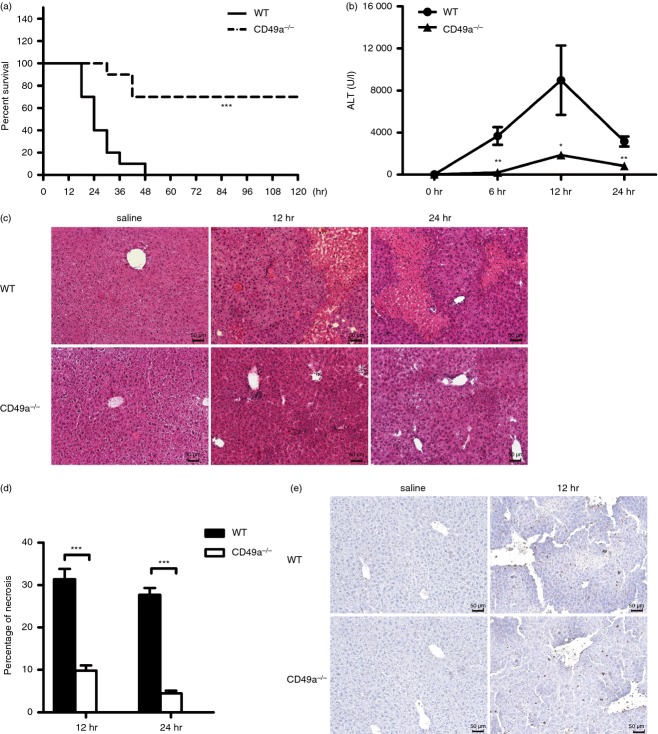
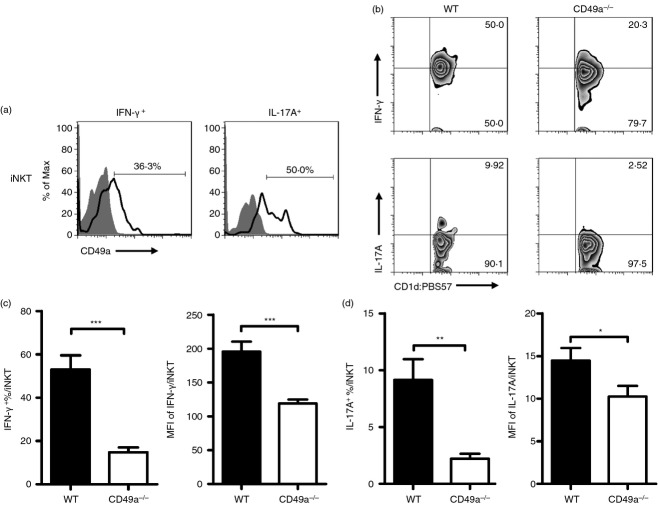
It is becoming increasingly clear that the T-cell-mediated immune response is important in many diseases. In this study, we used concanavalin A (Con A) -induced hepatitis to investigate the role of CD49a in the molecular and cellular mechanism of the T-cell-mediated immune response. We found that CD49a(-/-) mice had significantly reduced levels of serum alanine aminotransferase and were protected from Con A-induced hepatitis. CD49a deficiency led to decreased production of interferon-γ (IFN-γ) and interleukin-17A (IL-17A) after Con A injection. Furthermore, we found that hepatic CD4(+) T cells and invariant natural killer T cells up-regulated CD49a expression, along with enhanced activation after Con A injection, leading to production of inflammatory cytokines by these T cells. Blockade of CD49a in vivo ameliorated Con A-induced hepatitis with reduced production of IFN-γ and IL-17A. Hence, CD49a promoted Con A-induced hepatitis through enhancing inflammatory cytokine production (IFN-γ and IL-17A) by CD4(+) T and invariant natural killer T cells. The protective effect of CD49a blockade antibody suggested a new target therapeutic molecule for intervention of T-cell-mediated liver injury.
Keywords: CD49a; T-cell-mediated hepatitis; interferon-γ; interleukin-17A.
© 2013 John Wiley & Sons Ltd.
Figures



References
-
- Zhang S, Liang R, Luo W, et al. High susceptibility to liver injury in IL-27 p28 conditional knockout mice involves intrinsic interferon-γ dysregulation of CD4+ T cells. Hepatology. 2012;57:1620–31. - PubMed
Publication types
MeSH terms
Substances
LinkOut - more resources
Full Text Sources
Other Literature Sources
Medical
Molecular Biology Databases
Research Materials
