. 2013 Dec;70(12):1512-9.
doi: 10.1001/jamaneurol.2013.4013.

Associations between Alzheimer disease biomarkers, neurodegeneration, and cognition in cognitively normal older people

Affiliations

Associations between Alzheimer disease biomarkers, neurodegeneration, and cognition in cognitively normal older people

Miranka Wirth et al. JAMA Neurol. 2013 Dec.

Abstract

Importance: Criteria for preclinical Alzheimer disease (AD) propose β-amyloid (Aβ) plaques to initiate neurodegeneration within AD-affected regions. However, some cognitively normal older individuals harbor neural injury similar to patients with AD, without concurrent Aβ burden. Such findings challenge the proposed sequence and suggest that Aβ-independent precursors underlie AD-typical neurodegenerative patterns. OBJECTIVE To examine relationships between Aβ and non-Aβ factors as well as neurodegeneration within AD regions in cognitively normal older adults. The study quantified neurodegenerative abnormalities using imaging biomarkers and examined cross-sectional relationships with Aβ deposition; white matter lesions (WMLs), a marker of cerebrovascular disease; and cognitive functions.

Design, setting, and participants: Cross-sectional study in a community-based convenience sample of 72 cognitively normal older individuals (mean [SD] age, 74.9 [5.7] years; 48 women; mean [SD] 17.0 [1.9] years of education) of the Berkeley Aging Cohort.

Intervention: Each individual underwent a standardized neuropsychological test session, magnetic resonance imaging, and positron emission tomography scanning.

Main outcomes and measures: For each individual, 3 AD-sensitive neurodegeneration biomarkers were measured: hippocampal volume, glucose metabolism, and gray matter thickness, the latter 2 sampled from cortical AD-affected regions. To quantify neurodegenerative abnormalities, each biomarker was age adjusted, dichotomized into a normal or abnormal status (using cutoff thresholds derived from an independent AD sample), and summarized into 0, 1, or more than 1 abnormal neurodegenerative biomarker. Degree and topographic patterns of neurodegenerative abnormalities were assessed and their relationships with cognitive functions, WML volume, and Aβ deposition (quantified using carbon 11-labeled Pittsburgh compound B positron emission tomography).

Results: Of our cognitively normal elderly individuals, 40% (n = 29) displayed at least 1 abnormal neurodegenerative biomarker, 26% (n = 19) of whom had no evidence of elevated Pittsburgh compound B retention. In those people who were classified as having abnormal cortical thickness, degree and topographic specificity of neurodegenerative abnormalities were similar to patients with AD. Accumulation of neurodegenerative abnormalities was related to poor memory and executive functions as well as larger WML volumes but not elevated Pittsburgh compound B retention.

Conclusions and relevance: Our study confirms that a substantial proportion of cognitively normal older adults harbor neurodegeneration, without Aβ burden. Associations of neurodegenerative abnormalities with cerebrovascular disease and cognitive performance indicate that neurodegenerative pathology can emerge through non-Aβ pathways within regions most affected by AD.


Conflict of interest statement

Conflict of Interest Disclosures: No other disclosures were reported.

Figures

Figure 1
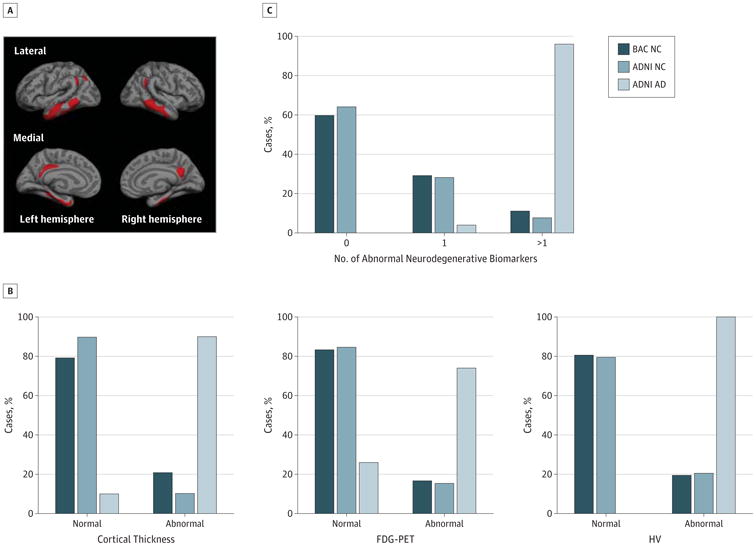
Figure 1. Neurodegenerative Biomarkers in Cognitively Normal (NC) Cases and Patients With Alzheimer Disease (AD)
A, The template of cortical AD-affected regions. B and C, Percentage of individuals with normal and abnormal cortical thickness, fludeoxyglucose positron emission tomography (FDG-PET), and hippocampal volume (HV) and 0, 1, and more than 1 abnormal neurodegenerative biomarker for Berkley Aging Cohort (BAC) NC cases, Alzheimer's Disease Neuroimaging Initiative (ADNI) NC cases, and ADNI AD cases.
Figure 2
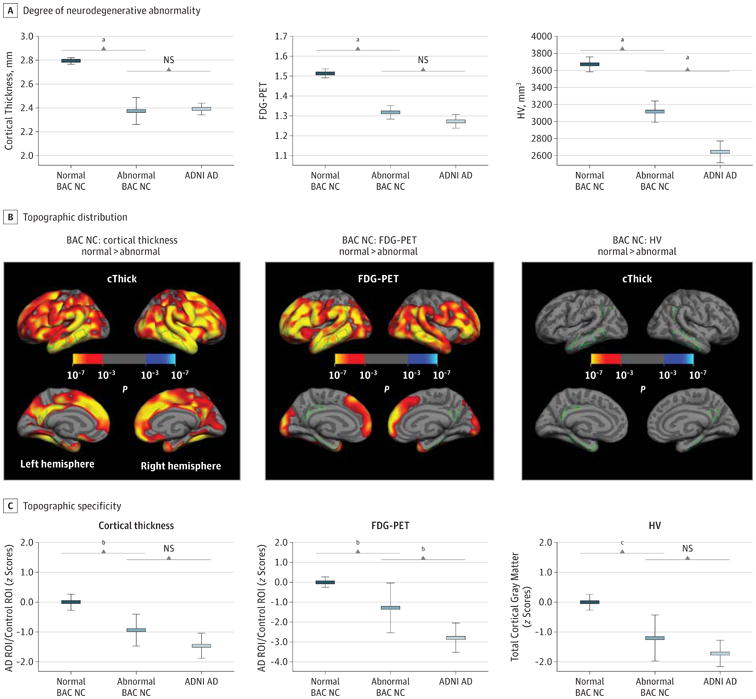
Figure 2. Degree and Topographic Distribution of Neurodegenerative Abnormalities in the Berkley Aging Cohort (BAC) Cognitively Normal (NC) Cases
A and C, For cortical thickness, fludeoxyglucose positron emission tomography (FDG-PET), and hippocampal volume (HV), degree of neurodegenerative abnormality within the Alzheimer disease (AD) region of interest (ROI) (A) and topographic specificity (C) are depicted for biomarker normal and abnormal BAC NC cases and Alzheimer's Disease Neuroimaging Initiative (ADNI) AD cases. B, Cortexwide comparisons between normal and abnormal BAC NC cases. cThick indicates cortical thickness and NS, not significant. aP < .001. bP < .05. cP < .01.
Figure 3
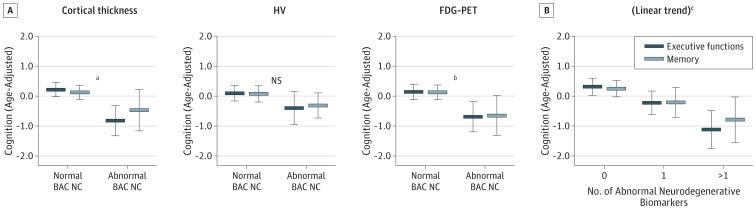
Figure 3. Relationship Between Neurodegenerative Abnormalities and Cognition in the Berkley Aging Cohort (BAC) Cognitively Normal (NC) Cases
Error bar plots (mean and 95% CI) demonstrate significant relationships between cognition and abnormality in each biomarker (A) and the number of abnormal neurodegenerative biomarkers (B). FDG-PET indicates fludeoxyglucose positron emission tomography; HV, hippocampal volume; and NS, not significant. aP < .05 for memory and P < .001 for executive functions. bP < .05 for memory and executive functions. cP < .01 for memory and P < .001 for executive functions.
Figure 4
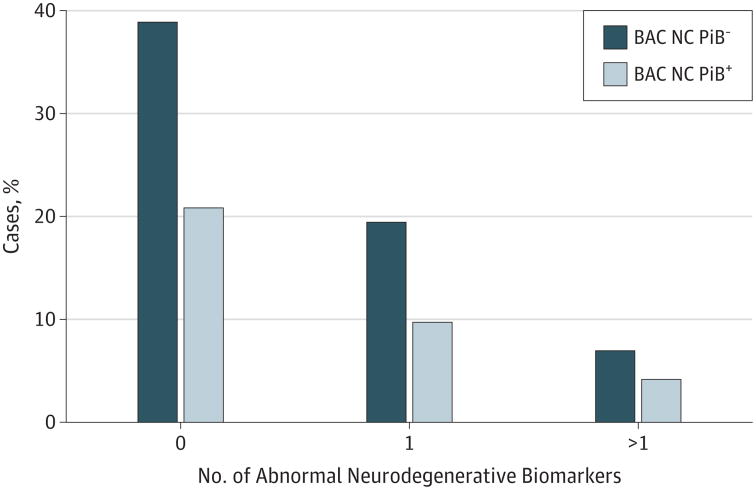
Figure 4. Relationship Between Neurodegenerative Abnormalities and Pittsburgh Compound B (PiB) Status in the Berkley Aging Cohort (BAC) Cognitively Normal (NC) Cases
The percentage of individuals with 0, 1, or more than 1 abnormal neurodegenerative biomarker stratified by PiB status (PiB+ or PiB).
Figure 5
Figure 5. Relationship Between Neurodegenerative Abnormalities and White Matter Lesions (WMLs) in the Berkley Aging Cohort (BAC) Cognitively Normal (NC) Cases 1
Error bar plots (mean and 95% CI) demonstrate significant (after covariate adjustment) relationships between WMLs and abnormality in each biomarker (A) and the number of abnormal neurodegenerative biomarkers (B). FDG-PET indicates fludeoxyglucose positron emission tomography; HV, hippocampal volume; and NS, not significant. aSignificance. bSignificance after covariate adjustment.

References

    1. Perrin RJ, Fagan AM, Holtzman DM. Multimodal techniques for diagnosis and prognosis of Alzheimer's disease. Nature. 2009;461(7266):916–922. - PMC - PubMed
    1. Sperling RA, Aisen PS, Beckett LA, et al. Toward defining the preclinical stages of Alzheimer's disease: recommendations from the National Institute on Aging-Alzheimer's Association workgroups on diagnostic guidelines for Alzheimer's disease. Alzheimers Dement. 2011;7(3):280–292. - PMC - PubMed
    1. Jack CR, Jr, Knopman DS, Weigand SD, et al. An operational approach to National Institute on Aging-Alzheimer's Association criteria for preclinical Alzheimer disease. Ann Neurol. 2012;71(6):765–775. - PMC - PubMed
    1. Knopman DS, Jack CR, Jr, Wiste HJ, et al. Brain injury biomarkers are not dependent on β-amyloid in normal elderly. Ann Neurol. doi: 10.1002/ana.23816. published online November 23, 2012. - DOI - PMC - PubMed
    1. Wirth M, Madison CM, Rabinovici GD, Oh H, Landau SM, Jagust WJ. Alzheimer's disease neurodegenerative biomarkers are associated with decreased cognitive function but not β-amyloid in cognitively normal older individuals. J Neurosci. 2013;33(13):5553–5563. - PMC - PubMed

Publication types

MeSH terms