


Contributions of human hippocampal subfields to spatial and temporal pattern separation
- PMID: 24167043
- PMCID: PMC3933274
- DOI: 10.1002/hipo.22223
Contributions of human hippocampal subfields to spatial and temporal pattern separation
Abstract
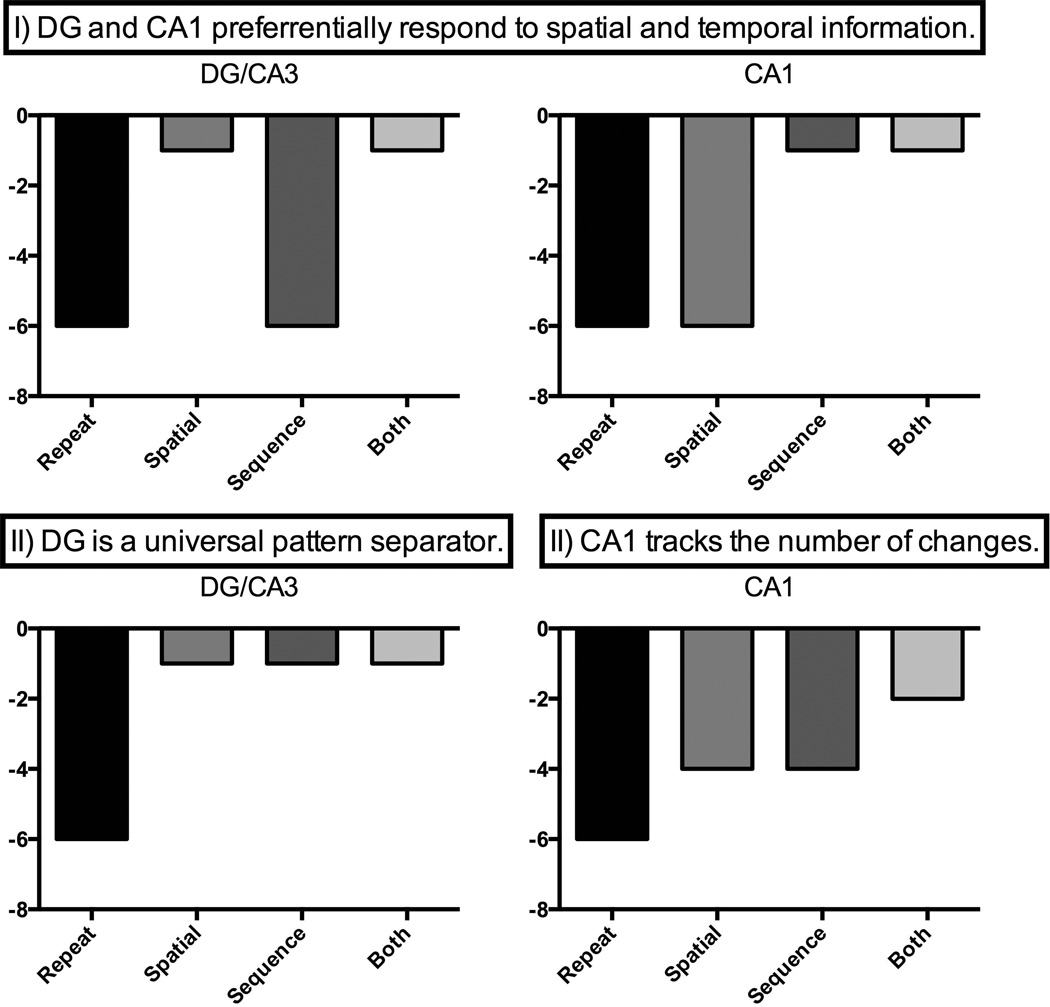
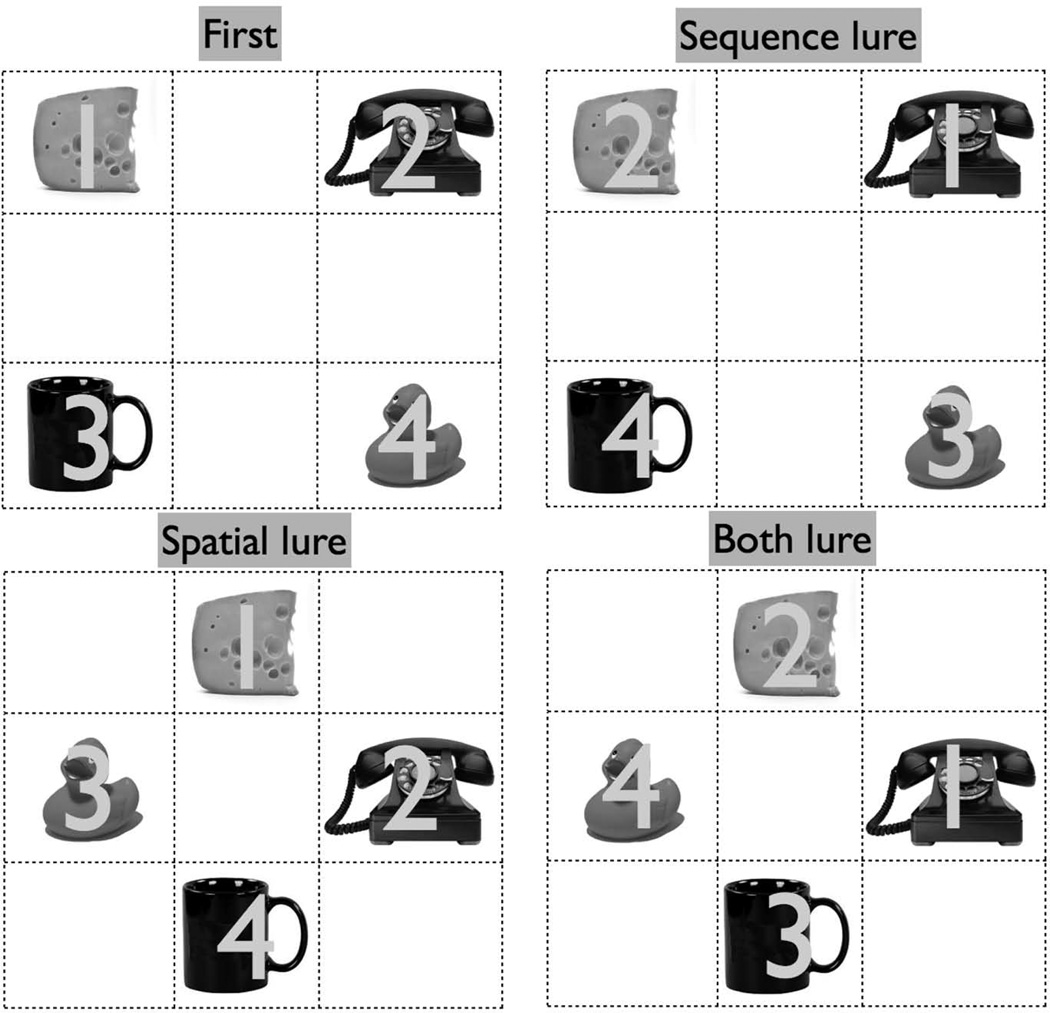
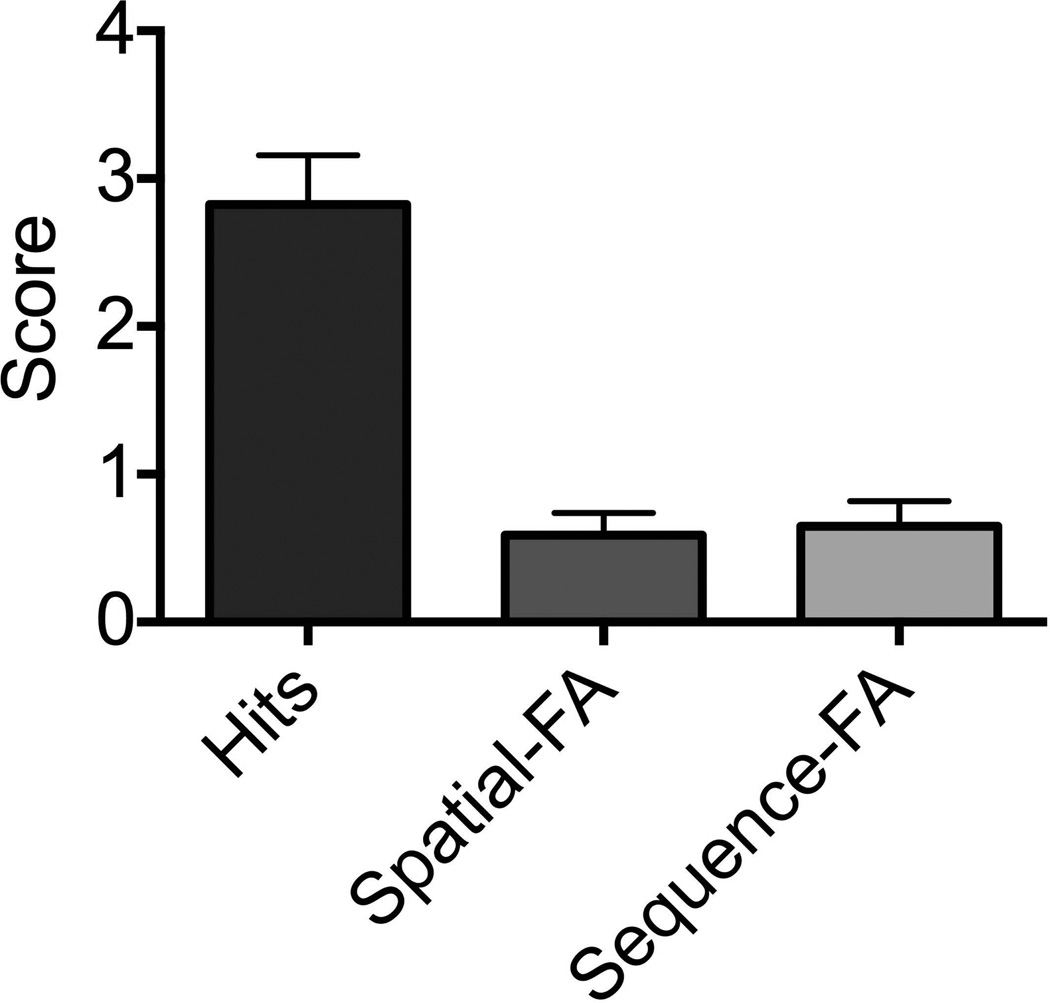
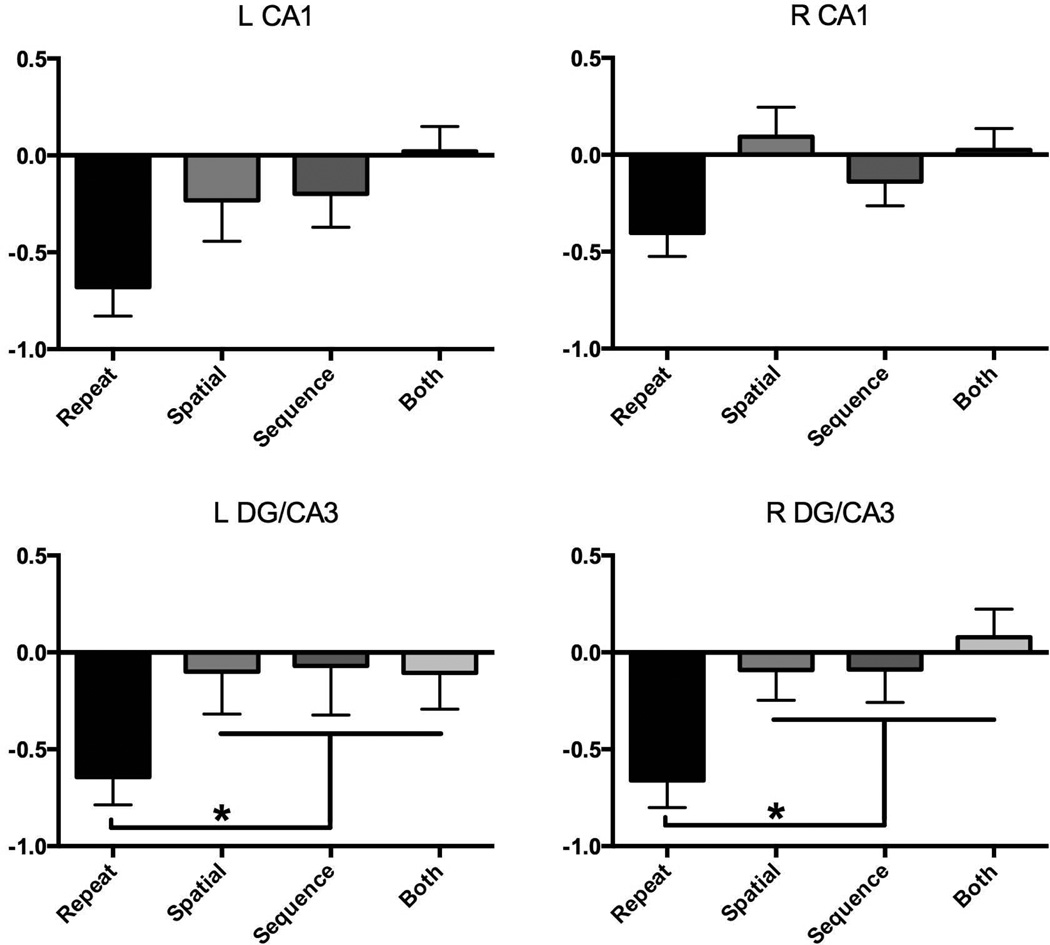
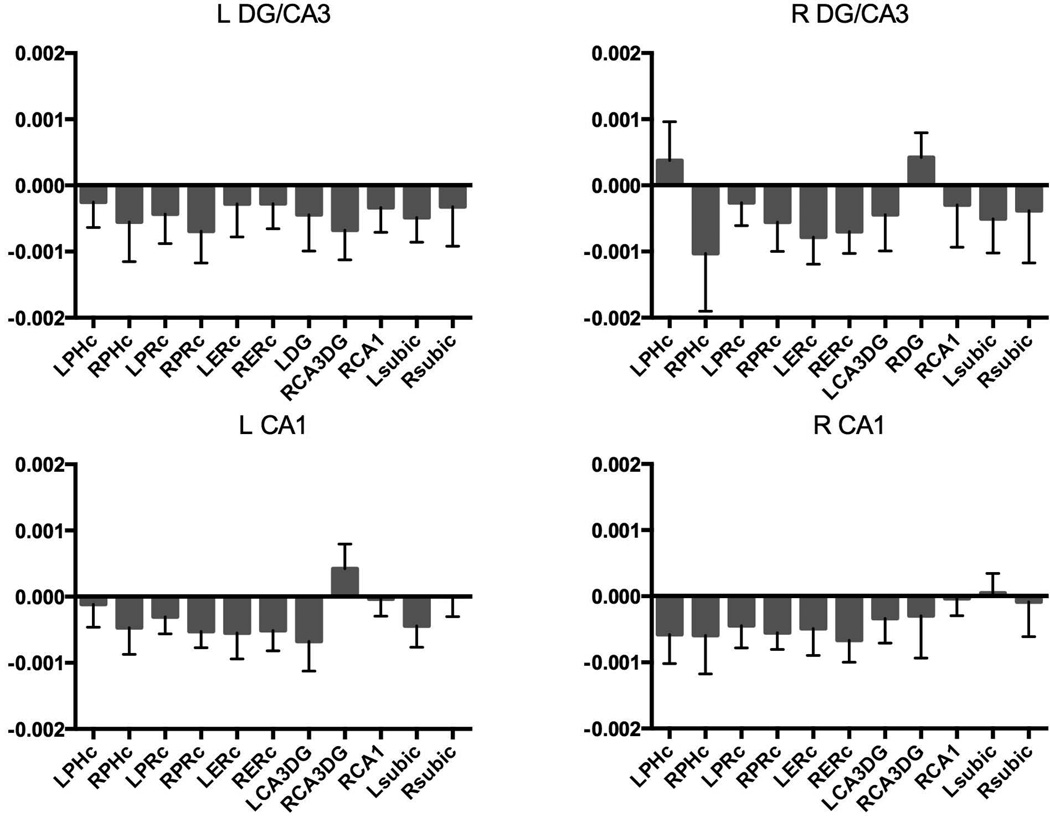
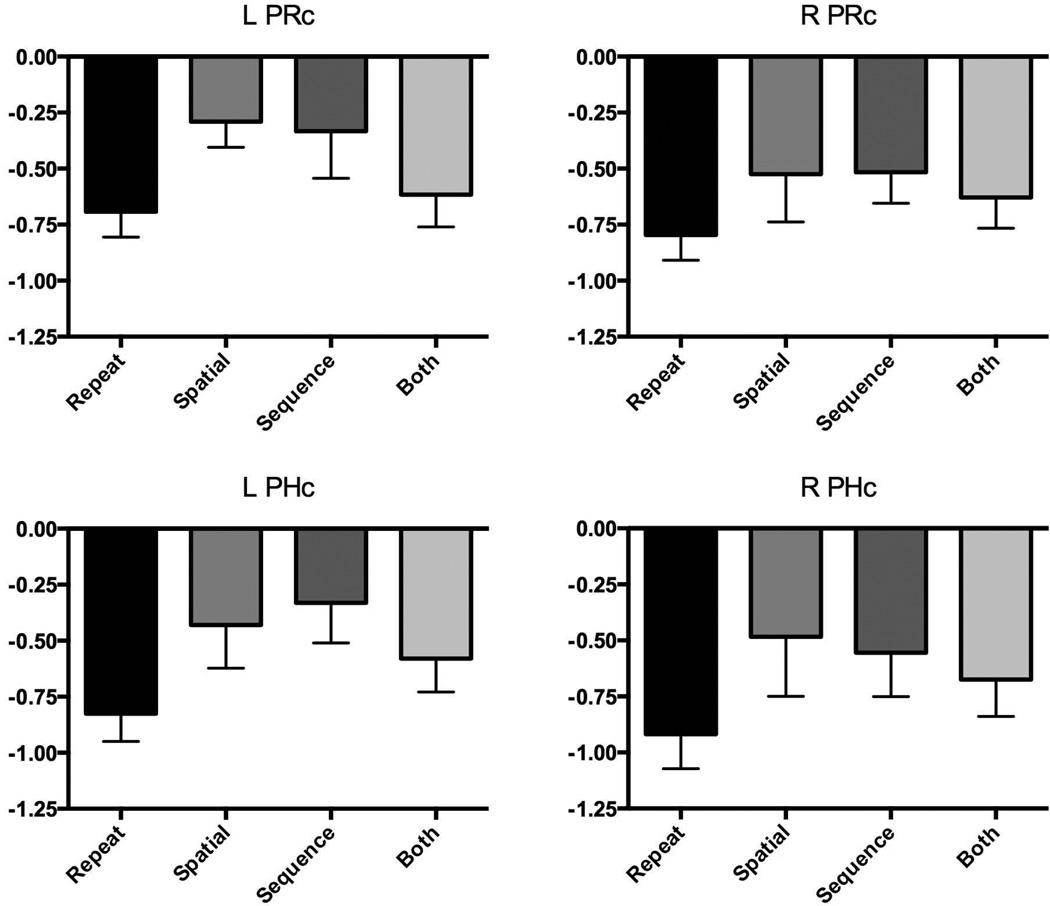
We sought to explore the roles of the hippocampal subregions and adjacent medial temporal lobe regions in pattern separation and any differential contributions based on sequential or spatial information. Young adults performed an incidental-encoding task on a sequence of four objects presented on the screen in one of eight locations while we collected high-resolution functional MRI brain scans. We employed five trials of interest: first presentations, exact repetitions, lures in which the same objects were repeated in different locations (spatial lures), lures in which the same objects were presented in a different sequential order (sequential lures), and lures in which both the spatial location and sequence were changed (both lures). We found no evidence for spatial or sequential specialization in the hippocampal subfields, consistent with the hypothesis that the dentate gyrus acts as a universal pattern separator. Likewise, we did not observe specialization for the perirhinal or parahippocampal cortices for spatial or sequential information, though both regions show evidence for associative processing in this task.
Keywords: CA1; CA3; hippocampus; medial temporal lobe; sequence learning.
Copyright © 2013 Wiley Periodicals, Inc.
Figures
References
-
- Amaral DG, Witter MP. The three-dimensional organization of the hippocampal formation: a review of anatomical data. Neurscience. 1989;3(571):591–591. - PubMed
-
- Baker CI, Hutchison TL, Kanwisher N. Does the fusiform face area contain subregions highly selective for nonfaces? Nature Neuroscience. 2007;10:3–4. - PubMed
Publication types
MeSH terms
Grants and funding
LinkOut - more resources
Full Text Sources
Other Literature Sources
Medical
Miscellaneous
