Review
. 2013 Oct 1:5:42.
doi: 10.12703/P5-42.

Intensive risk factor control in stroke prevention

Affiliations
Review

Intensive risk factor control in stroke prevention

J David Spence. F1000Prime Rep. .

Abstract

Stroke prevention is an urgent priority because of the aging of the population and the steep association of age and risk of stroke. Direct costs of stroke are expected to more than double in the US between 2012 and 2030. By getting everything right, patients can reduce the risk of stroke by 80% or more; however, getting everything right is a tall order. Roughly in order of importance, this requires smoking cessation, maintenance of a healthy weight, a Cretan Mediterranean diet, blood pressure control, lipid-lowering drugs, appropriate use of antiplatelet agents and anticoagulants, and appropriate carotid endarterectomy and stenting. A new approach called "treating arteries instead of targeting risk factors" appears promising but requires validation in randomized trials.


Figures
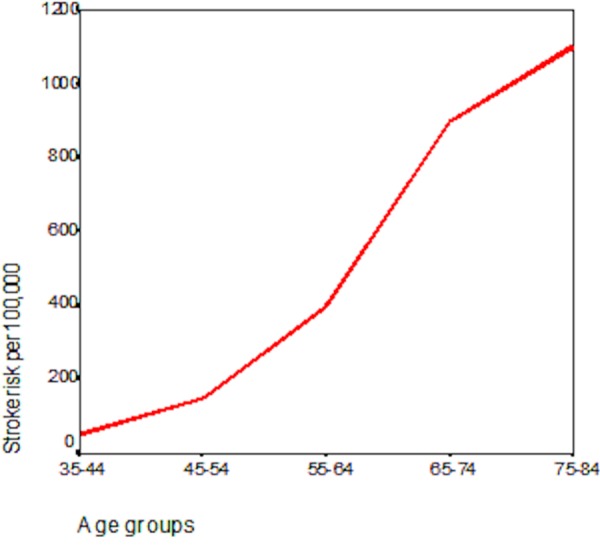
Figure 1.
Figure 1.. The steep increase in risk of stroke with age
The annual risk of stroke per 100,000 people increases from approximately 35 at age 35 to 1,100 by age 80. Based on data from [99].
Figure 2.
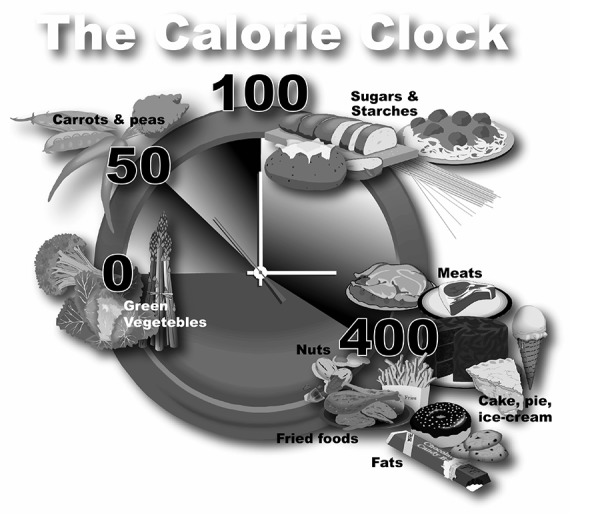
Figure 2.. The calorie clock
Patients who need to lose weight should eat more fruits and vegetables and whole grains and less fat-containing food such as meat, cake, pie, and ice cream. A large store-bought muffin contains about 450 calories; a small low-fat muffin contains 200. There are 10 calories in a single potato chip, 7 in a peanut, and 15 in a cashew. Green leaves have virtually no calories, because we cannot digest cellulose. Fat contains nearly twice as many calories per gram as protein or carbohydrates – about 25 calories in a teaspoon of sugar, and nearly 50 in a teaspoon of fat – even good, healthy olive oil. Reproduced with permission from Vanderbilt University Press [2].
Figure 3.
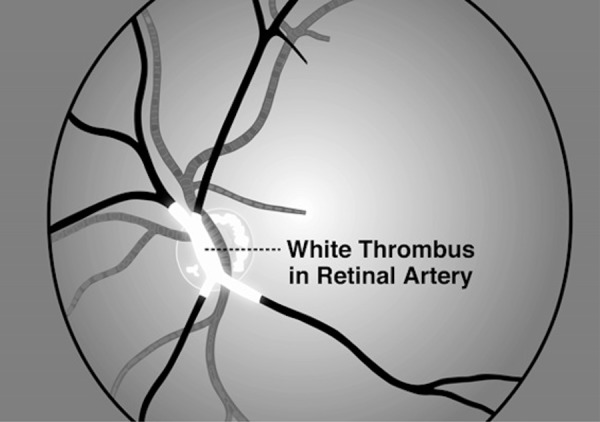
Figure 3.. White thrombus
White thrombus, consisting of platelet aggregates, is the target of antiplatelet therapy. I have been present on two occasions when patients had episodes of amaurosis fugax and so was able to observe by ophthalmoscopy the white thrombus oozing through the retinal arteries. As the white thrombus clears, the vision returns, sometimes in vertical or horizontal hemispheres, or in quadrants, as blood flow is restored to each main branch of the retinal artery. To the best of my knowledge, this phenomenon was first described by C. Miller Fisher; a patient who had amaurosis fugax was observed by many participants in Grand Rounds, taking turns with the ophthalmoscope. Reproduced with permission from Vanderbilt University Press [2].

References

    1. Ovbiagele B, Goldstein LB, Higashida RT, Howard VJ, Johnston SC, Khavjou OA, et al. Forecasting the Future of Stroke in the United States: A Policy Statement From the American Heart Association and American Stroke Association. Stroke. 2013 doi: 10.1161/STR.0b013e31829734f2. - DOI - PubMed
    2. http://f1000.com/prime/718012783

    1. Spence JD. How to prevent your stroke. Nashville: Vanderbilt University Press; 2006.
    1. Hackam DG, Spence JD. Combining multiple approaches for the secondary prevention of vascular events after stroke: a quantitative modeling study. Stroke. 2007;38:1881–1885. doi: 10.1161/STROKEAHA.106.475525. - DOI - PubMed
    1. Chiuve SE, Rexrode KM, Spiegelman D, Logroscino G, Manson JE, Rimm EB. Primary prevention of stroke by healthy lifestyle. Circulation. 2008;118:947–954. doi: 10.1161/CIRCULATIONAHA.108.781062. - DOI - PMC - PubMed
    2. http://f1000.com/prime/718113548

    1. Spence JD. US Neurology. Nutrition in stroke prevention. in press.