


Rapid decision-making under risk
- PMID: 24168650
- PMCID: PMC4161116
- DOI: 10.1080/17588928.2011.613988
Rapid decision-making under risk
Abstract
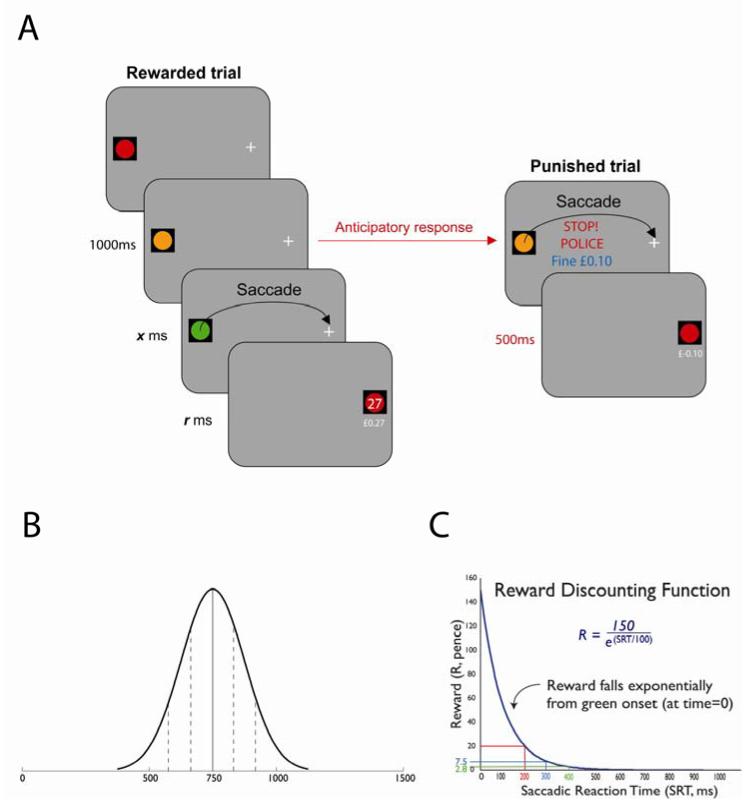
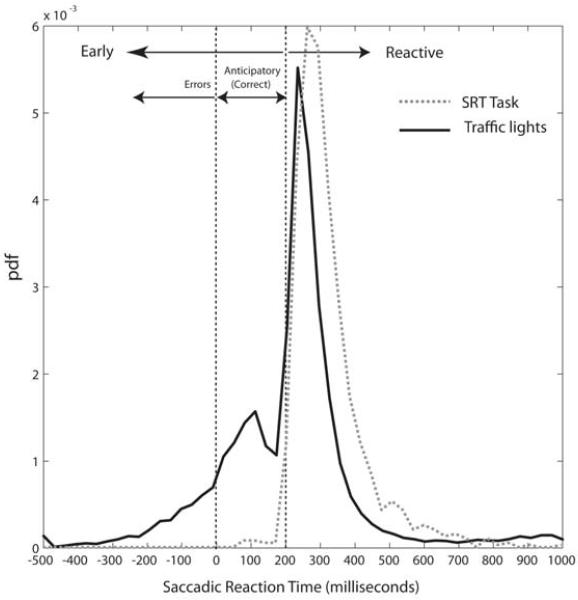
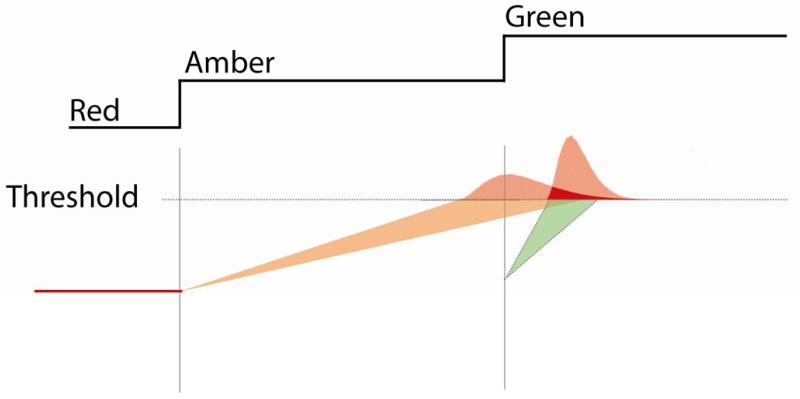
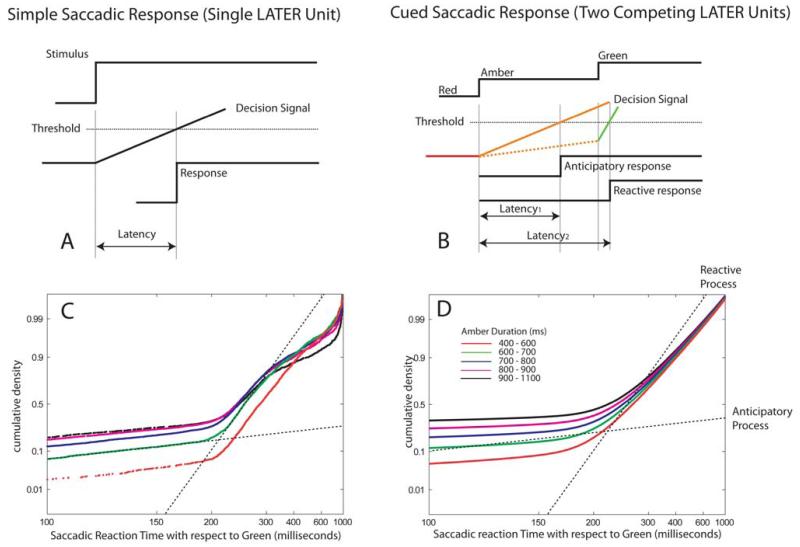
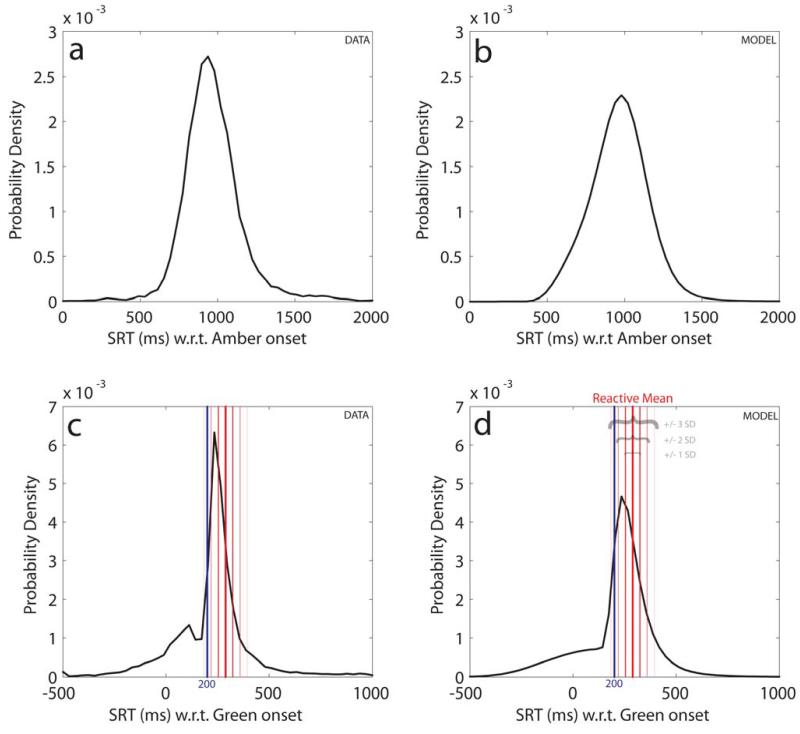
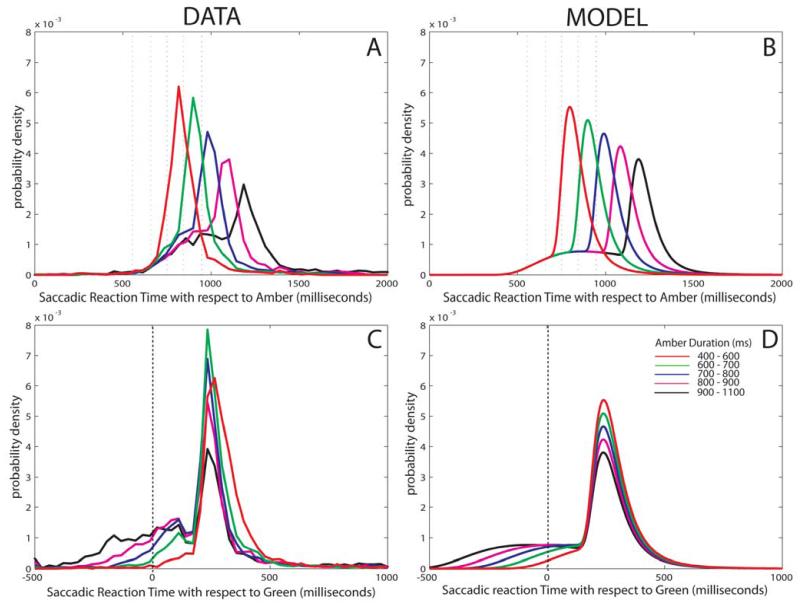
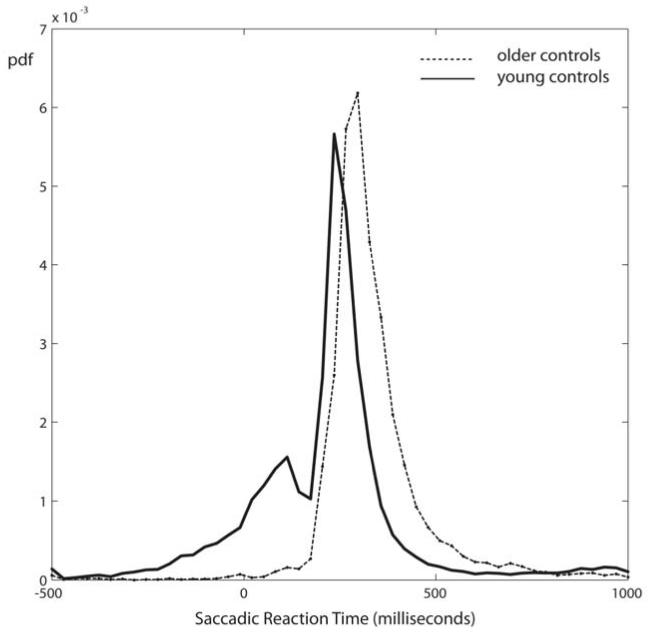
Impulsivity is often characterized by rapid decisions under risk, but most current tests of decision-making do not impose time pressures on participants' choices. Here we introduce a new traffic lights test which requires people to choose whether to program a risky, early eye movement before a traffic light turns green (earning them high rewards or a penalty) or wait for the green light before responding to obtain a small reward instead. Young participants demonstrated bimodal responses: an early, high-risk and a later, low-risk set of choices. By contrast, elderly people invariably waited for the green light and showed little risk-taking. Performance could be modeled as a race between two rise-to-threshold decision processes, one triggered by the green light and the other initiated before it. The test provides a useful measure of rapid decision-making under risk, with the potential to reveal how this process alters with aging or in patient groups.
Figures
References
-
- Aragues M, Jurado R, Quinto R, Rubio G. Laboratory Paradigms of Impulsivity and Alcohol Dependence: A Review. Eur Addict Res. 2011;17:64–71. - PubMed
-
- Bickel WK, Odum AL, Madden GJ. Impulsivity and cigarette smoking: delay discounting in current, never, and ex-smokers. Psychopharmacology. 1999;146:447–454. - PubMed
-
- Brown SBRE, Ridderinkhof KR. Aging and the neuroeconomics of decision making: A review. Cognitive, Affective, & Behavioral Neuroscience. 2009;9:365–379. - PubMed
-
- White CT, Eason RG, Bartlett NR. Latency and duration of eye movements in the horizontal plane. J Opt Soc Am. 1962;52:210–213. - PubMed
Grants and funding
LinkOut - more resources
Full Text Sources
