


Teriparatide and the treatment of bisphosphonate-related osteonecrosis of the jaw: a rat model
- PMID: 24170800
- PMCID: PMC3887480
- DOI: 10.1259/dmfr.20130144
Teriparatide and the treatment of bisphosphonate-related osteonecrosis of the jaw: a rat model
Abstract
Objectives: The objectives of this study were to establish a bisphosphonate-related osteonecrosis of the jaw (BRONJ) rat model and to analyse the effects of teriparatide (TP) on this model.
Methods: Sprague-Dawley rats were divided into three groups: I-zoledronic acid (ZA, n = 10); II-ZA and teriparatide (ZA + TP, n = 10); III-control (n = 10). Osteonecrosis was induced by administering zoledronic acid to groups ZA and ZA + TP. A week after the injections, rats underwent extraction of the first left mandibular molar. Following a four week period, TP was administered to the ZA + TP group for 28 days. Upon killing, extraction sockets were examined clinically, radiologically and histopathologically.
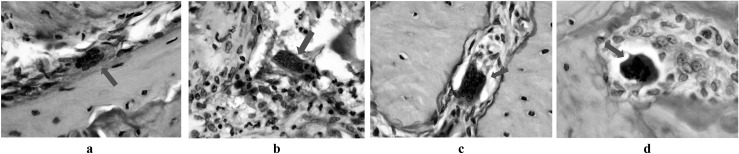
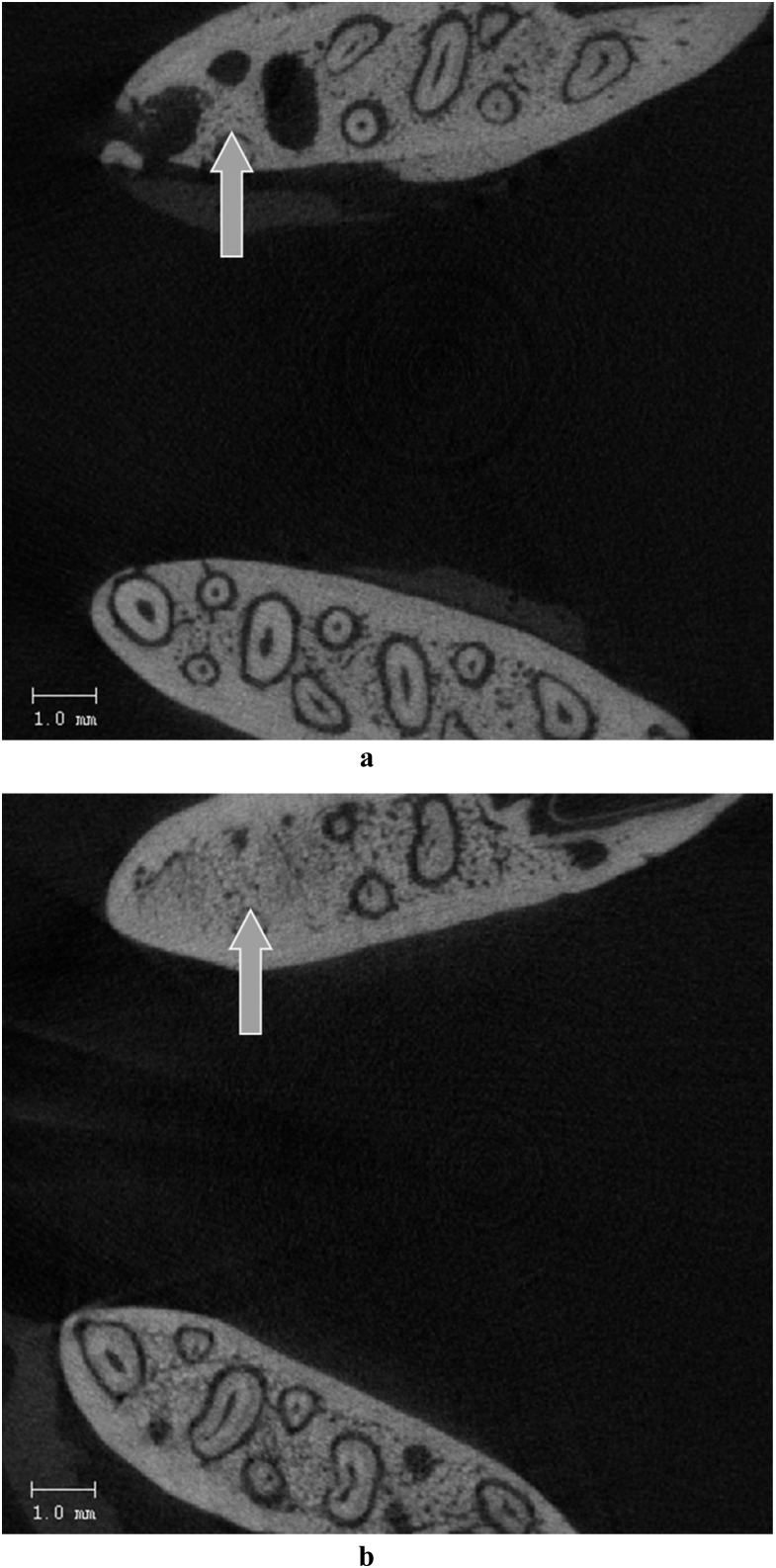
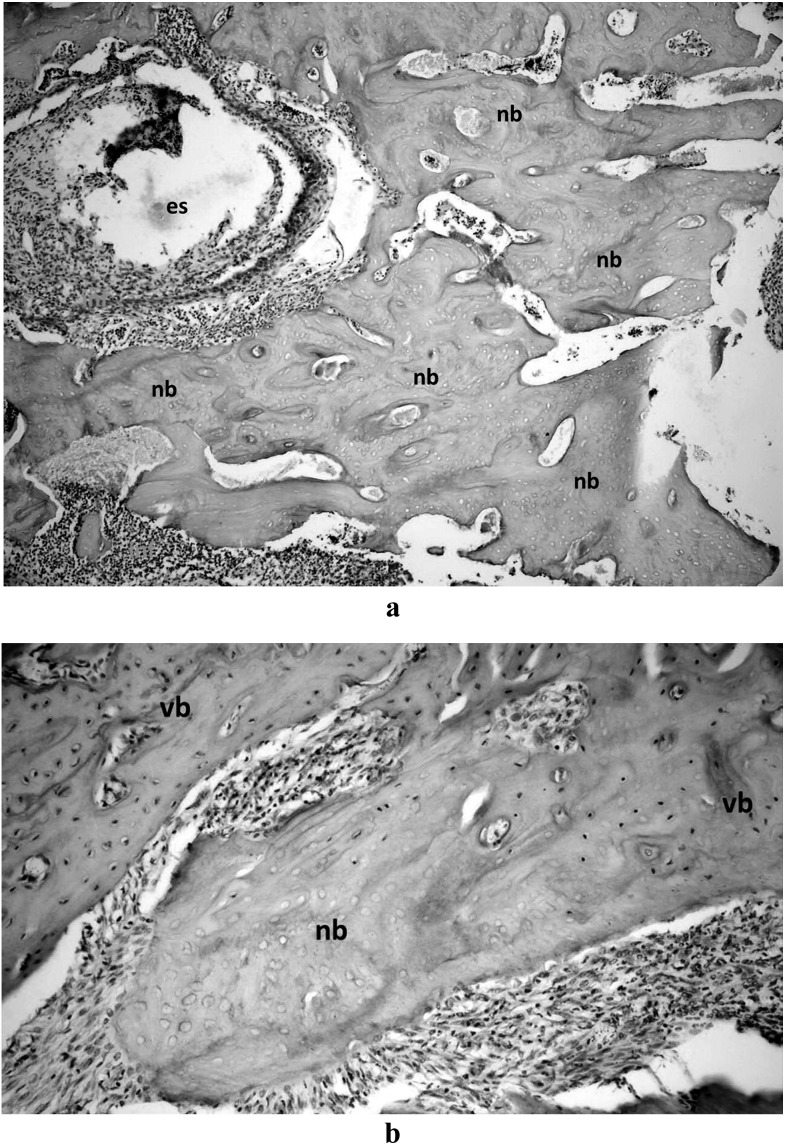
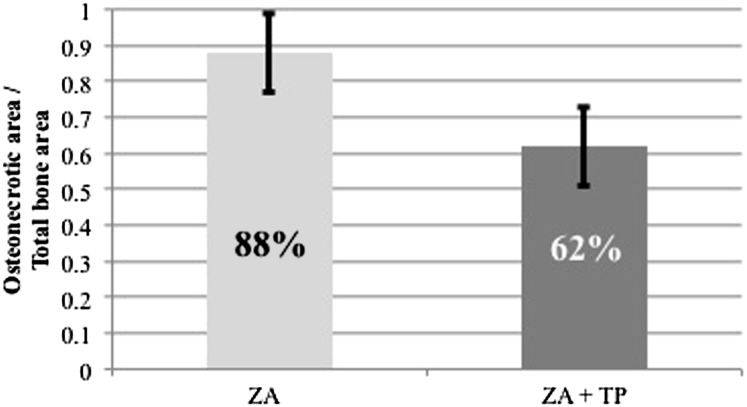
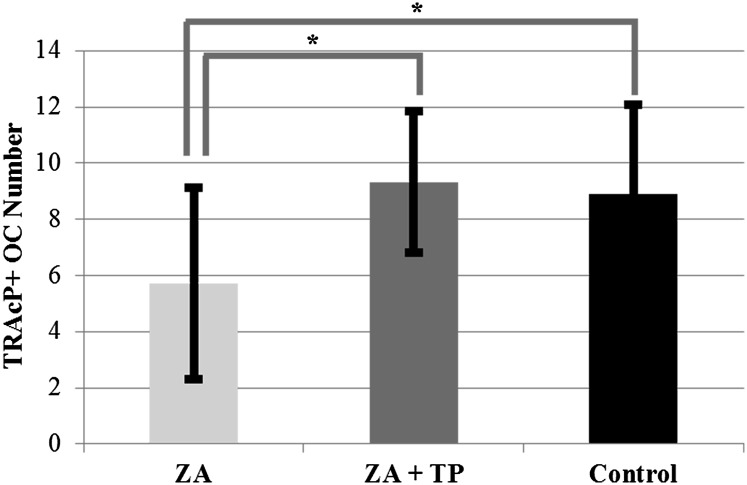
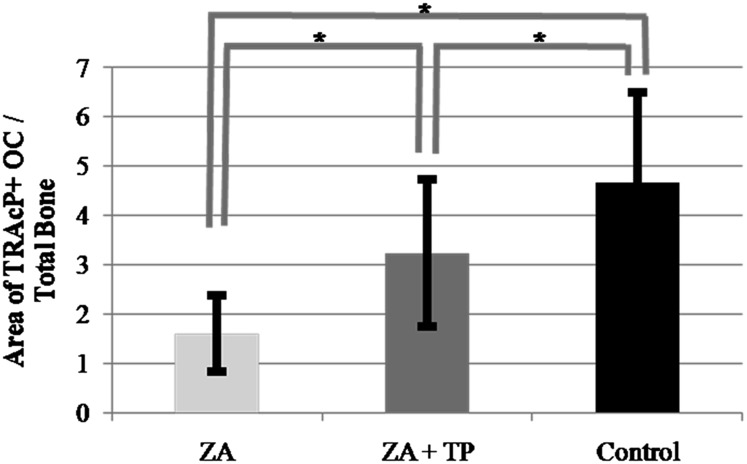
Results: Clinical examination revealed necrotic bone exposure in none of the animals. MicroCT (µCT) examination showed that bone mineral density of the newly formed bone in the extraction socket was lower in the ZA group than in the ZA + TP group (p < 0.05). Histopathological examination revealed that only the ZA and ZA + TP groups developed osteonecrosis, and the osteonecrotic bone area in the ZA group was larger than that in the ZA + TP group (p < 0.05). Tartrate-resistant acid phosphatase (TRAcP) enzyme histochemistry revealed that the number of detached and large osteoclasts were higher in the ZA group than in other groups, whereas the number of apoptotic osteoclasts in both ZA and ZA + TP groups were higher than in the control group (p < 0.05).
Conclusions: Our data indicate that bisphosphonate-related osteonecrosis of the jaw model used in the present study is an attractive model to investigate treatment modalities and that TP might be an effective treatment in BRONJ.
Keywords: Microcomputed tomography; bisphosphonate-associated osteonecrosis of the jaw; tartrate-resistant acid phosphatase; teriparatide; zoledronic acid.
Figures
References
-
- Advisory Task Force on Bisphosphonate-Related Osteonecrosis of the Jaws, American Association of Oral and Maxillofacial Surgeons. American Association of Oral and Maxillofacial Surgeons position paper on bisphosphonate-related osteonecrosis of the jaws. J Oral Maxillofac Surg 2007; 65: 369-376. 10.1016/j.joms.2006.11.003 - PubMed
-
- Bertoldo F, Santini D, Lo Cascio V. Bisphosphonates and osteomyelitis of the jaw: a pathogenic puzzle. Nat Clin Pract Oncol 2007; 4: 711-721. 10.1038/ncponc1000 - PubMed
-
- Biasotto M, Chiandussi S, Zacchigna S, Moimas S, Dore F, Pozzato G, et al. A novel animal model to study nonspontaneous bisphosphonates osteonecrosis of jaw. J Oral Pathol Med 2010; 35: 390-396. 10.1111/j.1600-0714.2009.00878.x - PubMed
-
- Junquera L, Gallego L. Nonexposed bisphosphonate-related osteonecrosis of the jaws: another clinical variant? J Oral Maxillofac Surg 2008; 66: 1516-1517. 10.1016/j.joms.2008.02.012 - PubMed
-
- Tashjian AH Jr, Chabner BA. Commentary on clinical safety of recombinant human parathyroid hormone 1-34 in the treatment of osteoporosis in men and postmenopausal women. J Bone Miner Res 2002; 17: 1151-1161. 10.1359/jbmr.2002.17.7.1151 - PubMed
Publication types
MeSH terms
Substances
LinkOut - more resources
Full Text Sources
Other Literature Sources
Medical
