


A new era of stroke prevention in atrial fibrillation: comparing a new generation of oral anticoagulants with warfarin
- PMID: 24171796
- PMCID: PMC3829372
- DOI: 10.1186/1755-7682-6-46
A new era of stroke prevention in atrial fibrillation: comparing a new generation of oral anticoagulants with warfarin
Abstract
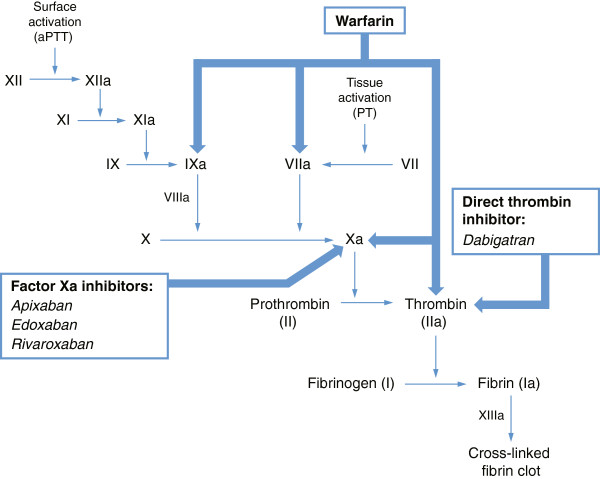
Traditionally, warfarin has been used to prevent stroke in patients with atrial fibrillation (AF), but data from large, multinational, prospective, randomized studies suggest that novel oral anticoagulants (NOACs) may be suitable alternatives. These include the direct thrombin inhibitor dabigatran and the factor Xa inhibitors rivaroxaban, apixaban, and edoxaban. These data showed that dabigatran 150 mg twice daily was more effective at preventing stroke than warfarin, with similar rates of major bleeding, while rivaroxaban 20 mg once daily was noninferior to warfarin, with no difference in major bleeding rates. In addition, apixaban 5 mg twice daily was shown to be superior to warfarin for preventing stroke, with lower bleeding rates. Currently, edoxaban is still in clinical trials. NOACs offer more predictable anticoagulant effects than warfarin and do not require regular monitoring; however, different NOACs are associated with varied drug interactions and limitations related to use in certain patient populations. Overall, the clinical data suggest that these novel agents will offer new options for stroke prevention in patients with AF.
Figures
References
-
- Passel JS, D’Vera C. February 11, 2008. U.S. population projections: 2005–2050, Pew Research Center. 2008. http://pewhispanic.org/files/reports/85.pdf.
-
- Fuster V, Rydén LE, Cannom DS, Crijns HJ, Curtis AB, Ellenbogen KA, Halperin JL, Kay GN, Le Huezey JY, Lowe JE, Olsson SB, Prystowsky EN, Tamargo JL, Wann LS. 2011 ACCF/AHA/HRS focused updated incorporated into the ACC/AHA/ESC 2006 guidelines for the management of patients with atrial fibrillation: a report of the American College of Cardiology Foundation/American Heart Association task force on practice guidelines developed in partnership with the European Society of Cardiology and in collaboration with the European Heart Rhythm Association and the Heart Rhythm Society. J Am Coll Cardiol. 2011;57(11):e101–e198. doi: 10.1016/j.jacc.2010.09.013. - DOI - PubMed
LinkOut - more resources
Full Text Sources
Other Literature Sources