


Anti HSV-1 activity of halistanol sulfate and halistanol sulfate C isolated from Brazilian marine sponge Petromica citrina (Demospongiae)
- PMID: 24172213
- PMCID: PMC3853722
- DOI: 10.3390/md11114176
Anti HSV-1 activity of halistanol sulfate and halistanol sulfate C isolated from Brazilian marine sponge Petromica citrina (Demospongiae)
Abstract
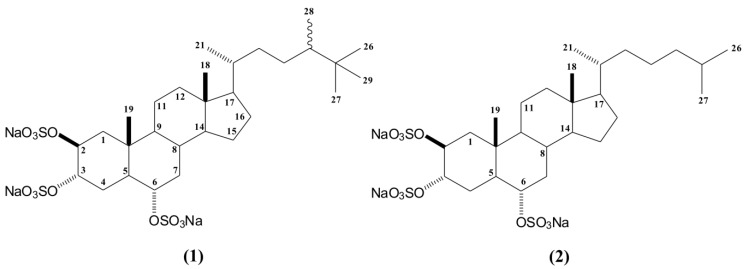
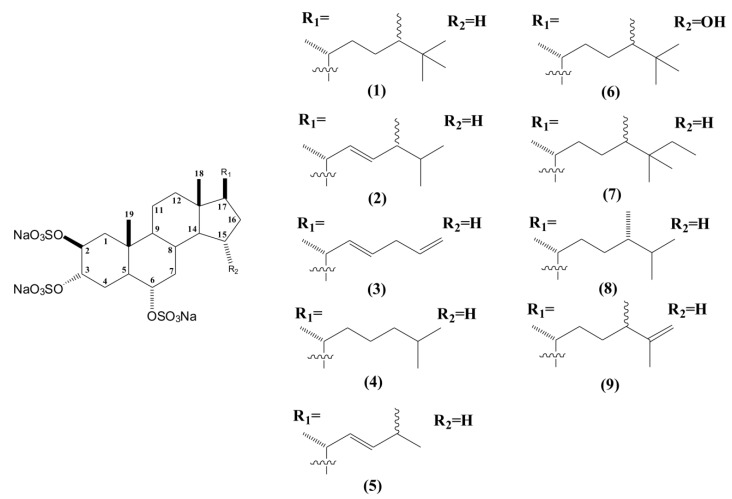
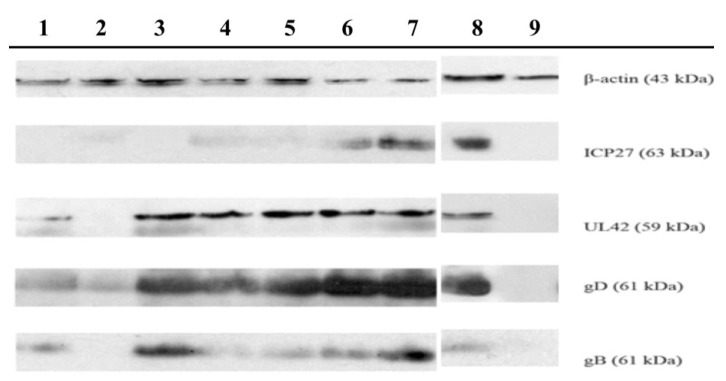
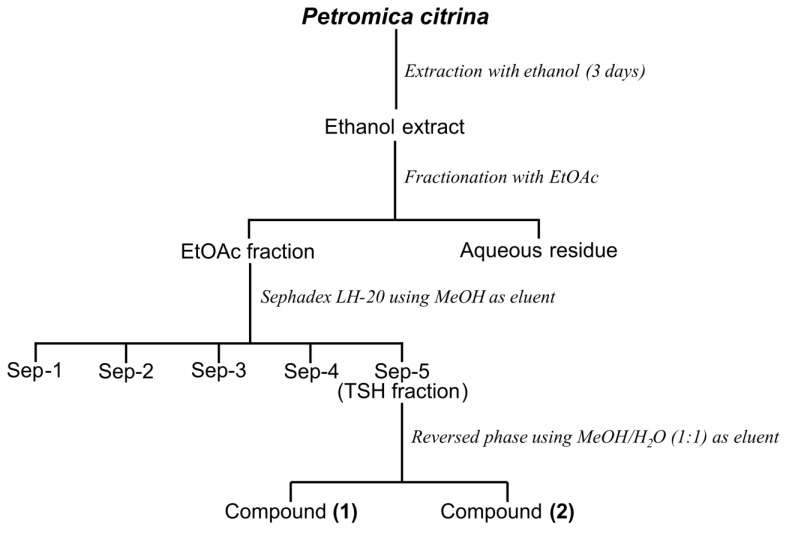
The n-butanol fraction (BF) obtained from the crude extract of the marine sponge Petromica citrina, the halistanol-enriched fraction (TSH fraction), and the isolated compounds halistanol sulfate (1) and halistanol sulfate C (2), were evaluated for their inhibitory effects on the replication of the Herpes Simplex Virus type 1 (HSV-1, KOS strain) by the viral plaque number reduction assay. The TSH fraction was the most effective against HSV-1 replication (SI = 15.33), whereas compounds 1 (SI = 2.46) and 2 (SI = 1.95) were less active. The most active fraction and these compounds were also assayed to determine the viral multiplication step(s) upon which they act as well as their potential synergistic effects. The anti-HSV-1 activity detected was mediated by the inhibition of virus attachment and by the penetration into Vero cells, the virucidal effect on virus particles, and by the impairment in levels of ICP27 and gD proteins of HSV-1. In summary, these results suggest that the anti-HSV-1 activity of TSH fraction detected is possibly related to the synergic effects of compounds 1 and 2.
Figures
References
-
- Nakakawa E., Reynold S.J. The management of herpes simplex virus infections in HIV infected patients: Current issues and the role of cidofovir. Virus Adapt. Treat. 2011;3:35–43.
-
- Mayer A.M.S., Rodríguez A.D., Berlinck R.G.S., Fusetani N. Marine pharmacology in 2007–8: Marine compounds with antibacterial, anticoagulant, antifungal, anti-inflammatory, antimalarial, antiprotozoal, antituberculosis, and antiviral activities; affecting the immune and nervous system, and other miscellaneous mechanisms of action. Comp. Biochem. Physiol. Part C Toxicol. Pharmacol. 2011;153:191–222. doi: 10.1016/j.cbpc.2010.08.008. - DOI - PMC - PubMed
Publication types
MeSH terms
Substances
LinkOut - more resources
Full Text Sources
Other Literature Sources
Miscellaneous
