


Effects of anti-obesity drugs, diet, and exercise on weight-loss maintenance after a very-low-calorie diet or low-calorie diet: a systematic review and meta-analysis of randomized controlled trials
- PMID: 24172297
- PMCID: PMC3862452
- DOI: 10.3945/ajcn.113.070052
Effects of anti-obesity drugs, diet, and exercise on weight-loss maintenance after a very-low-calorie diet or low-calorie diet: a systematic review and meta-analysis of randomized controlled trials
Abstract
Background: Weight-loss maintenance remains a major challenge in obesity treatment.
Objective: The objective was to evaluate the effects of anti-obesity drugs, diet, or exercise on weight-loss maintenance after an initial very-low-calorie diet (VLCD)/low-calorie diet (LCD) period (<1000 kcal/d).
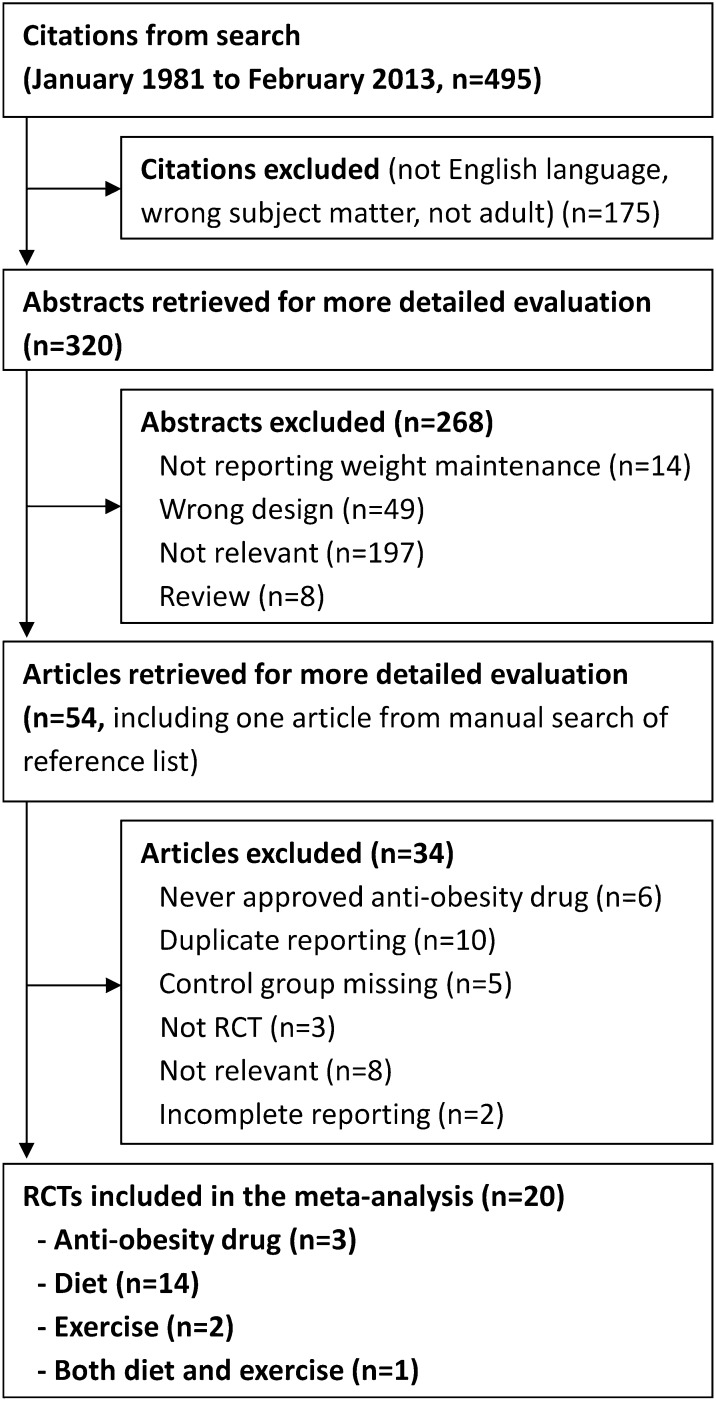
Design: We conducted a systematic review by using MEDLINE, the Cochrane Controlled Trial Register, and EMBASE from January 1981 to February 2013. We included randomized controlled trials that evaluated weight-loss maintenance strategies after a VLCD/LCD period. Two authors performed independent data extraction by using a predefined data template. All pooled analyses were based on random-effects models.
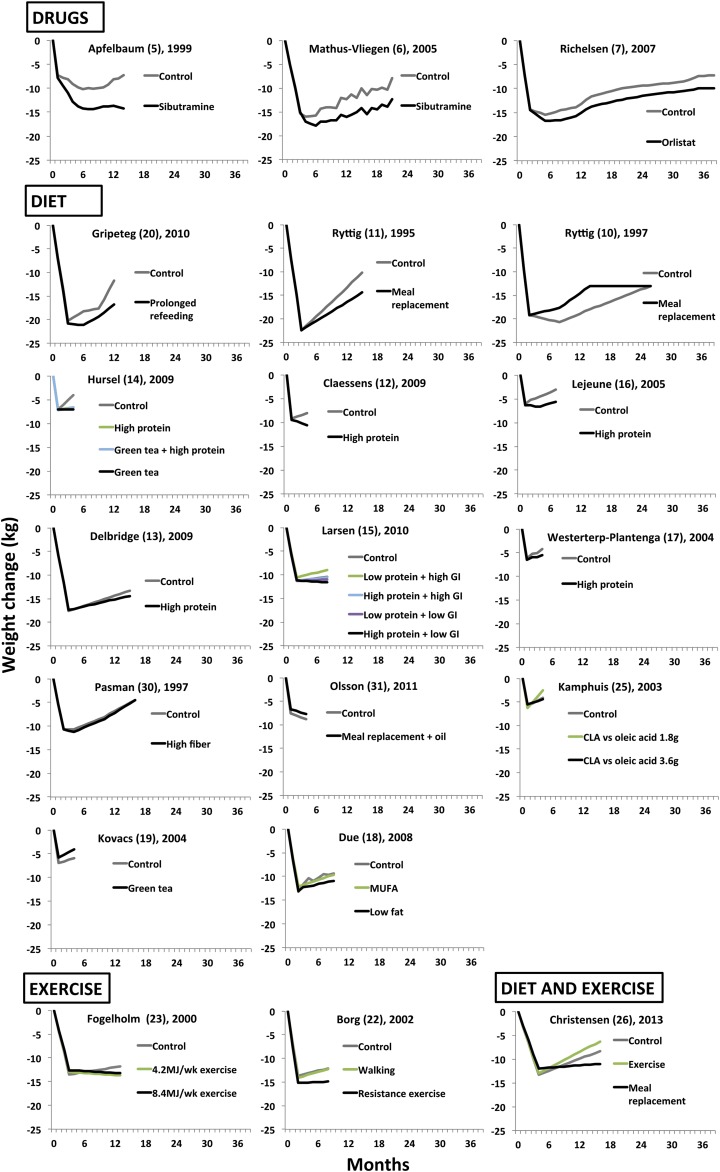
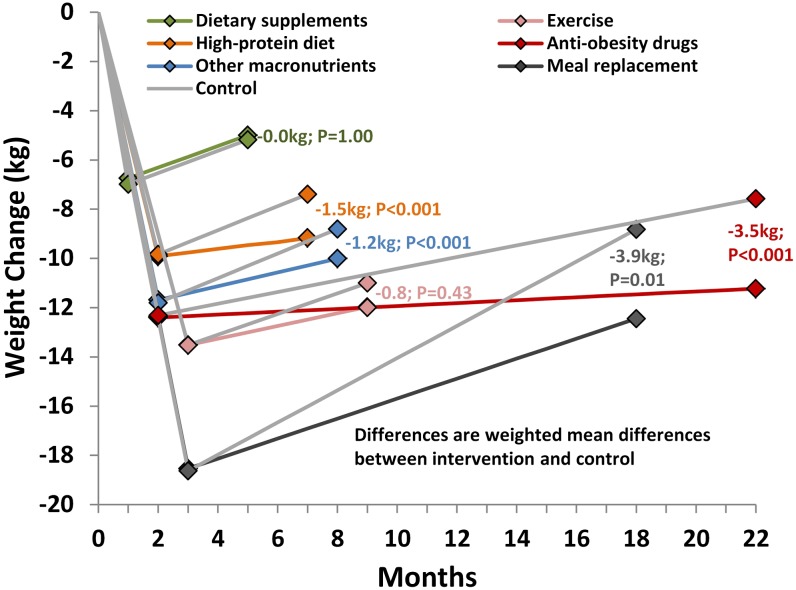
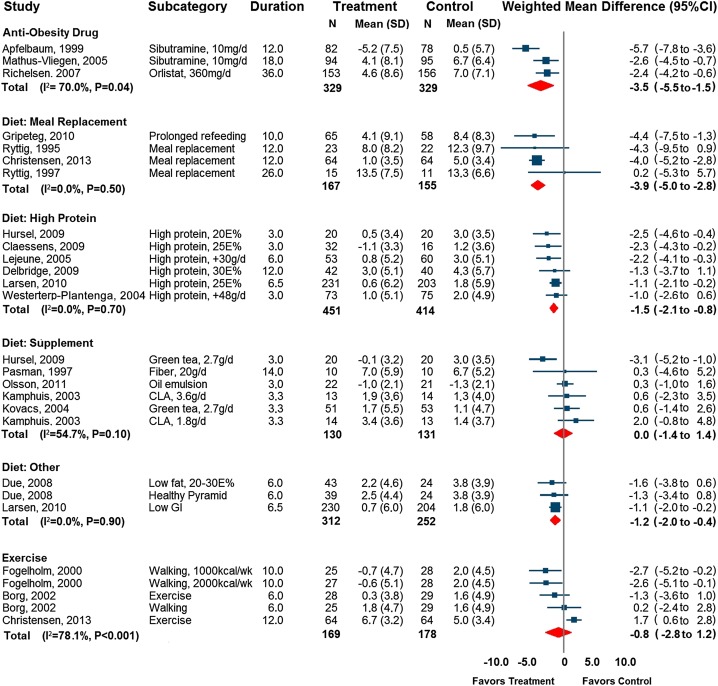
Results: Twenty studies with a total of 27 intervention arms and 3017 participants were included with the following treatment categories: anti-obesity drugs (3 arms; n = 658), meal replacements (4 arms; n = 322), high-protein diets (6 arms; n = 865), dietary supplements (6 arms; n = 261), other diets (3 arms; n = 564), and exercise (5 arms; n = 347). During the VLCD/LCD period, the pooled mean weight change was -12.3 kg (median duration: 8 wk; range 3-16 wk). Compared with controls, anti-obesity drugs improved weight-loss maintenance by 3.5 kg [95% CI: 1.5, 5.5 kg; median duration: 18 mo (12-36 mo)], meal replacements by 3.9 kg [95% CI: 2.8, 5.0 kg; median duration: 12 mo (10-26 mo)], and high-protein diets by 1.5 kg [95% CI: 0.8, 2.1 kg; median duration: 5 mo (3-12 mo)]. Exercise [0.8 kg; 95% CI: -1.2, 2.8 kg; median duration: 10 mo (6-12 mo)] and dietary supplements [0.0 kg; 95% CI: -1.4, 1.4 kg; median duration: 3 mo (3-14 mo)] did not significantly improve weight-loss maintenance compared with control.
Conclusion: Anti-obesity drugs, meal replacements, and high-protein diets were associated with improved weight-loss maintenance after a VLCD/LCD period, whereas no significant improvements were seen for dietary supplements and exercise.
Figures
References
-
- Tsai AG, Wadden TA. The evolution of very-low-calorie diets: an update and meta-analysis. Obesity (Silver Spring) 2006;14:1283–93. - PubMed
-
- Klem ML, Wing RR, McGuire MT, Seagle HM, Hill JO. A descriptive study of individuals successful at long-term maintenance of substantial weight loss. Am J Clin Nutr 1997;66:239–46. - PubMed
-
- Apfelbaum M, Vague P, Ziegler O, Hanotin C, Thomas F, Leutenegger E. Long-term maintenance of weight loss after a very-low-calorie diet: a randomized blinded trial of the efficacy and tolerability of sibutramine. Am J Med 1999;106:179–84. - PubMed
Publication types
MeSH terms
Substances
LinkOut - more resources
Full Text Sources
Other Literature Sources
Medical
